Visualizzazione post con etichetta Francia. Mostra tutti i post

mercoledì 3 ottobre 2018

Maria Antonietta: La gioventù di una regina/Marie Antoinette (Fuyumi Soryo)

"Maria Antonietta: La gioventù di una regina" è un manga del 2016 in volume unico dell'autrice giapponese Fuyumi Soryo (resa famosa da "Mars", ma che io amo tantissimo per via di "ES") edito in Italia dalla Star Comics nel 2018 in una pregevole edizione con alcune pagine a colori e una sovracoperta con dettagli dorati (7€).
Non sono una fan di Maria Antonietta, ma mi è piaciuto molto il tono leggero del film che Sofia Coppola ha dedicato a questo contestatissimo personaggio. Questo manga mi dava l'idea di avere un tono simile e non mi sbagliavo: di fatto, dopo una breve introduzione in cui si vede la protagonista già adulta, è un lungo flashback che narra l'avvicinamento fra lei e il futuro Luigi XVI. I protagonisti, per quanto agiscano in un contesto che oggi risulta alieno, risultano adolescenti molto credibili. Il risultato è una storia romantica molto delicata e appena accennata, senza toni melodrammatici. Delicata, ma comunque con continui riferimenti al sesso - infatti tutta la corte sa se e quando il matrimonio è stato consumato e sull'argomento si sprecano le battute.
Ovviamente la frivola vita di corte e personaggi come Madame Du Barry richiamano alla mente anche "Lady Oscar".
Lo stile di disegno della Soryo è sempre più raffinato e la cura per i dettagli dell'abbigliamento e degli ambienti è maniacale. Bisogna sottolineare anche che il volume è stato supervisionato dal Palazzo di Versailles, quindi, oltre che visivamente stupendo è anche storicamente accurato.
Insomma, l'edizione italiana non è certo a buon mercato, ma se vi piace il genere, vale assolutamente il prezzo.

"Marie Antoinette" is a 2016 manga in a single volume by the Japanese author Fuyumi Soryo (who became famous with "Mars", but who I love because of "ES").
I'm not a fan of Marie Antoinette, but I really liked the light tone of the film that Sofia Coppola dedicated to this highly contested character. This manga gave me the idea of ​​having a similar tone and I was not mistaken: in fact, after a brief introduction in which we see the protagonist as an adult, the story is a long flashback that narrates the meeting between her and the future Louis XVI. The protagonists, although they act in a context that today seems alien, are very credible teenagers. The result is a very delicate and mostly implied romantic story, without melodramatic tones. Despite being delicate, it has continuous references to sex - in fact, the whole court knows if and when the marriage has been consummated and jokes are wasted on the subject.
Obviously the frivolous court life and characters like Madame Du Barry also made me think of "Lady Oscar".
Soryo's drawing style is increasingly refined and her care for details of clothing and settings is obsessive. It must also be stressed that the volume was supervised by the Palace of Versailles, therefore, as well as visually stunning, it is also historically accurate.
In short, if you like the genre, this manga is absolutely a must.

mercoledì 6 dicembre 2017

Artigiano in Fiera di Milano 2017/Milan's 2017 craftmanship fair

Come ogni anno, anche questa volta sono andata all'Artigiano in Fiera, la fiera dedicata all'artigianato di tutto il mondo che si tiene ogni anno a Milano dal primo al secondo weekend di dicembre.

Like every year, I went to Artigiano in Fiera, the fair dedicated to craftmanship from around the world, held every year in Milan from the first to the second weekend of December.


Dopo tanti anni, l'impressione è di vedere un po' sempre le stesse cose, ma sono talmente tante e talmente belle che si trova sempre qualcosa di cui meravigliarsi, come il lego di cartone e le caffettiere di legno, o i bellissimi ombrelli dalle impugnature bizzarre.

After so many years, the impression is to see every time the same things, but they are so many and so beautiful that there is always something to wonder about, such as cardboard lego and wooden coffee pots, or beautiful umbrellas with bizarre handles.

Come sempre, una delle attrazioni della Fiera è il cibo, sia gli assaggini agli stand, sia i piatti stranieri difficili da trovare altrimenti. Ho preso come sempre la buonissima croque baguette francese (con chevre e salame piccante) e quest'anno ho provato anche le patatas bravas spagnole, purtroppo non all'altezza di quelle mangiate in Spagna (ma al Lidl ho trovato la salsa per farle a casa...).

As always, one of the attractions of the Fair is the food, both the tastes at the stands, and the foreign dishes difficult to find otherwise. As always I took the delicious French croque baguette (with chevre and spicy salami) and this year I also tried the Spanish patatas bravas, unfortunately not up to those eaten in Spain (but at Lidl I found the sauce to make them at home...).

Abbiamo comprato tantissimi regali di Natale, soprattutto mangerecci, ma anche tanto cibo per noi: i soliti pane carasau, culurgiones e bottarga sardi, il pesto di pistacchi siciliano e la nduja calabrese, ma anche del sidro di mele con sambuco e menta buonissimo, dell'origano siciliano, dei canederli fatti a mano sul momento a speck e formaggio (questi presi nella sezione Europa) e dei buonissimi dolci al cocco.

We bought many Christmas gifts, especially food, but also a lot of food for us: the usual Sardinian pane carasau, culurgiones and bottarga, Sicilian pistachio pesto and Calabrian nduja, but also very good apple cider with elderberry and mint, Sicilian oregano, Knödel handmade on the spot with speck and cheese (those bought in the Europe section) and delicious coconut sweets.

Quest'anno, in vista della fiera, abbiamo ospitato degli amici di Roma che ci hanno portato la vera porchetta di Ariccia (sublime!!! Non mangerò mai più porchetta al nord) e le coppiette, strisce di carne secca speziata, sempre prese ad Ariccia. Insomma, una mangiata dietro l'altra.

This year, for the fair, we hosted some friends from Rome who brought us the real porchetta of Ariccia (Delicious!!! I will never eat it again in the north) and coppiette, strips of spicy dry meat, from Ariccia too. In short, we ate all the weekend long.
Anche quest'anno non ho resistito al fascino degli stand indiani, dove stavolta non mi sono limitata ai cestoni "tutto a 1€". Ho comprato una vistosissima decorazione per capelli blu elettrico, tutta lustrini e pietrone e una collana tubolare tutta a perline d'oro, ognuna ad 1€, ma ho comprato anche 8€ di nappine blu elettrico e arancioni per farmi gli ennesimi orecchini di questo tipo e degli orecchini dorati con un'attaccatura particolare a 5€.

This year as well I couldn't resist the charm of the Indian stands, where this time I did not limit myself to the "all for 1€" baskets. I bought a statement electric blue hair decoration, all sequins and big stones and a tubular necklace with golden beads, each one for 1€, but I also bought 8€ of electric blue and orange tassels to make other earrings of this type and golden earrings with a particular hook for 5€.

Visto che da circa un mese ho un torcicollo che va e viene, la mia Pelosa Metà, come regalo di Natale anticipato mi ha comprato a 20€ un cuscino in memory foam fatto di aloe che in effetti è davvero molto molto comodo. Spero funzioni.

Since from about a month I have a stiff neck that comes and goes, my Hairy Half, as an early Christmas gift bought me for 20€ a memory foam pillow made with aloe which is actually very very comfortable. I hope it works.

lunedì 1 maggio 2017

French Milk (Lucy Knisley)

"French Milk" è un fumetto autobiografico del 2007 di Lucy Knisley, che racconta sei settimane passate dall'autrice e da sua madre a Parigi in occasione del loro ventiduesimo e cinquantesimo compleanno.
Usando come base un appartamento nel 5° arrondissement, le due esplorano la città, guardando i fuochi d'artificio sulla Torre Eiffel a Capodanno, visitando la tomba di Oscar Wilde, mangiando nei caffè e, naturalmente, bevendo delizioso latte francese (che diventa anche simbolo del loro rapporto).
Avevo adorato l'autrice in "Acquolina: la mia vita fra i fornelli" e "Something New". Tuttavia questo fumetto è anteriore di sei anni alla prima sua opera che ho letto, e si vede.
I disegni sono molto meno raffinati, realizzati prevalentemente a pennello, con un tratto spesso grosso e anatomie meno strutturate. Anche lo stile è meno definito. Tuttavia si vedono già la rotondità e l'ispirazione francese nella stilizzazione e in generale l'ho trovato piuttosto carino.
Quello che mi ha lasciato perplessa, rispetto agli altri fumetti dell'autrice che avevo letto, è l'assenza di una struttura narrativa vera e propria. "French Milk" è un vero e proprio diario a fumetti, disegnato giorno per giorno. Il risultato è una via di mezzo fra il taccuino di viaggio illustrato (ci sono shopping, cibo, monumenti, copie dal vero...) e il diario intimo. Anche troppo intimo: se ho provato parecchia empatia a leggere alcune riflessioni (tanto più che in quanto aspirante fumettista mi sono trovata spesso nelle stesse situazioni dell'autrice), altre mi hanno lasciato un pochino a disagio (i bisogni sessuali, gli attacchi di depressione...). Ma bisogna dire che io mi sento sempre un po' a disagio a leggere i diari personali (anche quello di Anna Frank, per esempio).
Mi è sembrato che con questo tipo di narrazione anche Parigi e il rapporto fra l'autrice e sua madre, che dovrebbero essere due dei temi centrali del libro, rimanessero piuttosto marginali rispetto alla soggettività della protagonista.
Ho trovato abbastanza abbastanza carina l'idea di inframmezzare alla narrazione foto della vacanza, che risultano tanto più vere in quanto spesso non bellissime o un po' sfocate.
In conclusione, sono rimasta un po' delusa perché di tutti i fumetti dell'autrice è quello che mi è piaciuto meno, però in sé è un prodotto carino, soprattutto per chi apprezza il genere diaristico, specie se ama Parigi.

"French Milk" is a 2007 autobiographical comic by Lucy Knisley, which tells about the six weeks spent by the author and her mother in Paris on their twentysecond and fiftieth birthday.
Using as their base an apartment in the 5th arrondissement, the two explore the city, looking at the fireworks on the Eiffel Tower on New Year's Eve, visiting the tomb of Oscar Wilde, eating in the cafes and of course drinking delicious French milk (which also becomes Symbol of their relationship).
I loved the author's storytelling and drawing style in "Relish: my Life in the Kitchen" and "Something New". However this comic was realized six years before the first work of hers I've read, and it shows a lot.
The drawings are much less refined, mainly made with a brush, often with thick lines and a less structured anatomy. The author's style is also less defined. Nevertheless, the roundness and the French inspiration in the stylization are already apparent and in general I found it quite nice.
What left me puzzled, compared to the other Knisley comics I read, is the absence of a true narrative structure. "French Milk" is a real journal, drawn day by day. The result is a cross between the illustrated travelogue (there are shopping, food, monuments, copies...) and a personal journal. Even too personal: I felt a lot of empathy reading some reflections (especially as I was often in the same situations, being a cartoonist), others left me a bit uncomfortable (sexual needs, depression...). But I have to say that I always feel a bit uncomfortable reading personal diaries (even Anna Frank's, for example).
It seemed to me that with this kind of narrative, Paris and the relationship between the author and her mother, which should be two of the central themes of the book, remain rather marginal respect to the subjectivity of the protagonist.
I found quite nice the idea of putting among the pages of the comics photos of the holiday in Paris, which are all the more true as they are often somewhat blurry or not very beautiful.
In conclusion, I was a bit disappointed because of all the comics by the author this is the one I loved less, but in itself it is a nice product, especially for people who appreciate the diary genre, especially if they loves Paris.

giovedì 16 giugno 2016

Timeline (film)

Ho finalmente visto il film "Timeline", tratto dall'omonimo romanzo di Michael Crichton, che avevo letto con piacere l'estate scorsa (trovate la recensione qui). Il film è stato girato nel 2003 da Richard Donner.
La trama, seppur semplificata, segue quella del libro. Un gruppo di giovani archeologi che sta conducendo degli scavi nel villaggio di Castelgard, in Francia, fa un ritrovamento impossibile: gli occhiali e una richiesta d'aiuto del professore che dirige gli scavi, chiaramente risalenti al medioevo.
I tagli e i cambiamenti fatti per trasformare il romanzo in film provocano qualche momento wtf (nel medioevo si parlava lo stesso inglese e francese di oggi?), ma anche un'azione più concitata e una motivazione più razionale per le azioni della multinazionale che finanzia gli scavi.
Alcuni personaggi guadagnano in umanità (Chris, Marek), altri perdono spessore (il professore, Doninger, il fisico, François), ma la maggior parte rimangono sostanzialmente piatti.
Insomma, è un buon film d'azione U.S.A., con una bella ambientazione e un po' di romanticismo.
Fra gli attori c'è quella delizia per gli occhi di Gerard Butler nel suo periodo più manzo. Invece, sebbene ben fatto, ho trovato piuttosto fastidioso il doppiaggio italiano di Kate.

I finally watched the movie "Timeline", based on Michael Crichton's novel with the same name, which I read with pleasure last summer (you can find my review here). The film was shot in 2003 by Richard Donner.
The plot, tough simplified, follows that of the book. A group of young archaeologists who are excavating in the village of Castelgard, in France, does an impossible discovery: the glasses and a help message of the professor who leads the excavations, clearly from the middle ages.
The cuts and changes made to transform the novel into a film cause some wtf moments (in the Middle Ages was spoken the same English and French of today?), but also more rhytm and a more rational motivation for the actions of the multinational which supports the excavations.
Some characters gain in humanity (Chris, Marek), others lose depth (the professor, Doninger, the physicist, François), but most remain essentially flat.
In short, it is a good U.S.A. action film, with a beautiful setting and a bit of romance.
Among the actors there is Gerard Butler in his hottest period.

lunedì 13 giugno 2016

Kirikù e la strega Karabà/Kirikou and the Sorceress

Kirikou et la sorcière.jpg
"Kirikù e la strega Karabà" (Kirikou et la sorcière) è un film animato del 1998 scritto e diretto da Michel Ochelot, che avevo amato per "Principi e Principesse" e per "Azur e Asmar".
Il film è stato un tale successo che è stato realizzato un seguito "Kirikù et les bêtes sauvages", uscito nel 2005, e adattato in un musical, "Kirikù et Karaba", la prima volta nel 2007. A fine 2012 è stato realizzato un altro seguito, "Kirikù et les hommes et les femmes".
La storia è basata su racconti folkloristici dell'Africa occidentale. Kirikù è un bambino minuscolo, ma che nasce sapendo già parlare. Il suo villaggio è sotto il dominio della malvagia strega Karabà, che fa sparire gli uomini e ruba l'oro e l'acqua. Kirikù usa la sua intelligenza per contrastare le sue cattiverie.
E' sempre un piacere vedere un minimo di diversità etnica e culturale all'interno dei cartoni animati, che sono prevalentemente statunitensi e giapponesi, e ancora di più conoscere le leggende di un luogo lontano.
La storia è carina, ma raccontata proprio come una favola o una leggenda, quindi in maniera abbastanza elementare e ripetitiva, nonostante non manchino gli spunti di riflessione o i temi difficili. Secondo me questo stile rende il film più adatto ad un target molto giovane.
Ochelot ha uno stile molto bello e colorato, ma a livello di realizzazione l'ho trovato senz'altro inferiore rispetto ai film successivi, sia come qualità del disegno sia come animazione.
Su questo film ci sono alcune curiosità divertenti: il doppiaggio originale francese è stato eseguito da un cast di attori e studenti dell'Africa occidentale e registrato a Dakar. Il doppiaggio inglese, sempre diretto da Ocelot, è stato fatto in Sud Africa. Esiste anche un doppiaggio in lingua Swahili, prodotto in Tanzania nel 2009.
I personaggi del film hanno abiti tipici dell'Africa precoloniale, quindi i bambini sono nudi e le donne hanno il seno scoperto. E' bastato questo per ritardare l'uscita del film negli U.S.A. fino al 2002.
Per concludere è senz'altro un bel prodotto, ma lo consiglio soprattutto ai bambini abbastanza piccoli.

"Kirikou and the Sorceress" (Kirikou et la sorcière) is a 1998 animated film written and directed by Michel Ochelot, who I loved for "Princes and Princesses" and "Azur and Asmar".
The film was such a success that it was made a follow up "Kirikou et les bêtes sauvages", released in 2005, and it was adapted into a musical, "Kirikou et Karaba" in 2007. At the end of 2012 was realized another follow-up, "Kirikou et les hommes et les femmes".
The story is based on West African folk tales. Kirikou is a tiny baby, born knowing already how to talk. His village is under the rule of the evil sorceress Karaba, who makes men disappear and steals gold and water. Kirikou uses his intelligence to counter her wickedness.
It's always a pleasure to see some ethnic and cultural diversity in animated films, as they are mostly American and Japanese, and even more to know the legends of a faraway place.
The story is nice, but told just like a fairy tale or a legend, so it's simple and repetitive, although there is some space for thought, or difficult topics. I think this style makes the film more suitable to a very young audience.
Ochelot has a very beautiful and colorful style, but as for the realization I found this film definitely on a lower level than the others I saw, both visually and for the animation.
About this film, there are some fun trivia: the original French dubbing was performed by a cast of actors and students of West Africa and recorded in Dakar. The English dub, also directed by Ocelot, was done in South Africa. There is also a dubbing in Swahili, produced in Tanzania in 2009.
The characters in the film have typical pre-colonial African clothes, so children are naked and women wear only skirts. This was enough to delay the release of the film in the U.S.A. until 2002.
Finally, it is certainly a nice product, but I recommend it especially to small children.

venerdì 29 gennaio 2016

Lo straordinario viaggio di T.S. Spivet/The Young and Prodigious Spivet

"Lo straordinario viaggio di T.S. Spivet" (The Young and Prodigious Spivet) è un film franco-australiano-canadese del 2013 scritto e diretto da Jean-Pierre Jeunet. E' stato tratto dal romanzo "Le mappe dei miei sogni" (The Selected Works of T.S. Spivet) di Reif Larsen. Ha vinto vari premi.
Il protagonista è T.S. Spivet, un bambino geniale che vive in un ranch nel Montana con la madre, un'entomologa, il padre cowboy e la sorella quattordicenne ossessionata dai concorsi di bellezza.
Un giorno, T.S. riceve una chiamata da una rappresentante dello Smithsonian Institution, che gli comunica che è il vincitore del prestigioso premio Baird e che si aspettino che vada a ritirarlo e tenga un discorso ad una conferenza in suo onore. Ovviamente nessuno sa che è un bambino. Così T.S. scappa di casa per andare a ritirare il suo premio a Washington, DC.
Amo i film con un mix di magia e di sfondamento della quarta parete: scritte in sovraimpressione che spiegano quanto avviene, un narratore ironico, magari in contraddizione con quanto mostrato e così via, un po' sullo stile di Amelie, che non a caso è dello stesso regista. E mi piace molto quando i protagonisti di questi film sono dei bambini.
 Oltre ad essere tutto questo, "T.S. Spivet" ha una fotografia bellissima, è molto ben girato e ha personaggi bizzarri e indimenticabili. Ma è necessaria un'avvertenza: sebbene sembri un film d'avventura molto ironico, in realtà  il tema centrale è l'elaborazione di un lutto. Ne è emblematico il viaggio da ovest verso est, il contrario di quello classico da frontiera americana, che è un ritorno piuttosto che un percorso verso una nuova meta.
L'ho trovato molto bello, eppure qualcosa che non mi ha convinto fino in fondo, quindi (di poco) non entrerà nella classifica dei miei preferiti. Resta comunque un film da vedere.

"The Young and Prodigious Spivet" is a 2013 Franco-Australian-Canadian film written and directed by Jean-Pierre Jeunet. It's based on the novel "The Selected Works of TS Spivet" by Reif Larsen. It won various awards.
The protagonist is T.S. Spivet, a genius child who lives in a ranch in Montana with his mother, an entomologist, his cowboy father and his fourteen years old sister obsessed with beauty pageants.
One day, T.S. receives a call from a representative of the Smithsonian Institution, who announces that he won the prestigious Baird award and that they expect him to go pick it up and do a speech at a conference in his honor. Obviously no one knows he is a child. So T.S. runs away from home to go to get his award in Washington, DC.
I love movies with a bit of magic and that break the fourth wall: writings overlay that explain what is happening, an ironic narrator, perhaps in contradiction with what is shown, and so on, a bit in the style of Amelie, which not coincidentally is by the same director. And I really like when the protagonists of these films are children.
 Besides being all this, "TS Spivet" has a beautiful photography, is very well shot and has bizarre and unforgettable characters. But a warning is necessary: ​​although it seems a very ironic adventure film, the central theme is the processing of a grief. The journey from west to east, the opposite of the classic American frontier, is emblematic as it is a return rather than a path toward something new.
I found it very nice, but something didn't convince me, then it (just) doesn't enter in the ranking of my favorite films. Anyway it is a movie you should watch.

venerdì 8 gennaio 2016

Josephine 3

copertina jos3 sito
E' uscito il capitolo conclusivo della trilogia a fumetti dedicata a Josephine, la single trentenne con il sederone creata dalla francese Pénelope Bagieu, "Joséphine 3: si cambia!" (in originale "Joséphine change de camp").
Avevo già amato i primi due volumi e mi aspettavo grandi cose dal terzo (trovate la recensione del primo qui e del secondo qui). Anche questo capitolo è costituito da tavole autoconclusive collegate da una trama comune.
Lo stile di disegno tondeggiante, ma adulto e molto francese rimane quello che ho apprezzato così tanto nelle puntate precedenti.
Purtroppo però ho trovato l'umorismo meno convincente che nei volumi precedenti. I personaggi restano fedeli a se stessi, eppure molte pagine non sono divertenti e in generale l'umorismo è meno tagliente. Penso che sia legato al fatto che Joséphine passa da single disperata o donna impegnata in relazioni sbagliate a felicemente fidanzata, e quindi l'autrice non può più giocare sulle situazioni alla Bridget Jones che mi piacevano così tanto. Bisogna dire però che di emule di Bridget Jones ce ne sono anche troppe e che le situazioni presentate in questo volume sono più adulte e anche un pochino più originali rispetto ai classici della chick lit che tendono a mostrare l'eroina fino alla cattura finale del principe azzurro, ma non quello che viene dopo.
Il finale mi ha un po' spiazzato perché rimane molto aperto. Ci sarebbe stato spazio per un altro volume eppure pare che questo sia l'ultimo. Ma forse piuttosto di una conclusione forzata è meglio lasciare che sia il lettore a immaginare il resto della storia di Joséphine.

Finally was realeased the final chapter of the trilogy dedicated to Josephine, the single woman in her thirties with a big butt created by the French comic artist Penelope Bagieu, "Joséphine de change camp".
I loved the first two volumes and expected great things from the third (you will find the review of the first here and of the second here). This chapter is made of self contained tables connected by a common plot too.
The style of drawing, round but adult and very French is the one I liked so much in the previous chapters.
Unfortunately, I found the humor less convincing than in previous volumes. The characters remain true to themselves, but many pages are not funny and the humor in general is less sharp. I think it's related to the fact that Josephine went from desperate single or woman engaged in bad relationships to happily engaged, so the author can no longer play on the Bridget Jones like situations that I liked so much. It must be said, however, that there are too many Bridget Jones duplicates and that the situations presented in this volume are more mature and a little more original than in the classic chick lit that tends to show the heroine till the final capture of the prince charming, but not what comes next.
The ending surprised me because it is very open. There would be room for another book but it seems that this one will be the last. But perhaps rather than a forced conclusion it's better to leave to the reader to imagine the rest of Josephine's story.

giovedì 10 dicembre 2015

Artigiano in Fiera 2015 (shopping)

Approfittando del ponte, martedì sono andata all'Artigiano in Fiera di Milano, che raccoglie prodotto d'artigianato da tutto il mondo. Sono riuscita a vederla tutta e come al solito mi è piaciuta un sacco e mi sono stancata tantissimo.

Taking advantage of the holydays (in Milan the 7th and 8th of December are non working days), on Tuesday I went to Milan's Artisan Fair, that gather handmade products from all over the world. I was able to tour it all and as usual, I liked it a lot and I got really tired.

Era tutto molto carino come sempre, molto simile agli scorsi anni. Ho notato in particolare gli orsetti profumati alla lavanda, i gioielli della Ester Bijoux e le magliette nerd che sono una novità. E ovviamente ho adorato i vari cibi tipici regionali.

It was all very nice as always, very similar to the previous years. I particularly noticed the fragrant lavender bears, the Ester Bijoux  jewels and the nerd T-shirts that were a new product. And of course I loved the various typical regional foods.

Quello che ho goduto di più della visita è stato come sempre il cibo! Oltre ai tanti assaggini offerti dagli stand, ho mangiato la mia amata croque baguettte nella sezione francese (5€), ho assaggiato l'ottima e abbondante tartiflette della Pelosa Metà, un piatto valdostano a base di patate, cipolle, vino, formaggio e pancetta (5€), e ho preso un godurioso sorbetto al cocco del Madagascar (2€).

 What I enjoyed most of the visit was the food, as always! In addition to the many tastes offered by the stands, I ate my beloved croque baguettte in the French section (5€), I tasted the good and abundant tartiflette of the Hairy Half, a dish from Val d' Aosta made of potatoes, onions, wine, cheese and bacon (5€ ), and I took a yummy coconut sorbet from Madagascar (2€).

 Per quanto riguarda i miei acquisti, ho finito di comprare i regali di Natale, ma per me ho preso abbastanza poco. Nel reparto francese io e la Pelosa Metà abbiamo preso quattro salami, uno ai fichi, uno all'anatra, uno alle noci e uno alle olive (10€ in tutto). In Germania abbiamo preso un salamino affumicato a 1€, in Emilia i tortellini fatti a mano di Re Tortollino (li stavano facendo sotto i nostri occhi) a 5€ per 250g. In Sardegna abbiamo preso i culurgiones alla menta di Artinpasta (5€ a confezione) e della bottarga di muggine.
Poi ho comprato due cose che piacciono solo a me, il gorgonzola al tartufo di Rufozola (100g per 3€) e la nduja calabrese (ho scelto un barattolo piccolo da 3€). Rufozola stranamente pur essendo Lombardia non era nel padiglione dedicato, ma fra le regioni italiane.
Di non alimentare ho preso molto poco. Ho comprato una pallina di Darth Vader per l'albero di Natale da Wishloot, una bancarella di magliette nerd in cui ho comprato un sacco di regali. In India non ho resistito ai gioielli a basso costo e ho preso un paio di orecchini e una collana con pendente a stella per un totale di 2€.

 As for my purchases, I finished to buy all the Christmas gifts, but I didn't buy a lot for me. In the French department the Hairy Half and I have bought four salami, one with figs, one with duck, one with walnuts and one with olives (for a total of 10€). In Germany we took a smoked sausage for 1€, in Emilia handmade tortellini at Re Tortollino (they were making them before our eyes) for 5 € per 250g. In Sardinia we bought mint culurgiones at  Artinpasta (5 € per package) and mullet bottarga.
Then I bought two things just for me, the gorgonzola truffle by Rufozola (100g for 3 €) and Calabrese nduja, a hot salami paste (I chose a small 3€ jar).
I bpught few non edible things. I bought a Darth Vader Christmas ball for our tree at Wishloot, a stand of nerd t-shirts where I bought a lot of gifts. In India I could not resist the cheap jewelry and I bought a pair of earrings and a necklace with a star pendant for a total of 2€.

lunedì 16 novembre 2015

Hugo Cabret


"Hugo Cabret" è un film del 2011 diretto da Martin Scorsese, tratto dal romanzo di Brian Selznick "La straordinaria invenzione di Hugo Cabret". Ha ricevuto moltissimi riconoscimenti fra cui 5 oscar e un premio come miglior regista.
La storia è ambientata negli anni '30 del '900. Hugo Cabret è un orfano che vive nella stazione Montparnasse di Parigi, occupandosi degli orologi e tentando di riparare un automa trovato dal padre, una macchina umanoide costruita per scrivere con una penna, nella speranza che gli riveli un ultimo messaggio del defunto genitore.
La sua vita cambia quando viene scoperto a rubare dall'anziano venditore di giocattoli della stazione, che a sua volta gli ruba il taccuino con gli appunti per riparare l'automa. Per recuperarlo, infatti, Hugo è costretto a coinvolgere la figlioccia di lui, Isabelle.
Più della trama, che pure è carina, di Hugo Cabret rimangono in mente le atmosfere oniriche, un po' alla Amelie, il tocco steampunk dato dall'automa e dai marchingegni a molla, ma soprattutto l'umanità che frequenta la stazione, dal sorvegliante con il braccio artificiale, all'anziana signora, la fioraia, i musicisti e così via.
Mi sono piaciuti moltissimo anche i costumi, specialmente quelli dei due ragazzini.
Consiglio senz'altro questo film, magari per una lunga serata d'inverno in cui avete bisogno di un po' di magia.


"Hugo" is a 2011 film directed by Martin Scorsese, that is the adaptation of the novel "The Invention of Hugo Cabret" by Brian Selznick. It has received many awards including five Oscars and a Best Director award.
The story is set in the 30s of 1900. Hugo Cabret is an orphan living in the Montparnasse station in Paris, taking care of the clocks and trying to repair an automaton found by his father, a humanoid machine built to write with a pen, in the hope that it will reveal a last message of the deceased man.
His life changes when he is caught stealing by the elder toy salesman of the station, who in turn steals  his notebook with instructions to repair the automaton. To retrieve it, in fact, Hugo is forced to involve his goddaughter, Isabelle.
More than the plot, which is really nice, Hugo Cabret strikes for his dreamlike, a little Amelie style, atmospheres: the steampunk touch given by the automaton and the clockwork machines, but above all the humanity who hangs out at the station, the guard with the artificial arm, the old lady, the flower girl, the musicians and so on.
I liked very much the costumes, especially those of the two boys.
I would absolutely recommend this film, maybe for a long winter evening when you need a little 'magic.

mercoledì 26 agosto 2015

Timeline

MichaelCrighton Timeline.jpg
"Timeline" è un romanzo del 1999 di Michael Crichton, autore anche di "Jurassik Park". Nel 2000 ne è stato tratto un videogioco e nel 2003 un film omonimo.
Secondo me è un libro ideale da approcciare senza saperne niente, se non che è un romanzo di avventura che ha per protagonisti degli studiosi che stanno compiendo degli scavi archeologici in Francia e loro malgrado vengono in contatto con i loschi traffici di una grande ditta fondata dal genio senza scrupoli Robert Doninger.
Se volete saperne qualcosa di più (senza spoiler), leggete il riassunto in bianco.
Doninger infatti, attraverso lo studio della fisica quantistica, ha inventato una sorta di macchina del tempo e ha grandi progetti per fare un sacco di soldi attraverso lo sfruttamento turistico di siti archeologici, che è in grado di ricostruire perfettamente attraverso le spedizioni che manda a pattugliare il passato (in realtà questa mira non mi ha del tutto convinto). Ma non si può condurre un'operazione di questa entità senza danni collaterali. Prima la morte di un ricercatore per i troppi viaggi nel tempo attira l'attenzione delle autorità, poi il capo degli scavi archeologici scopre dei viaggi nel tempo, si fa spedire nel medioevo nel sito che sta studiando e non fa ritorno. L'unica possibilità per salvare sia il professore sia la segretezza della nuova tecnologia è spedire un gruppo di ricerca che sia esperto sia dell'area dove si è perso sia di usi e costumi medievali. La scelta più ovvia sono i migliori fra gli studiosi che stanno lavorando agli scavi.
E' un libro basato su studi scientifici accurati (probabilmente anche storici, ma non ho le competenze per valutarlo), con un'azione concitatissima e coinvolgente. Secondo me il suo difetto principale è nella psicologia dei personaggi. La maggior parte dei personaggi principali ha una peculiare storia personale e subisce un'evoluzione all'interno del romanzo, eppure la mia sensazione è stata che risultassero comunque piatti. Probabilmente dipende anche dal fatto che i loro sentimenti, invece che mostrati attraverso le loro azioni, tendono ad essere spiegati, come pure i loro retroscena.
Insomma, per quel che mi riguarda non è un libro eccelso, ma leggerlo non è nemmeno tempo sprecato, anzi! Mi ha lasciato la curiosità di vedere il film, che, visto che per forza di cose avrà tagliato sulle parti più spiegate, potrebbe essere ancora meglio del libro.


"Timeline" is a 1999 novel by Michael Crichton, who also wrote "Jurassic Park". This book in 2000 was made into a video game and in 2003 in a movie of the same name.
I think it is an ideal book to approach without knowing anything, except that it is an adventure story that has for protagonists some scholars who are making archaeological excavations in France and get involved in the shady dealings of a big company founded by the unscrupulous genius Robert Doninger.
If you want to know something more (no spoilers), read the summary in white.
Doninger in fact, through the study of quantum physics, has invented a kind of time machine and has big plans to make a lot of money through the tourist exploitation of archaeological sites, which is able to perfectly reconstruct through expeditions sent to patrol the past (in fact I was not entirely convinced by this aim). But you can not run an operation of this magnitude without collateral damages. First, the death of a researcher because of the too many time travel attracts the attention of the authorities, then the head of the archaeological excavations discovers time travel, manages to be sent in the Middle Ages on the site he is studying and doesn't return. The only chance to save both the professor and the secrecy of the new technology is to send a research team with experience of  both the area where he got lost and medieval traditions and customs. The obvious choice are the best among the scholars who are working on the excavation.
It's a book based on accurate scientific studies (probably also historic, but I do not have the skills to evaluate it), with breathtaking and engaging action. I think its major flaw is in the psychology of the characters. Most of the main characters have a personal history that defines them and undergo an evolution in the novel, but my feeling was that they resulted flat anyway. Probably it depends on the fact that their feelings, as well as their background, instead of being shown through their actions, tend to be explained.
In short, in my opinion it isn't an excellent book, but reading it is not even a waste of time, indeed! It left me curious to watch the film, which, given that inevitably the explained parts will be cut, could be even better than the book.

lunedì 24 agosto 2015

Paddington

File:Paddingtоn (film).png
"Paddington" è un film del 2014 basato sull'omonimo personaggio dei libri di Michael Bond. Paddington è un'icona della letteratura britannica per bambini, ma a sorpresa questo film è una collaborazione franco-britannica.
Questa è la storia: nel misterioso Perù vivono degli orsi parlanti. A seguito di problemi familiari, un'anziana orsa, che ricorda con grande piacere l'esploratore inglese che aveva incontrato in gioventù, manda il nipote Paddington a Londra. Ma la capitale britannica si rivela essere decisamente meno accogliente di quanto gli orsi avessero sperato...
Onestamente temevo che si trattasse della solita commedia stupida per bambini, e infatti mi sono decisa a vederla quasi per caso. E' stata una bellissima sorpresa. Riesce ad essere brillante e divertente anche per una persona adulta pur rimanendo perfettamente adatta anche ai bambini più piccoli, il che secondo me è una caratteristica delle opere per ragazzi meglio riuscite.
In più è impossibile resistere al coefficiente di adorabilità di un orsetto marmellatomane.

"Paddington" is a 2014 film of based on the character of the same name of the books by Michael Bond. Paddington is an icon of British children literature, but surprisingly this film is a French-British coprodution.
This is the story: in the mysterious Peru live talking bears. As a result of family problems, an old bear, who recalls with pleasure the English explorer she met in her youth, sends his nephew Paddington to London. But the British capital turns out to be far less welcoming than the bears had hoped...
Honestly I was afraid that it was the usual stupid comedy for children, and in fact I decided to watch it almost by accident. It was a wonderful surprise. It manages to be bright and fun for adults while remaining perfectly suitable for small children, which I think is a feature of the most successful works aimed towards children.
Plus it's impossible to resist the adorableness coefficient of a jam addicted little bear.

martedì 11 agosto 2015

In cucina con Alain Passard (Cristophe Blain)

"In cucina con Alain Passard" (En cuisine avec Alain Passard) è un fumetto del 2011 di Blain che in Italia è stato pubblicato da Bao nel 2014 a 15€.
Cristophe Blain è uno dei più grandi fumettisti francesi contemporanei, mentre Alain Passard è uno chef di grido che ha fatto guadagnare ben tre stelle Michelin al suo ristorante L'Arpege.
Per realizzare quest'opera, il fumettista ha seguito il cuoco durante il suo lavoro e a sua volta il cuoco ha elaborato 14 ricette inedite. Il risultato sono tanti capitoletti di poche pagine ciascuno, spesso preceduti da una ricetta scritta.
Cosa viene fuori dall'incontro fra due personalità di questa portata? Mah! Non è un fumetto che racconta una storia vera e propria, le parti a fumetti mancano di narratività e le ho trovate poco incisive. È piuttosto un libro di cucina che mostra anche un grande cuoco al lavoro.
Mi è spiaciuto un po' che le ricette non fossero integrate nel testo perché ultimamente ho la passione per le ricette disegnate, però in questo modo si riesce sia ad avere una ricetta scritta con tutti i crismi, sia a vedere come e con che passione la realizza lo chef.
Le ricette in sé sono anche fattibili, alcune più e alcune meno (per esempio, voi avete in casa un tagliauova? Io no). Sono soprattutto piatti vegetariani. E fin qui tutto bene. Il problema è che Passard ha una serie di orti biologici coltivati in modi particolarissimi . Si suppone che la qualità degli ingredienti cambi completamente il gusto del piatto. Quindi mi chiedo anche quanto senso possa avere tentare di replicare un piatto di Passard con gli ingredienti di qualità inferiore a cui ho accesso.
In più sono piatti gourmet che difficilmente capita di mangiare nella vita di tutti i giorni: fragole passate in particolari caramelle tritate e condite con olio d'oliva. Piccione ai confetti con idromele. Ma quando mai? Solo un paio di piatti come il pagliericcio di patate alla salvia e all'aglio fresco mi hanno lasciato la voglia di provarli.
In definitiva è un ottimo lavoro di due grandi personalità, ma l'ho trovato molto lontano dalla vita delle persone comuni. Secondo me, per apprezzarlo, oltre al fumetto bisogna amare l'alta cucina ed essere interessati a provare a realizzarla.

"En cuisine avec Alain Passard" (Cooking with Alain Passard) is a 2011 comic bookby Blain.
Christophe Blain is one of the greatest contemporary French comic artists, while Alain Passard is a famous chef who earned three Michelin stars for his restaurant L'Arpege.
To make this comic, the Blain followed the cook in his work and in turn the cook created14 new recipes. This result is many chapters of a few pages each, often preceded by a written recipe.
What comes out of the encounter between two personalities of this promincence? Well! It's not a comic book that tells a story, the comic parts lack of narrative and I didn't find them so sharp. It is rather a cookbook that also shows a great cook at work.
I was a bit sad that the recipes were not incorporated into the text because lately I have a passion for drawn recipes, but in this way it is possible to have both a proper written recipe, and to see how and with what passion the chef realizes it.
The recipes themselves are feasible, some more and some less (for example, do you have an eggshell cutter at home? I don't). They are mainly vegetarian. Nothing bad so far. The problem is that Passard has a number of organic gardens cultivated in special ways. I assume that the quality of the ingredients completely change the taste of the dish. So I wonder if it makes sense to replicate these dishes with the inferior quality ingredients to which I have access.
Plus, they are gourmet dishes unlikely to be eaten in everyday life: strawberries passed in particular chopped candies and seasoned with olive oil. Pigeon in sugared almonds with mead. When do we eat something like this? Only a couple of dishes such as potatoes straw with sage and fresh garlic left me the desire of trying them.
To sum it up it is a good work of two great personalities, but I found it very far from the lives of ordinary people. In my opinion, to appreciate it, in addition to loving comics you have to love haute cuisine and be interested in trying to prepare it.

giovedì 2 luglio 2015

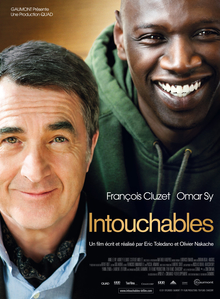
Quasi amici/Intouchables


"Quasi amici" (in originale "Intouchables") è un film francese del 2011 diretto da Olivier Nakache ed Éric Toledano.
Racconta il rapporto fra Philippe, ricchissimo tetraplegico, e Driss, il suo improbabile badante, assunto quasi per scherzo. Driss ha interessi diversissimi da quelli del suo datore di lavoro, si dimentica continuamente che è tetraplegico e fa battutacce sul suo handicap, ma proprio per questo, nonostante la preoccupazione di tutta la sua famiglia, è la ventata di aria fresca di cui Philippe aveva bisogno.
È un misto di dramma e commedia, pieno di gag improbabili sempre sull'orlo del politically scorrect e di tenerezza. Lo si può sospettare di volersi ingraziare lo spettatore con messaggi positivi sull'integrazione. Di sicuro vedendolo io ho pensato che i personaggi fossero un po' esagerati. Poi ho scoperto che è stato tratto da una storia vera, su cui è stato anche girato un documentario.

"Intouchables" is a 2011 French film directed by Olivier Nakache and Éric Toledano.
It's about the relationship between Philippe, a rich quadriplegic, and Driss, his unlikely caregiver, hired almost as a joke. Driss has very different interests from his employer, he constantly forgets that he is quadriplegic and jokes about his handicap, but exactly for this reasons, despite the concern of his whole family, he is the breath of fresh air that Philippe needed.
It is a mix of drama and comedy, full of unlikely gags always on the edge of political scorrectness and full of tenderness. You may suspect it of wanting to curry favor with the audience with positive messages about integration. When I watched it I thought the characters were a little exaggerated. Then I found out that it was based on a true story, which was also made into a documentary.

lunedì 15 giugno 2015

Cotto a puntino (Guillaume Long)/À boire et à manger

"Cotto a puntino: appunti per una cucina migliore" (in originale "À boire et à manger") è un libro di cucina a fumetti del 2012 di Guillaume Long, che raccoglie le vignette fatte dal fumettista e gastronomo per il blog del celebre giornale francese "Le Monde" (ecco il link al suo blog per chi mastica il francese: http://long.blog.lemonde.fr/)
E' lungo 137 pagine e in Italia è edito da Bao al prezzo di 15€.
Il libro è diviso in sezioni corrispondenti alle quattro stagioni, una cosa che ho molto apprezzato perché per me il cibo è intrinsecamente legato al periodo dell'anno in cui in genere viene preparato. Così abbiamo per esempio la fonduta al formaggio in inverno e l'insalata di pomodori in estate.
I capitoletti che compongono il volume sono tutti abbastanza corti, dalla striscia a poche pagine, e sono differenziati in base all'argomento grazie a dei simboli: ci sono ricette di tre diversi livelli di difficoltà, liste utili per chi vuole dedicarsi alla cucina (ho trovato favolosa in particolare quella delle verdure di stagione, visto che io non le so mai), recensioni di ristoranti, consigli di due diversi cuochi e una categoria che raccoglie quel che non rientra nelle precedenti.
In realtà ho trovato particolarmente affascinante un argomento non categorizzato, ovvero i diari di viaggio, che però si distinguono per una differente colorazione della carta e i disegni monocromatici. In questo volume vengono raccontate una settimana a Budapest e una a Venezia.
Ma la particolarità di questo libro non è solo parlare di cucina a fumetti, è soprattutto nell'approccio con cui Long ne parla, che è carico di ironia e secondo me è il punto forte del libro. Possiamo quindi vedere l'autore importunare un suo amico chef per avere consigli, esaltarsi di fronte ad un trita-aglio e sbavare di fronte ad un piatto prelibato (cosa che me lo ha fatto sentire vicino).
Invece i disegni sono estremamente espressivi ed efficaci, ma non sono particolarmente belli: basta guardare le mani in copertina (ma anche il cucchiaio o la lingua) per accorgersene.
Un altro punto importante da prendere in considerazione sono le ricette e i consigli di cucina: i consigli sono quasi tutti molto utili, e delle ricette la maggior parte sono effettivamente fattibili, mentre alcune mi hanno lasciato perplessa riguardo alla reperibilità degli ingredienti (ravanello nero? dente di leone?) e altre sull'effettivo sapore del risultato (anguria e feta? Davvero?). Poche mi hanno lasciato davvero la voglia di provarle.
Nonostante le perplessità che vi ho detto, è un libro che mi è piaciuto molto e che mi sento di consigliare agli amanti della gastronomia e dei fumetti (o anche solo della gastronomia, ma NON solo dei fumetti per via dell'argomento e dei disegni bruttini).

"À boire et à manger" (to eat and drink) is a 2012 comic cookbook by Guillaume Long, that collects the comics made by the cartoonist and gastronome for the blog of the famous French newspaper "Le Monde" (here is the link to his blog for people who know French http://long.blog.lemonde.fr/).
It was translated in italian, german and spanish, but, from what I know, not in English yet.
The book is divided into sections corresponding to the four seasons, one thing that I really appreciated because for me food is intrinsically linked to the time of year in which it is usually prepared. So, for exampl,e we have cheese fondue in winter and tomato salad in summer.
The chapters that make up the volume are all fairly short, from a strip to few pages, and are differentiated by topic through symbols: there are recipes with three different difficulty levels, useful lists for people who want to cook (I found really gret in particular the one about seasonal vegetables, because I never remember them), restaurant reviews, tips of two different chefs and a category that collects the stuff that is not within the previous ones.
Actually I found particularly fascinating a topic that isn't categorized, that of travel diaries, but they are recognizable by a different paper color and monochrome drawings. In this volume there are two about a week in Budapest and one in Venice.
But the peculiarity of this book is not just that it's a kitchen book made of comics, is mainly in Long's approach, which is full of irony and in my opinion is the strong point of the book. So we can see the author pestering his chef friend for advice, geting excited in front of a garlic mincer and drooling in front of a delicious dish (which made me feel close him).
Instead, the drawings are very expressive and effective, but are not particularly beautiful: you just have to look at the hands on the cover (and also at the spoon or the tongue) to notice it.
Another important point to consider are the recipes and cooking tips: the tips are almost all very helpful, and most of the recipes are actually feasible, while some left me puzzled about the availability of the ingredients (black radish? Dandelions?) and other on the actual flavor of the result (watermelon and feta? Really?). Few left me really wanting to try them.
Despite these concerns, it is a book that I loved and that I would recommend to lovers of gastronomy and comics (or even just of gastronomy, but NOT just of comics because of the subject and of the not so beautiful drawings).

venerdì 1 maggio 2015

Supercondriaco - Ridere fa bene alla salute/Supercondriaque

"Supercondriaco - Ridere fa bene alla salute" (Supercondriaque) è un film francese del 2014 scritto e diretto da Dany Boon, che recita anche la parte del protagonista.
Il protagonista è Romain Faubert, un quarantenne talmente ipocondriaco da causare problemi a tutti quelli che gli stanno intorno, compreso il suo medico, Dimitri, che decide di aiutarlo a trovarsi una ragazza, sperando che lo aiuti a risolvere i suoi problemi. Da lì parte una commedia degli equivoci con tanto di scambio di persona: infatti Roman per un caso scambia identità con Anton Miroslav, capo della rivoluzione contro una brutale dittatura in un paese dell'Europa dell'Est.
Ho trovato questo film davvero divertente e lo consiglio senz'altro!

"Supercondriaque" is a 2014 French film written and directed by Dany Boon, who also plays the part of the protagonist.
The protagonist is Romain Faubert, a forty year old so hypochondriac as to cause problems to all people around him, including his doctor, Dimitri, who decides to help him find a girlfriend, hoping she may help him solve his problems. From there starts a comedy of errors with even an identity mix-up: in fact Roman by chanche swap identities with Anton Miroslav, head of the revolution against a brutal dictatorship in an Eastern Europe country.
I found this film really funny and would definitely recommend it!

venerdì 13 febbraio 2015

Non sposate le mie figlie/Serial (Bad) Weddings

"Non sposate le mie figlie" (in originale "Qu'est-ce qu'on a fait au Bon Dieu"?) è un film comico francese del 2014 di Philippe de Chauveron.
Racconta di tre sorelle francesi che sposano uomini di origini straniere e di religioni ed etnie diverse, con grande costernazione dei genitori borghesi, cattolici e gollisti. I due ripongono le loro speranze nella quarta e ultima figlia, ma avranno una sorpresa...
Sono già stati girati tanti film che puntano sull'amore come mezzo di superamento dei conflitti identitari, ma di questo genere mi piacciono particolarmente quelli francesi, sia perché i francesi conoscono da vicino il problema (basti parlare delle banlieue), sia per il loro modo di affrontarlo ancora fortemente influenzato dagli ideali della Rivoluzione.
Il film gioca sul filo del plotically scorrect riuscendo nella creazione di una commedia vivace nonostante i cliché e allo stesso tempo rassicurante, girata e recitata benissimo.
Se proprio bisogna fare delle critiche, la commedia è strutturalmente simile ad altre dello stesso genere e non affronta problemi di dislivello sociale ed economico perché i "diversi" appartengono tutti ad una borghesia medio alta. Inoltre, due delle sorelle non sono quasi per niente caratterizzate.
Ma per quel che mi riguarda è voler cercare il pelo nell'uovo in un film che è una commedia di intrattenimento intelligente che più che fare riflettere sulla questione dell'integrazione vuole sdrammatizzarla. Io l'ho trovata davvero carina e divertente e la consiglio senz'altro ad un pubblico di tutte le età!

"Serial (Bad) Weddings" (in the original "Qu'est-ce qu'on fait au Bon Dieu"?) is a 2014 French comic film by Philippe de Chauveron.
It's about three french sisters who marry men of foreign origin and of different religions and ethnic groups, to the dismay of their bourgeois, catholic and gaullists parents. The two put their hopes in the fourth and last doughter, but they will have a surprise...
There are many movies that propose love as a means of overcoming identity conflicts but of this genre I like especially the french ones, both because the French know closely the problem (let's just mention the banlieue), and because they still face it with a strong influence of the ideals of the Revolution.
The film plays on the thin ice of the plotically scorrect succeeding despite the cliches in creating a comedy that is lively, and at the same time reassuring, very well filmed and acted.
If I really have to make critics, the comedy is structurally similar to others of the same kind and does not address social and economic problems because the "others" all belong to the middle class. In addition, two of the sisters are almost not characterized.
But in my opinion that is to nitpick a film that is a comedy of intelligent entertainment that more than making the audience think about the issue of integration wants to downplay it. I found it really nice and funny and I definitely recommend it to an audience of all ages!

giovedì 15 gennaio 2015

Poco raccomandabile/Mauvais Genre (Chloè Cruchaudet)

"Poco raccomandabile" è un fumetto di una delle più note autrici francesi della nuova leva, Chloè Cruchaudet. 
E' stato pubblicato nel 2013, ha vinto il “Prix du Public Cultura” all'importantissimo festival di Angouleme ed è stato definito miglior fumetto dell'anno dall'autorevole rivista Lire.
La trama prende spunto da "La garçonne et l’assassin. Histoire de Louise et de Paul, déserteur travesti, dans le Paris des années folles" di Fabrice Virgili, un resoconto storico sulla vicenda di Paul Grappe, caporale dell’esercito francese durante la prima guerra mondiale, che diserta e per sfuggire alla fucilazione si traveste da donna. All'inizio travestirsi serve a risolvere necessità pratiche come lasciare il suo rifugio o trovare un lavoro, ma poi anche se finisce la guerra l'amnistia non arriva, passano gli anni e Paul si trova sempre più calato nella sua nuova identità e nel potere che gli concede. L'idea del travestimento però non è stata di Paul, ma di sua moglie Louise, che è un personaggio importantissimo nell'opera e contribuisce in maniera fondamentale all'evoluzione del personaggio.
Raccontare la trama non è abbastanza per far capire di che tipo di fumetto si tratti, visto che a partire da queste premesse si può scrivere un dramma come una commedia. In questo caso direi che si tratta di un dramma psicologico, in quanto l'autrice si focalizza sui cambiamenti che si verificano nella psiche di Paul in seguito agli orrori della guerra, al suo travestimento e alle vicende che si trova di volta in volta ad affrontare. Paul si ritrova a rinnegare il nazionalismo e la guerra che permeano l'identità maschile francese nella sua epoca e poi addirittura il suo genere, arrivando ad una progressiva dissoluzione e ricostruzione della propria identità e di conseguenza del suo modo di relazionarsi con gli altri.
Lo stile di disegno è quello stilizzato ed espressivo tipico francese. con una palette cromatica su toni spenti (tranne qualche rosso molto espressivo) che rendono l'idea del vintage e quindi dell'ambientazione storica.
Ho trovato questo fumetto interessantissimo e molto ben realizzato perciò lo consiglio senz'altro, ma ci tengo anche ad avvertirvi che l'ho trovato molto più crudo di quanto mi aspettassi.
Non avrei scoperto "Poco raccomandabile" se non fosse stato per Acalia, che ne ha scritto un'ottima recensione sul suo blog, quindi ne approfitto per ringraziarla.

"Mauvais Genre" is a comic by one of the most famous French authors of the new generation, Chloe Cruchaudet.
It was published in 2013, it won the "Prix du Public Culture" at the important festival of Angouleme and it has been defined best comic of the year by the authoritative magazine Lire.
The plot was inspired by "The garçonne et l'assassin. Histoire et de Louise de Paul, déserteur transvestite, dans des années folles the Paris" by Fabrice Virgili, an historical account about the affair regarding Paul Grappe, corporal of the French army during the first World War, who deserted and to escape the shooting disguised himself as a woman. Earlier, his disguise served to solve practical needs like leaving his refuge or find a job, but then, even the war ended, amnesty didn't not come, the years passed and Paul got more and more immersed in his new identity and the power that it grants him. The idea of the disguise, however, was not Paul's, but of his wife Louise, who is an important character in the comic and contributes significantly to the evolution of the character.
To describe the plot is not enough to understand what kind of comics it is, because from these premises can spawn both a comedy and a drama. In this case I would say that it is a psychological drama, as the author focuses on the changes that occur in the psyche of Paul following the horrors of the war, his disguise and the events that he has to deal with from time to time. Paul finds himself renouncing the nationalism and war that permeate the French masculine identity of his time, and even then his biological sex, coming to a progressive dissolution and reconstruction of identity and consequently of his way of relating to others.
The drawing style is typically French, stylized and expressive. with a color palette of dull tones (except some very expressive red) that gives the idea of vintage and therefore of the historical setting.
I found this comic interesting and very well done so I would definitely recommend it, but I feel also I should warn you that I found it much cruder than I expected.
I would not have discovered "Mauvais Genre" if it were not for Acalia, who wrote a great review on her blog, so I take this opportunity to thank her.
Related Posts Plugin for WordPress, Blogger...