Visualizzazione post con etichetta depressione. Mostra tutti i post

giovedì 21 dicembre 2017

Ricordi/Memories

 Di recente ho avuto un po' di cose di mia nonna (per la serie vintage autentico). Ho preso un cappotto carinissimo e un impermeabile giallino (che non so come lavare, consigli?).

I recently got some of my grandma's stuff (for the series authentic vintage). I took a cute coat and a yellow raincoat (which I do not know how to wash, have you got some piece of advice?).

Ho preso anche una giacca che mi ricordava un po' lo stile Chanel di una volta.

I also took a jacket that reminded me a bit of the old Chanel style.

Il colpo migliore sono stati i maglioni, che, oltre a essere molto carini, sono di ottime fibre, tre 100% lana e uno di cachemire.

The best thing were the sweaters, which, besides being very nice, are made of excellent fibers, three 100% wool and a cashmere one.

Ho avuto anche tantissime camicie, tutte bianche, ma con colletti particolari, bei bottoni o ricami (ce n'è perfino una a righine con un ricamo a paperelle sul davanti).

I also got a lot of shirts, all white, but with nice collars, pretty buttons or embroidery (there's even a striped one with ducks embroidery on the front).

La cosa che mi è piaciuta di più è stata una maglietta di Fiorucci della serie "Il Piccolo Principe".

The thing I liked the most was a Fiorucci t-shirt of the "The Little Prince" series.

Ho anche avuto una gonna che mi va un po' stretta, ma è di velluto con un bel motivo a uva e foglie.

I also got a skirt that is a little tight, but it is made of velvet with a nice pattern of grapes and leaves.

Non vado matta per i mocassini, ma ho finito per prendere anche questi.

I'm not a fan of moccasins, but I ended up taking these too.

Ho scelto due borse, una tote ricamata ad orsetti e una in pelle scamosciata marrone.

I chose two bags, a tote embroidered with teddy bears and a brown suede one.

Ho avuto due spille d'ambra, un portamonete luccicante e due foulard in seta pacchiani, uno con la Tour Eiffel e uno a motivi africaneggianti.

I got two amber brooches, a shimmering purse and two flashy silk scarves, one with the Eiffel Tower and one with African-style motifs.

Per la prima volta sono entrata in possesso di un profumo firmato, "Dolce Vita" di Dior, e ho voluto anche un libro fantasy che mi aveva prestato tanto tempo fa.

For the first time I came into possession of a brand perfume, "Dolce Vita" by Dior, and I also wanted a fantasy book that my granny lent me a long time ago.

Ho anche avuto una lampada da tavolo arancione bellissima che ricorda un po' il simbolo della Pixar.

I also got a beautiful orange table lamp that is somewhat similar to the Pixar's symbol.

venerdì 26 maggio 2017

L'altro volto della speranza/The other side of the hope

http://pad.mymovies.it/filmclub/2016/07/097/locandinapg1.jpg
"L'altro volto della speranza" (Toivon tuolla puolen) è un film del 2016 del regista finlandese Aki Kaurismaki, famoso per i suoi film impegnati dedicati agli emarginati del mondo. Ho visto questo film perché mi era piaciuto molto "Miracolo a Le Havre", il primo film del regista a trattare il tema dei migranti.
"L'altro volto della speranza" segue le storie di due uomini: Khaled, un siriano appena giunto ad Helsinki dove ha presentato una domanda di asilo e Wilkström, un commesso viaggiatore che vende cravatte e camicie da uomo, che ha appena lasciato la moglie e sogna di aprire un ristorante. Le loro strade si incroceranno.
Il film è girato in maniera magistrale: alcune inquadrature sembrano quadri di Hopper e ci sono silenzi che valgono più di mille parole e piccoli tocchi da maestro (come il chitarrista con i bottoni a forma di chitarra).
La recitazione è ottima. Le musiche, tutte affidate a gruppi live, sono eccezionali, mi è venuta voglia di recuperare la colonna sonora.
In generale è un film molto triste (senza mai scadere nel patetico), ma ci sono dei momenti davvero esilaranti.
L'unica cosa che non mi ha convinto del tutto è il finale che lascia molto, forse troppo in sospeso.

"The Other Face of Hope" (Toivon tuolla puolen) is a 2016 film by the Finnish filmmaker Aki Kaurismaki, famous for his films dedicated to marginalized people. I watched this movie because I loved "Le Havre", the first movie of the director to deal with the issue of migrants.
"The Other Face of Hope" follows the stories of two men: Khaled, a Syrian man who just came to Helsinki where he filed an asylum application and Wilkström, a traveling salesman selling men's ties and shirts, who just left his wife and dreams of opening a restaurant. Their roads will cross.
The film is shot masterfully: some frames look like Hopper's paintings and there are silences worth more than a thousand words and awesome little touches (like a guitar player with guitar-shaped buttons).
The acting is great. The music, all entrusted to live bands, is exceptional, I'm keen to recover the soundtrack.
In general, it's a very sad movie (without ever going into the pathetic), but there are really hilarious moments.
The only thing I did not completely appreciate is the ending that leaves a lot, perhaps too much ,unconcluded.

mercoledì 8 febbraio 2017

Lanterne Rosse/Raise the Red Lantern

Lanterne rosse (大红灯笼高高挂) è un film del 1991 diretto da Zhāng Yìmóu. E' stato sceneggiato da Ni Zhen adattando il romanzo del 1990 "Mogli e concubine" di Su Tong.
Il film è ambientato a Pingyao, nella Cina del Nord, nel 1920.
La protagonista è Songlian, una diciannovenne che lascia l'università per sposare un uomo ricco, di mezza età e con già  tre mogli: Yuru, invecchiata e rigida, Zhuoyun, sempre sorridente e Meishan, un'ex cantante di successo.
Nella casa dell'uomo si seguono tradizioni antichissime. Per le mogli la più importante è quella dell'accensione delle lanterne rosse davanti alla stanza di colei con cui il marito vuole passare la notte, cosa che dà alla prescelta speciali privilegi come un massaggio ai piedi e il diritto a scegliere il pasto del giorno successivo. Nel piccolo mondo chiuso del palazzo di famiglia quei piccoli vantaggi diventano un'ossessione che spinge le mogli a sabotarsi a vicenda, sia apertamente sia in modi più sottili. Presto anche Songlian entra nel gioco delle lanterne.
Avevo già apprezzato il famoso regista in" Hero" (2002), "La foresta dei pugnali volanti" (2004) e soprattutto ne "La città proibita" (2006). Tutti questi film sono accomunati dalla splendida fotografia e dall'interesse verso la storia della Cina, caratteristiche che si ritrovano anche in "Lanterne Rosse". Pingyao è una città splendida con un centro ricco di edifici tradizionali, e, sotto la regia di Zhāng Yìmóu, si trasforma in un luogo magico e misterioso, immutabile, ma che al tempo stesso cambia con il trascorrere delle stagioni e la luce delle lanterne rosse, creando delle immagini splendide.
A differenza degli altri tre film che ho nominato, però, questo non è un wuxia, ovvero un film che si concentra su eroi della tradizione che combattono l'ingiustizia a forza di arti marziali (spesso e volentieri volando), anche se il dramma e le trame tessute in un ambiente chiuso e scandito da un rigido cerimoniale mi hanno ricordato molto "La città proibita". "Lanterne Rosse" è un film ambientato in un universo femminile, carico di una violenza molto più sottile, dove gli uomini sono il motore di tutte le vicende, ma vengono a stento inquadrati. Il tono è realistico e drammatico.
Anche la recitazione degli attori è splendida, in particolare quella di Gong Li, attrice feticcio di  Zhāng Yìmóu, che dà vita ad un'eroina ambigua che non si riesce ad amare od odiare del tutto.
Ho apprezzato moltissimo anche le musiche, ad eccezione del canto tradizionale cinese che proprio non è nelle mie corde.
Insomma, dopo averlo visto posso dichiarare che "Lanterne rosse" è uno di quei film famosi per un'ottima ragione. Non è per tutti, ma è senza dubbio stupendo e va visto almeno una volta.

"Raise the Red Lantern" (大红 灯笼 高 高挂) is a 1991 film directed by Zhang Yimou. It was written by Ni Zhen adapting the 1990 novel "Wives and Concubines" by Su Tong.
The film is set in Pingyao in the North of China, in 1920.
The protagonist is Songlian, a nineteen year old girl who leaves the university to marry a rich man, who is middle-aged and already has three wives: Yuru, aged and stiff, Zhuoyun, always smiling and Meishan, a former successful singer.
The life in his house is governed by ancient traditions. For the wives the most important is the lightning of red lanterns in front of the room of the woman with whom her husband wants to spend the night, which gives special privileges to chosen one as a foot massage and the right to choose the meal of the day . In the small closed world of the family palace those little advantages become an obsession that drives the wives to sabotage each other, both openly and in more subtle ways. Soon Songlian enters the lanterns game.
I already loved the famous film director in "Hero" (2002), "House of Flying Daggers" (2004) and especially in "The Forbidden City" (2006). All these films are united by the splendid photography and the interest towards the history of China, features that are also found in "Raise the Red Lantern". Pingyao is a beautiful city with a center rich of traditional buildings, and, under the direction of Zhang Yimou, is transformed into a magical and mysterious place, eternal, but at the same time changing with the seasons and the light of red lanterns, creating beautiful images.
Unlike the other three films I mentioned, however, this is not a wuxia, or a movie that focuses on traditional heroes who fight injustice by force of martial arts (often flying), although the drama and the plots woven in a closed space governed by a rigid ceremonial reminded me a lot of "The Forbidden City". "Raise the Red Lantern" is a film set in a female universe, full of a lot subtler violence, where men are the engine of all the events, but are barely framed. The tone is realistic and dramatic.
Even the acting is splendid, especially that of Gong Li, the fetish actress of Zhang Yimou, who creates ab ambiguous heroine that you can not fully love or hate.
I also liked very much the music, except for the traditional Chinese singing that is just not my cup of tea.
In short, after watching it, I can declare that "Raise the Red Lantern" is one of those movies that are famous for a good reason. It is not for everyone, but it is undoubtedly stunning and that should be watched at least once.

giovedì 29 dicembre 2016

Orange is the new black - season 4

Orange is the new Black.png
"Orange is the new black", è una serie televisiva U.S.A. che a me piace moltissimo, tratta dalle memorie di Piper Kerman "Orange Is the New Black: My Year in a Women's Prison". Trovate la mia recensione della prima serie qui, quella della seconda qui e quella della terza qui.
Anche la quarta stagione è composta da 13 episodi di lunghezza compresa fra i 50 e i 76 minuti, più un'ultima puntata da 90 minuti.
Fortunatamente la protagonista, dopo il radicale cambiamento della terza stagione, ritorna più coerente con il suo carattere iniziale.
Come la stagione precedente, anche questa dà più spazio ai comprimari.
Il livello si mantiene molto alto, fra azione, amore, colpi di scena, personaggi profondamente umani e in continua evoluzione e soprattutto la combinazione di comicità e dramma che è la caratteristica peculiare di questo telefilm (anche se oserei dire che questa stagione è più sbilanciata verso il dramma). La quarta stagione è piena di scene emotivamente molto forti e di pugni nello stomaco. In puro stile "Il trono di spade" uno dei miei personaggi preferiti è stato ucciso e anche questa serie si è conclusa con la combinazione fra un colpo di scena e un finale aperto.
Non vedo l'ora di vedere la quinta, ma allo stesso tempo mi chiedo quante stagioni si possano ancora fare per raccontare un singolo anno in prigione. Visto che pare che ce ne saranno almeno 7, spero che coprano anche parte della vita di Piper (e magari di qualcuna delle altre detenute) dopo il rilascio, perché è un argomento che mi interesserebbe molto.

"Orange is the new black", is an U.S.A. television series that I love. It is an adaptation of the memoirs of Piper Kerman "Orange Is the New Black: My Year in a Women's Prison". You can find my review of the first series here, of the second here and of the third here.
As the previous ones, the fourth season consists of 13 episodes between 50 and 60 minutes, plus a final 90 minutes episode.

Luckily, the main character, after the radical change of the third season, returns more consistent with her initial personality.
Like the previous season, the fourth gives more space to the supporting characters.
The level remains very high, between action, love, twists, deeply human and constantly evolving characters and especially the combination of comedy and drama that is the special feature of this show (although I dare to say that this season is more biased towards the drama). The fourth season is full of emotionally powerful and gut-wrenching scenes. In true "The game of thrones" style one of my favorite characters was killed and this series ended with the combination of a plot twist and an open ending.

I can not wait to see the fifth, but at the same time I wonder how many seasons can still be made to tell about a single year in prison. Since it seems that there will be at least 7, I hope they will also cover part of Piper's life after her release (and maybe the lives of some of the other prisoners too), because it is a topic that would interest me a lot.

lunedì 14 novembre 2016

In guerra per amore

http://mr.comingsoon.it/imgdb/locandine/big/52649.jpg
"In guerra per amore" è un film italiano del 2016 diretto, sceneggiato e interpretato da Pif, nome d'arte di Pierfrancesco Diliberto. Si tratta del secondo film dell'autore dopo l'esordio nel 2013 con "La mafia uccide solo d'estate".
Si tratta di una commedia con sfumature tragiche, ambientata fra U.S.A. e Sicilia durante la seconda guerra mondiale.
1943. Arturo Giammaresi è uno spiantato cameriere italoamericano che ama riamato Flora, la nipote del suo datore di lavoro. Flora però è promessa a Carmelo, figlio di un boss mafioso. Per aggirare le proteste dello zio e del boss, Flora manda Arturo a chiedere la sua mano a suo padre, in Sicilia (che sarà mai, c'è solo in corso la seconda guerra mondiale!).
Alla storia di Arturo si intrecciano anche quelle di una coppia formata da un cieco e uno zoppo, di un coraggioso tenente italoamericano, di una famigliola siciliana composta da un nonno fascista, suo nipote e sua nuora, e di un asino volante, sullo sfondo delle vicende della guerra.
Dietro alla facciata della commedia romantica, il vero tema del film è quello delle responsabilità statunitensi e di Democrazia Cristiana rispetto al riaffermarsi del potere mafioso durante e dopo il conflitto.
Negli anni ho perso fiducia verso il cinema italiano del mio tempo, mal recitato e con trame spesso banali, quindi mi sono avvicinata a questo film con un po' di timore. E invece ho trovato una storia divertente e a tratti commovente, mai scontata e con un messaggio estremamente valido.
Perfino l'uso del dialetto, usato spesso per nascondere una cattiva dizione, è funzionale alla trama.
Questo film mi è piaciuto tantissimo e lo consiglio senz'altro. A questo punto urge il recupero di "La mafia uccide solo d'estate".

"In guerra per amore" (To war for the sake of love) it is a 2016 italian film directed, written and starring Pif, stage name of Pierfrancesco Diliberto. This is the second film after the author's debut of 2013 with "La mafia uccide solo d'estate" (The Mafia Kills Only in Summer).
It is a comedy with tragic tones, set between the U.S.A. and Sicily during the Second World War.
1943. Arturo Giammaresi is a penniless Italian-American waiter who loves Flora, the niece of his employer, and is loved by her in return. But Flora is promised to Carmelo, the son of a mafia boss. To bypass her uncle and the boss's demands, Flora sends Arturo to ask her hand to her father, in Sicily (what's the problem, there is only second world war going on!).
Arturo story interwines with those of a couple formed by a blind and a lame man, a brave Italian-American Lieutenant, a Sicilian family consisting of a fascist grandfather, his grandson and his daughter in law, and a flying donkey, on the backdrop of the events of the war.
Behind the romantic comedy facade, the real theme of the film is that of US responsibility in reasserting the mafia during and after the conflict.
Over the years I had lost confidence in the Italian cinema of my time, badly acted and with often trivial plots, so I approached this movie with a bit of fear. But I found a funny and at times moving story, never predictable and with a very important message.
Even the use of dialect, often used in modern italian films to hide a bad diction, is functional to the plot.
I loved this film and I definitely recommend it. At this point I also want to watch "The Mafia Kills Only in Summer".

martedì 5 gennaio 2016

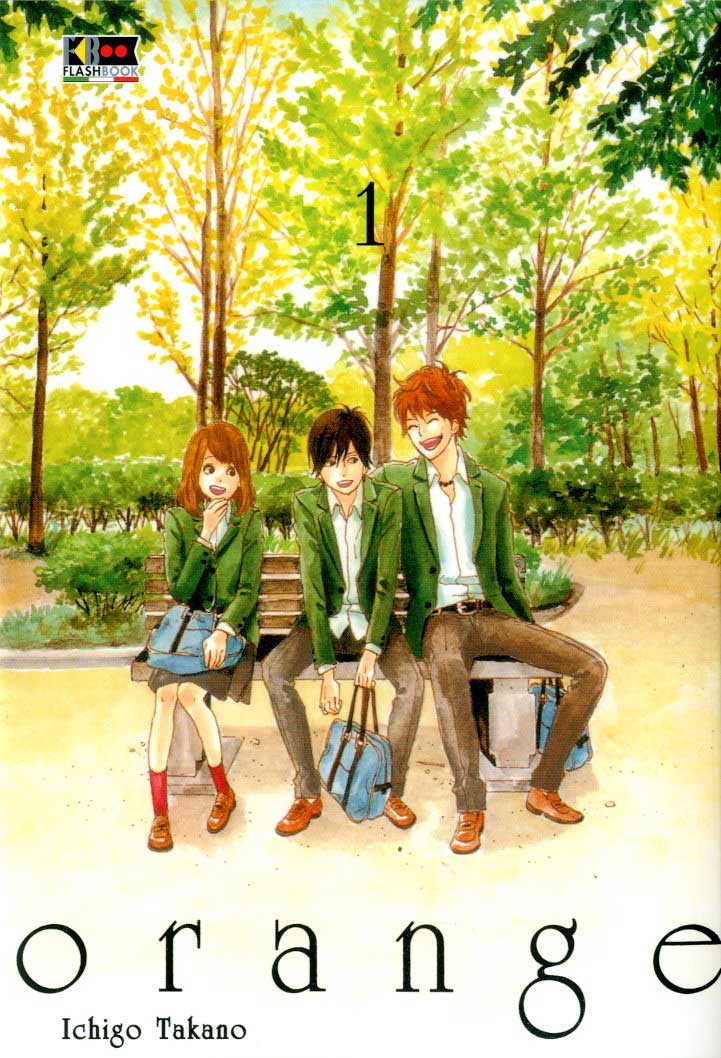
Orange (Ichigo Takano)


"Orange" è un manga di Ichigo Takano edito dal 2012 su Bessatsu Margaret e poi, dopo un'interruzione di più di un anno (l'autrice voleva abbandonare la carriera di fumettista), su Futabasha dal 2014 al 2015. E' stato raccolto in cinque volumetti. In madrepatria ha riscosso un discreto successo e nel 2015 ne è stato tratto un film live action.
Naho, la liceale diciassettenne protagonista di questo manga, riceve una lettera dalla sé stessa di dieci anni nel futuro. La lettera descrive perfettamente gli avvenimenti della giornata prima che avvengano, fra cui il trasferimento nella classe di Naho di un nuovo studente, Kakeru, e prega la ragazza di seguire i suoi consigli per evitare di avere rimpianti in seguito, ma soprattutto per salvare Kakeru, che nel futuro da cui viene la lettera sarà morto.
La storia è molto coinvolgente a causa del mistero della lettera e della corsa contro il tempo per salvare Kakeru, che la trasforma quasi in un thriller. Per il resto è un classico shojo scolastico e anzi, le parti romantiche sono di un'ingenuità quasi imbarazzante tenendo conto dell'età dei protagonisti.
Per l'espediente della lettera Takano tenta una spiegazione scientificamente plausibile, cosa che ho apprezzato molto visto che spesso i fumetti giapponesi lasciano senza spiegazione (o con spiegazioni campate per aria) anche elementi molto rilevanti per la trama.
Naho, Takeru e Suwa, il migliore amico di Naho, sono personaggi a tutto tondo, dotati di spessore e umanità, mentre gli altri tre membri del gruppetto sono poco approfonditi.
I disegni sono interessanti, i personaggi hanno corpi molto magri, piedi piccoli e tratti del volto più realistici della media dei manga (realismo che in alcuni casi diventa uno svantaggio, visto che alcune espressioni risultano poco convincenti). Gli sfondi sono pochi e abbastanza generici, ma nel contesto funzionano bene. In generale è uno stile abbastanza sobrio, in linea con l'atmosfera del manga.
In generale mi è piaciuto molto, ho trovato la storia originale e coinvolgente. Ha dei difetti, ma, dato il numero di volumi limitato, è stato fatto comunque un ottimo lavoro. Peraltro pur essendo uno shojo con situazioni di forte impatto emotivo, non punta sulla lacrima a tutti i costi, cosa che ho apprezzato. Lo consiglio senz'altro!
Ringrazio Claire che mi ha invogliato a leggerlo classificandolo come suo manga preferito del 2015.

"Orange" is a manga by Ichigo Takano published from 2012 on Bessatsu Margaret and then, after a break of more than a year (the author wanted to abandon her career as a comic artist), on Futabasha from 2014 to 2015. It been collected in five volumes. In its motherland it was quite a success and in 2015 it was made into a live action film.
Naho, the seventeen year old high school girl protagonist of this manga, receives a letter from herself ten years into the future. The letter describes perfectly the day's events before they occur, including the transfer of a new student, Kakeru, in Naho's class and pray the girl to follow its advices to avoid having regrets later on, but also to save Kakeru, that in the future in which is the letter was written will be dead.
The story is very engaging because of the mystery of the letter and the race against time to save Kakeru, that becomes almost a thriller. The rest is a classic scholastic shojo and indeed, the romantic parts are almost embarrassingly naive, considering the age of the protagonists.
Takano tries a scientifically plausible explanation for the letter, which I liked as often Japanese comics leave plot devices, also relevant ones, without explanation (or give airy-fairy explanations).
Naho, Takeru and Suwa, Naho's best friend, are well-rounded characters, with depth and humanity, while the other three members of the group remain a bit flat.
The drawings are interesting, the characters have very thin bodies, small feet, and facial features that are more realistic than in the average manga (this realism in some cases it becomes a disadvantage, as some expressions are not very convincing). There are few and fairly generic backgrounds, but in the context of work well. In general it is a quite sober style, fit for the atmosphere of the manga.
Overall I really enjoyed it, I found the story original and engaging. It has flaws, but given the limited number of volumes, was done a great job anyway. However, despite being a shojo with situations with strong emotional impact, it doesn't want to make the reader cry at all costs, which I liked. I would definitely recommend it!
Thanks Claire who enticed me to read this manga classifying it as her favorite 2015 manga.

mercoledì 2 dicembre 2015

Orange is the new black - season 3


Adoro "Orange is the new black", la serie televisiva U.S.A. tratta dalle memorie di Piper Kerman "Orange Is the New Black: My Year in a Women's Prison". Trovate mia recensione della prima serie qui e quella della seconda qui.
Ovviamente non potevo farmi scappare la terza. E' sempre composta da 13 episodi di lunghezza compresa fra i 50 e i 60 minuti, più un'ultima puntata da 90 minuti.
Il livello si mantiene altissimo. C'è azione, c'è amore, ci sono infiniti colpi di scena, ma soprattutto c'è la combinazione di comicità e dramma che rende così speciale questo telefilm insieme ai personaggi così profondamente umani e in continua evoluzione.
Rispetto alle prime due serie la protagonista continua la sua evoluzione, ma questa terza serie dà più spazio ai comprimari con ottimi risultati. La mia unica rimostranza è che ho dovuto dire addio alla mia coppia preferita.
Come sempre l'ultimo episodio è esplosivo, pieno di colpi di scena, commovente e terribile allo stesso tempo. Purtroppo o per fortuna anche questa volta si tratta di un finale aperto, non vedo già l'ora di vedere la quarta stagione.

I love "Orange is the new black", the USA television series that is an adaptation of the memoirs of Piper Kerman "Orange Is the New Black: My Year in a Women's Prison". You can find my review of the first series here and of the second here.
Of course I could not miss the third. It consists of 13 episodes between 50 and 60 minutes, plus a final 90 minutes episode.
The level remains really high. There is action, there is love, there are endless twists, but above all there is the combination of comedy and drama that makes this show so special together with the so deeply human and ever evolving characters.
Compared to the first two series the protagonist continues her evolution, but this third series gives more space to the other characters with great results. My only complaint is that I had to say goodbye to my favorite couple.

As always, the latest episode is explosive, full of surprises, moving and terrible at the same time. Unfortunately or fortunately it is still an open ending, I already look forward to watching the fourth season.

martedì 20 ottobre 2015

Not Totoro shoes: tale of a shoe printing failure

Durante il mio viaggio in Giappone all'inizio di Settembre, sono stata al Museo Ghibli, dove ho comprato ad un prezzo esagerato dei timbrini di Totoro con l'idea di usarli per srampare delle scarpe di tela che avevo comprato a poco prezzo quest'estate.
Ho iniziato a stampare le scarpe con troppo entusiasmo, senza aver fatto abbastanza prove. Forse i timbri erano troppo piccoli, forse ho usato un inchiostro troppo denso o forse è stata colpa della superficie delle scarpe, fatto sta che le stampe sono venute malissimo. Per fortuna avevo iniziato a dalla parte interna che si vede meno, quindi ho deciso di interrompere poco dopo.

During my trip to Japan at the beginning of September, I went to Ghibli Museum, which I bought really expensive little Totoro stamps with the idea of ​​using them to print a pair of canvas shoes I had bought for cheap this summer.
I started to print the shoes with too much enthusiasm, without enough testing. Perhaps the stamps were too small, perhaps I used an ink that was too thick or perhaps the fault was of the surface of the shoes, the fact is that the print came out badly. Luckily I had started printing from the inside part that is less noticeable, so I decided to stop shortly after.

Già che avevo iniziato a stampare, però, ho deciso di portare a termine il lavoro con dei timbri fatti da me, un fungo e una ghianda sulla parte anteriore e uno scoiattolo sul lato esterno.
Dopodiché ho imbottito le scarpe di carta di giornale e ho stirato la parte in stoffa facendo molta attenzione a non sciogliere la plastica con il calore del ferro.
Non sono proprio le scarpe che volevo, ma in fin dei conti sono carine lo stesso.

I already started printing, however, so I decided to finish the job with the stamps I made, a fungus and an acorn on the front and a squirrel on the outside part.
Then I filled the shoes with balled newspapers and I ironed the fabric, making sure not to melt the plastic with the heat of the iron.
They aren't the shoes I wanted, but in the end they are cute anyway.

venerdì 9 ottobre 2015

ll mio Settembre via Instagram/My September via Instagram

Vi dico la verità, mi ero dimenticata di questa rubrica, ma anche se è tardi ci tengo a farla lo stesso perché è un modo di fare il punto del mese.
L'evento più rilevante di questo Settembre è sicuramente stato il mio tanto agognato viaggio in Giappone (trovate la mia valigia, il mio programma, le mie avventure e il mio diario di viaggio disegnato seguendo il tag Giappone 2015).

To tell the truth, I forgot about this column, but even if it's late I want to do it anyway because it is a way to make the point of the month.
The most important event of this September was definitely my coveted trip to Japan (you can find my suitcase, my program, my adventures and my illustrated travel journal by following the tag Giappone 2015).

Sono tornata che era metà Settembre. Già ero in depressione da rientro dalle vacanze, ripresa del lavoro, ripresa della dieta, e divieto di shopping autoimposto per un mese, poi la pioggia e il brutto tempo non hanno aiutato. Per fortuna il freddo è arrivato solo a Ottobre. Mi sono consolata con tante tisane calde e indossando gli acquisti fatti in Giappone.

I came back that it was mid-September. I was already depressed because of the return from vacation, the return to work, the new start of my diet, and a self-imposedone  month shopping ban, and the rain and bad weather did not help. Fortunately, the cold come only in October. I tried to lift my mood with many herbal teas and wearing the purchases I made in Japan.

Per fortuna sono riuscita anche a fare una bellissima gita all'abbazia di Morimondo, vicino a Milano.
Ne avevo in programma un'altra per il weekend dopo, ma è saltata per pioggia.

Luckily I also managed to make a beautiful trip to Morimondo abbey, near Milan.
I planned another trip for the weekend after, but we had to cancel it for rain.

Con il brutto tempo però è tornata anche la mia creatività, che quest'estate era andata in vacanza.

With bad weather, however, returned my creativity, which this summer had gone on holyday.

Il punto dolente del mese è stata la dieta: ormai sono a dieta da tre mesi (esclusa la pausa del Giappone), ma dopo il primo chilo non ho perso più niente, anche perché quando esco con gli amici non mi va di fare la rompiscatole e finisco per sgarrare. Devo assolutamente rimettermi in forma entro Dicembre in modo da mangiare come un maiale ai vari cenoni! Questo è lo spirito giusto!

The sore point of the month was my diet: I've been on a diet for three months (excluding the Japan break), but after the first kg I haven't lost anything, also because when I go out with friends I don't want to be a nuisance and I end up eating things I can't. I really have to get back in shape by December so that I can eat like a pig at the various Xmas dinners! This is the right spirit!

mercoledì 7 ottobre 2015

Wonder Rocket e il declino del mori/Wonder Rocket and the downfall of mori

Mi sono lamentata della mia visita a Wonder Rocket durante il viaggio in Giappone dicendo che avevo grandi aspettative, ma nono rimasta delusa.
Ma qual è stato il mio problema? Ve lo mostro con qualche foto della collezione autunnale: semplicemente non è più una marca mori. Alcuni capi sono carini e particolari, ma potremmo vederli in un qualsiasi negozio giapponese. Wonder Rocket sembra essersi fuso con la sua sottomarca più attenta alle tendenze Momo e avere perso la propria individualità nel processo. Le due marche non sembrano essere più separate nemmeno sul sito. Vedremo se WR riuscirà a sopravvivere vendendo la stessa merce di tutti gli altri negozi (peraltro a prezzi non bassissimi) o se sarà costretto a chiudere o a darsi un'identità più particolare.
In ogni caso fa tutto parte del processo di declino del mori che sta inevitabilmente portando alla sua scomparsa, se non come moda di nicchia seguita da poche persone in tutto il mondo. In questo processo ho trovato estremamente significativa la chiusura dei maggiori blog mori in inglese e, come dice Rhiannon, la scomparsa di praticamente tutte le riviste mori, il cambio di stile o il trasferimento in internet dei negozi che vendevano abbigliamento mori.

I complained about my visit to Wonder Rocket during my travel in Japan, saying that I had high expectations, but I was disappointed.

But what was my problem? I'll show you it with some pictures of the fall collection: it is simply no longer a mori brand. Some piece of clothing are nice, but we could see them in any Japanese store. Wonder Rocket seems to have merged with its trendier sub-brand Momo and to have lost its individuality in the process. The two brands do not appear to be separated anymore even on the site. We'll see if WR will survive by selling the same goods as all the other stores (at prices that aren't super cheap), or if it will be forced to close or to give itself a specific identity again.
In any case, it's all part of the downfall of mori girl that is inevitably leading to his death, if not as niche trend followed by few people in the world. In this process I found extremely significant the shutting down of the biggest mori blogs in english and, as Rhiannon says, the disappearance of almost all mori magazines, the change of style or the transformation in online only shops of most shops selling mori clothing.


ワイン

giovedì 3 settembre 2015

La storia della principessa splendente/The Tale of the Princess Kaguya

"La storia della principessa splendente" (in originale "Kaguya-hime no monogatari") è un film animato del 2013 diretto da Isao Takahata (famoso soprattutto per "Una tomba per le lucciole").
Si basa sul "Taketori Monogatari" (racconto di un tagliabambù), un racconto giapponese risalente al X secolo e considerato uno dei primi, se non il primo, esempi di narrativa nipponica.
Io ne avevo dovuta tradurre una versione più moderna durante il corso di giapponese all'università e quindi conoscevo già la storia. Proprio per questo, dopo avere perso la breve uscita del film nei cinema italiani, ne avevo rimandato la visione per molto tempo. Mi sono decisa a vederlo solo in vista del mio viaggio in Giappone. Infatti si tratta di una storia molto triste.
Un povero e vecchio tagliabambù trova una minuscola bambina luminosa all'interno di un tronco di bambù e decide di allevarla come propria insieme alla moglie. Ma, nonostante l'amore dei genitori adottivi, la bambina non è un essere di questo mondo.
Ho trovato la storia piuttosto fedele all'originale nonostante le aggiunte, che però erano necessarie visto che il "Taketori Monogatari" è molto corto. Senza stravolgere l'originale, viene data grande rilevanza al desiderio di libertà della protagonista, intrappolata dalle convenzioni sociali e dalle regole di genere, cosa che mi è piaciuta molto.
I personaggi riescono ad essere credibili e approfonditi, cosa non scontata dato il tipo di storia.
Secondo me, oltre ad essere molto bene fatto, è un film molto interessante sia per il suo essere una trasposizione di un racconto così antico, sia per la descrizione di vita e costumi del periodo Heian (794-1185). Anche in questo caso il doppiaggio italiano usa un linguaggio antiquato, ma per un'opera tratta da un racconto di più di mille anni fa, per una volta, mi è parso assolutamente appropriato.
Il character design purtroppo non mi ha entusiasmato come speravo (anche se la domestica bassa e rotonda con la faccia furbetta è stupenda), ma ho trovato particolarmente bella l'animazione e geniali i disegni che simulano la pennellata a china su carta e che, nelle numerose descrizioni della natura e delle stagioni, riprendono l'arte classica giapponese.

File:Kaguya-hime no Monogatari.png
"The Tale of the Princess Kaguya" (in the original "Kaguya-hime no Monogatari") is a 2013 animated film directed by Isao Takahata (famous in particular for "Grave of the Fireflies").
It is based on "Taketori Monogatari" (The Tale of the Bamboo Cutter), a Japanese tale dating from the tenth century and considered one of the first, if not the first, example of Japanese fiction.
I had to translate a more modern version during the Japanese class at the university so I already knew the story. For this reason, after losing the short film's release in Italian theaters, I postponed the vision for a long time. I decided to watch it only in view of my trip to Japan. In fact it is a very sad story.
A poor and old bamboo cutter finds a tiny little bright child inside a bamboo trunk and decides to raise her as his own with his wife. But, despite the love of her adoptive parents, the child is not a being of this world.
I found the story quite faithful to the original despite the additions, but they were necessary because the "The Tale of the Bamboo Cutter" is very short. Without changing the original, it gives great importance to the desire of freedom of the protagonist, trapped by social conventions and gender rules, and I really appreciated it.
The characters manage to be credible and deep, that is not obvious given the kind of story.
In my opinion, in addition to being very well done, it is a very interesting movie because it is a transposition of a really old story, and because of the description of the life and customs of the Heian period (794-1185).
Unfortunately I was not impressed as I hoped by the character design (although short and plump servant with the mischievous face is great), but I found the animation particularly beautiful and drawing that mimic the brush in ink on paper brilliant and I liked that, in many descriptions of nature and the seasons, they reproduce classical Japanese art.

giovedì 25 dicembre 2014

Natali neri e altre storie di guerra (Fabio Visintin)

Natali neri e altre storie di guerra è un libro a fumetti pubblicato da Comicout nel novembre 2014 che raccoglie 9 racconti del celeberrimo illustratore e fumettista (e tanto altro) veneziano Fabio Visintin. Di questi otto sono usciti sulla rivista a fumetti Animais, chiusa nel 2011 al numero 25 e il nono, quello che dà il nome alla raccolta, è inedito. Questo è quanto recita la quarta di copertina:
Viviamo tempi di guerre. Anche quando non ce ne accorgiamo o pensiamo siano lontane. Dall'inizio del mondo fino a oggi. Guerre ufficiali, come la I o la II Guerra Mondiale, o battaglie culturali (San Francesco incontrò il Grande Saladino, non stava solo a predicare gli uccelli). La Guerra e il corpo delle donne, si intitola una delle graphic novel di questo volume, che raccontano la guerra e la lotta anche nel quotidiano, nelle zone di confine, magari la notte di Natale, o sulla barca di un pescatore per diporto. I racconti qui pubblicati, cui si aggiunge un inedito che dà il titolo al libro, sono usciti sulla rivista "Animais".
 I fumetti della raccolta sono piccole storie tristi di guerre di tutti i tipi, nel presente e nel passato, con le pallottole o culturali. Visto che contengono morte, stupri e violenze di ogni tipo, specifico subito che sono destinati ad un pubblico adulto.
La narrazione è perfetta: si entra nelle situazioni senza lunghe e fastidiose didascalie di spiegazione e ogni racconto, per quanto corto, è una storia compiuta con un inizio, uno svolgimento e una fine e soprattutto con una ricchezza di significato incredibile rispetto alla lunghezza, grazie anche alle stratificazioni create da citazioni che accompagnano la storia (di cui anche le più colte sono rese accessibili ad un pubblico di tutti i generi), dall'uso del metafumetto (il fumetto nel fumetto) e così via. In un paio di occasioni non mi ha del tutto convinto l'uso dell'autore come personaggio che crea la storia dialogando con il diavolo de Il Maestro e Margherita, ma il libro è senz'altro di altissimo livello.
Oltre ad avere un'ottima narrazione e una grandissima profondità, questi racconti sono dei veri e propri pezzi d'arte. Le note sul disegno, quando si parla di Visintin sembrano sempre superflue e riduttive: è stupendo, sempre e comunque. L'autore è un maestro e questo si nota in particolare quando si presta attenzione agli espedienti grafici che usa nelle varie storie. Per esempio quella ambientata durante la prima guerra mondiale è tutta sui toni del seppia, in So this is xmas gli esterni sono a colori e gli interni in bianco e nero... ci sarebbe da dissertare per pagine e pagine.
E' un libro da comprare e da leggere e rileggere.

***

Natali neri e altre storie di guerra (Black Christmases and other war stories) is a comic book published by Comicout in November 2014 that collects nine stories of the famous Venetian illustrator and cartoonist (and much more) Fabio Visintin. Of these, eight have been pubished on the comic magazine Animais, closed in 2011 at issue 25 and the ninth, the one that gives its name to the collection, is unpublished.
  The comics of the collection are small sad stories of wars of all kinds, in the present and in the past, with bullets or cultural ones. Given that they contain death, rapes and violence of all kinds, I specify from now that they are intended for an adult audience.
The narration is perfect: you enter into situations without tedious explanation captions and every story, however short, is a complete story with a beginning, a middle and an end, and above all with an incredible depth than the length may indicate, thanks also the depth created by the quotes that accompany the story (of which even the most educated are made accessible to audiences of all kinds), the use of metacomic (a comic in the comic) and so on. On a pair of occasions I was not entirely convinced by the use of the author as a character that creates the history talking with the devil of The Master and Margarita, but the book is definitely top notch.
Besides having a perfect narration and a great depth, these stories are real pieces of art. The notes about the drawings, when talking about Visintin seem always superfluous and reductive: they are gorgeous, always. The author is a master and this is particularly noticeable when you pay attention to the tricks he uses in the various stories. For example, the one set during the First World War is all in shades of sepia, in So this is xmas exteriors are colored and the interiors in black and white...I would have to spend pages and pages on it.
It's a book to buy and to read and reread.

giovedì 20 novembre 2014

Colorful against the rain

Sciarpa/Scarf: Accessorize (10€ on sale)
Cardigan: H&M Man, modificato da me/H&M Man, altered by me (10€ on sale)
Vestito/Dress: usato/used
Calzamaglie/Tights:  Kiabi (1,50€ on sale)
Scarponcini/Boots: Dolomite (riparati)/Dolomite (repaired)


Purtroppo i vestiti colorati consolano dal brutto tempo (è un outfit di settimana scorsa) ma non possono fare niente contro la sfiga: ieri mi hanno rubato il portafoglio ed ero appena stata pagata :T_T:
Questo weekend volevo andare per la prima volta a Bilbolbul, la fiera del fumetto di Bologna e ora devo rinunciarci. Sono davvero depressa.

Unfortunately, the colorful clothes can cheer up on a gray day (it's an outfit from last week) but can't do anything against the bad luck: yesterday someone stole my wallet and I had just been paid :T_T:
This weekend I wanted to go for the first time to Bologna comic fair and now I have to give up. I'm really depressed.

giovedì 6 novembre 2014

Dimentica il mio nome (Zerocalcare)

"Dimentica il mio nome" è l'ultimo libro del fumettista italiano Zerocalcare, pubblicato dalla BAO Publishing a metà ottobre in formato cartonato. Nelle 240 pagine di fumetto, Zerocalcare, in occasione della morte della nonna, rievoca la storia della sua famiglia attraverso un'autobiogafia con elementi fantastici.
L'ho trovato il migliore dei suoi libri seri finora: mi ha fatto ridere, mi ha commosso e mi ha appassionato. Non riuscivo a smettere di leggerlo. Non l'ho trovato senza pecche, avrei tagliato o gestito in modo diverso alcune parti, ma mi è piaciuto comunque molto. Sarà anche che mi sono innamorata delle volpi, troppo carine (Zero, se fai i gadget io te li compro)!
Se avete già provato a leggere qualcosa di suo e vi è piaciuto, vi consiglio questo volume. Però, come succede di solito con i fumetti di Zerocalcare, su internet si trovano recensioni diversissime, quindi, visto anche il prezzo (18€), vale la pena di leggerne un po'prima di investirci. Se di suo ancora non avete letto niente invece vi consiglio di iniziare con le strisce umoristiche che trovate sul suo blog.

Related Posts Plugin for WordPress, Blogger...