Visualizzazione post con etichetta storia. Mostra tutti i post

martedì 3 luglio 2018

Shopping di giugno/June shopping

A giugno ho veramente esagerato con gli acquisti.
Ho preso libri illustrati e fumetti molto belli "Maria Antonietta: La gioventù di una regina" di Fuyumi Soryo (7€) edito dalla Star Comics e allo stand della Lavieri, ad una fiera del fumetto a Vignola, "La città delle cose dimenticate" di Frezzato e due cartoline con illustrazioni sempre di Frezzato (16,5€).

In June I really did too many purchases.
I book beautiful illustrated books and comics "Marie Antoinette ~ The Youth of A Queen" by Fuyumi Soryo (7€) published by Star Comics and at the Lavieri stand of  a cartoon fair in Vignola, "La città delle cose dimenticate" (The city of forgotten things) by Frezzato and two postcards with illustrations by Frezzato (16.5€).

Sempre a Vignola ho comprato due quaderni  di diverse dimensioni in super sconto con fogli bianchi di ottima qualità e copertine stilosissime, una con posate chiusa da un elastico e una con dei pesci. Ho speso poco più di 6€. Ho anche approfittato di un'occasione (5€ al posto di 10) per comprare le sfumature di giallo (le ultime avanzate) dei Gelatos della Faber Castell, dei pastelli acquerellabili.

Also in Vignola I bought two notebooks of different sizes in super discount with white paper of excellent quality and very stylish covers, one with cutlery closed by a rubber band and one with fishes. I spent a little over 6€. I also took advantage a really good discount (5€ instead of 10) to buy the shades of yellow (the only ones left) of the Gelatos by Faber Castell, watercolor pastels.

Questo mese ho comprato anche due paia di orecchini: un paio con il lobo a stella e delle stelle pendenti collegate al gancio posteriore (6€) e un paio a forma di stella marina picchiettate di finti turchesi.

This month I also bought two pairs of earrings: a pair with a star-shaped lobe and hanging stars connected to the back hook (6€) and a starfish pair embroidered with faux turquoise stones.

Da Mango non prendo mai niente, ma stavolta ho preso tre magliette di cotone con delle stampe bellissime, bianca a righine blu con omini che nuotano, arancione con teste di volpe geometriche e rosa polvere con sagome di dinosauri. Ognuna è costata 6€.

I never buy anything from Mango, but this time I bought three cotton T-shirts with beautiful prints, white with thin blue stripes with swimming men, orange with geometric fox heads and powder pink with dinosaur shapes. Each costed 6€.

Da Essence ho anche preso dei trucchi: uno smalto top coat che brilla al buio che non vedo l'ora di provare a 2,49€, il lucidalabbra effetto olografico holo wow! nel colore 03 scarab wings, prugna con iridescenza blu, a 3,56€ e le goccine asciugasmalto a 2€.

From Essence I also bought some make up: a top coat polish that shines in the dark that I can not wait to try  for 2.49€, the holographic effect lip gloss holo wow! in the color 03 scarab wings, plum with blue iridescence, for 3.56€ and fast dryings drops for nail polish for 2€.

La mia amica V-chan mi ha fatto un mega regalo di compleanno: il libro "Cambio pelle in 7 passi" di Lucia Cuffaro che spiega come prendersi cura del corpo in maniera naturale e un portachiavi dettagliatissimo di Chibiusa, una penna-anello di Sailor Mercury, un portamine con dei coniglietti, delle gommine, dei post-it dei Little Twin Stars e un mini astuccio Disney Tsum Tsum.

My friend V-chan gave me a big birthday present: Lucia Cuffaro's "Cambio pelle in 7 passi" which explains how to take care of your body in a natural way, a very detailed keychain of Chibiusa, a Sailor Mercury pen-ring, a box of pencil leads with little bunnies, eraser, Little Twin Stars post-its and a Disney Tsum Tsum mini-pouch.

La mia amica Prociona è venuta a trovarmi dal Regno Unito e mi ha portato i buonissimi crackers integrali alla cipolla dolce Ryvita, una composta di melassa e sumac della Creative Cook e dei crumpets della Warburtons.

My friend, Prociona, came to visit me from the United Kingdom and brought me delicious sweet onion wholemeal crackers by Ryvita, a mixture of molasses and sumac by Creative Cook and crumpets from Warburtons.

martedì 22 maggio 2018

Agent Carter

"Marvel's Agent Carter" è una serie tv della Marvel del 2015 costituita da due stagioni rispettivamente da 8 e 10 episodi da 45 minuti ciascuno. 
Il telefilm è ambientato nel 1946 a New York dopo il film del Marvel Cinematic Universe del 2011 "Captain America - Il primo Vendicatore". Gli attori del film, infatti sono gli stessi della serie tv.
La protagonista è Peggy Carter, che, dopo aver combattuto insieme a Captain America durante la Seconda Guerra Mondiale, essersi innamorata di lui e averlo perso, cerca di ricostruire la sua vita lavorando sotto copertura come unica agente donna dell'SSR (Strategic Scientific Reserve). Ma l'ambiente maschilista la opprime, così si lascia convincere da un vecchio amico, il geniale donnaiolo Howard Stark, a fare il doppio gioco per lui.
L'ambientazione storica mi è piaciuta molto e anche la protagonista forte. La trama non è incredibile, ma scorre bene.
Il problema di questo telefilm è che la protagonista è una terrificante Mary Sue: fa 2000 flessioni su di un braccio solo, decifra codici russi ad una sola occhiata e così via. In più, per dimostrare di essere forte, tratta tutti a pesci in faccia.
I personaggi con più spessore sono il maggiordomo Jarvis e Jack Thompson, collega maschilista e pieno di sé di Carter.
In definitiva una serie carina, ma che avrebbe potuto essere molto migliore. Infatti nel 2016, dopo la seconda stagione è stata cancellata.

"Marvel's Agent Carter" is a 2015 Marvel TV series consisting of two seasons of 8 and 10 episodes of 45 minutes each.
The show is set in 1946 in New York after the 2011 film of the Marvel Cinematic Universe "Captain America - The First Avenger". The actors of the film, in fact, are the same of the TV series.
The protagonist is Peggy Carter, who, after having fought together with Captain America during the Second World War, having fallen in love with him and having lost him, tries to rebuild her life working under cover as the only woman agent of the SSR (Strategic Scientific Reserve). But the chauvinist environment oppresses her, so she lets herself be convinced by an old friend, the brilliant womanizer Howard Stark, to play for both sides.
I loved the historical setting and also the strong protagonist. The plot is not incredible, but it flows well.
The problem with this show is that the protagonist is a terrifying Mary Sue: she does 2,000 pushups on one arm, deciphers Russian codes at a single glance and so on. In addition, to prove that she is strong, she treats everyone badly.
The characters with more depth are the butler Jarvis and Jack Thompson, Carol's chauvinist colleague.
Ultimately it is a nice series, but it could have been much better. In fact, in 2016, after the second season, it has been canceled.

sabato 12 maggio 2018

AFA 2018: il bottino

Dal 4 al 6 marzo ho partecipato con il mio collettivo,  Cargo, alla terza edizione dell'AFA (Autoproduzioni Fichissime Anderground), il festival dell'autoproduzione che si tiene allo spazio pubblico autogestito Leoncavallo di Milano. Ovviamente mi è scappato qualche acquisto. Ho speso più di quello che avrei voluto, ma ho anche ricevuto un sacco di regali inaspettati.
Ho comprato a 10€ ciascuno due libri della Hazard Edizioni, della collana MIDI - Fumetti per il Sud: "Il fiore e la serpe L’uomo che uccise Federico II" sceneggiato da Freckt (che me l'ha anche autografato) e disegnato da Sanse, e "Li chiamavano lupi sordi", sceneggiato e disegnato da Luigi Zetti (che ha anche partecipato a vari lavori di Cargo). "Il fiore e la serpe L’uomo che uccise Federico II" mette insieme varie leggende infondate su Federico II per creare un western ambientato nel XIII secolo. La storia è fantastica, le colorazioni ottime, i disegni non sempre convincenti, ma fanno il loro lavoro. "Li chiamavano lupi sordi", invece, è ambientato fra il presente e la fine della seconda guerra mondiale, in una Puglia appena liberata dagli americani. Americani che però si prendono troppe libertà... in questo caso i disegni sono meravigliosi, ma la storia, seppur bella, ha un che di incompiuto.
Poi ho comprato a 4€ due cartoline di Elisa Caroli, con un pesce con un kimono stampato a sushi e un gallo con una camicia stampata a uova e a 1€ una cartolina piratesca con scheletri danzanti della 451 Press.
Oltre a questo bendiddio mi sono state regalate un sacco di cose per motivi a me ignoti: un adesivo con una vagina allo stand della Hazard (ma l'adesivo era di Gretaeta), fuori dai bagni ho ricevuto da un tizio che si faceva le selfie nello specchio coperto da graffiti due adesivi con la faccia di Lucy, la celebre ominide, e la dicitura Hag. In più il nostro vicino di stand, Mondo Frivolo, ci ha regalato un po' di cose sue e io mi sono accalappiata i primi due volumi di Mondo Frivolo e una spilletta molto carina.
Purtroppo o per fortuna per il mio portafogli alla fine il mio adorato Rocco Lombardi non è riuscito ad esserci.

lunedì 23 aprile 2018

The Time Traveller's Guide to Medieval England: A Handbook for Visitors to the Fourteenth Century (Ian Mortimer)

"The Time Traveller's Guide to Medieval England: A Handbook for Visitors to the Fourteenth Century" è un libro del 2009 scritto dallo storico inglese Ian Mortimer. Si tratta di un saggio di storia, ma è scritto come se fosse una guida turistica. L'idea di Mortimer è di considerare la storia non qualcosa di mummificato in un museo, non più comprensibile, ma un periodo vivo.
In questo stile Mortimer ha scritto anche "The Time Traveller's Guide to Elizabethan England: a Handbook for Visitors to the Sixteenth Century", del 2014, e "The Time Traveller's Guide to Restoration Britain: Life in the Age of Samuel Pepys, Isaac Newton and The Great Fire of London", del 2017.
E' divisa in capitoli sul genere delle guide turistiche: "cosa vedere", "cosa mangiare"...
L'ho trovato un libro molto interessante, in particolare le parti sulle donne e sull'abbigliamento, anche se ho fatto un po' fatica con le parti che ho trovato meno interessanti, anche perché c'erano vari termini inglesi non proprio immediati.
In ogni caso mi piacerebbe provare a leggere le due guide per viaggiatori nel tempo successive.

"The Time Traveler's Guide to Medieval England: A Handbook for the Fourteenth Century" is a 2009 book written by the English historian Ian Mortimer. It is a history essay, but it is written as if it were a tour guide. Mortimer's idea is to consider history not as something, no longer understandable, mummified in a museum but a living period.
In this style Mortimer in 2014 also wrote "The Time Traveler's Guide to Elizabethan England: a Handbook for Visitors to the Sixteenth Century", and in 2017 "The Time Traveler's Guide to Restoration Britain: Life in the Age of Samuel Pepys, Isaac Newton and The Great Fire of London ".
It is divided into chapters on the style of tourist guides: "what to see", "what to eat"...
I found it a very interesting book, in particular the parts about women and clothing, although I had a bit of trouble with the parts that I found less interesting.
In any case I would like to try to read the two following  guides.

mercoledì 21 febbraio 2018

La forma dell'acqua/The shape of water

Sabato scorso, per festeggiare San Valentino in ritardo, io e la Pelosa Metà siamo andati al cinema a vedere "La forma dell'acqua - The Shape of Water", l'ultimo film diretto da Guillermo del Toro, vincitore del Leone d'oro per il miglior film alla 74ª Mostra internazionale d'arte cinematografica di Venezia, di due Golden Globe per il miglior regista e la miglior colonna sonora originale e di ben tredici Oscar.
Il film è ambientato a Baltimora negli anni '60, durante la guerra fredda. La protagonista è una donna muta che convive con l'amico Giles, disegnatore pubblicitario fallito, e lavora come addetta alle pulizie in un laboratorio segreto governativo. Il suo mondo cambia quando viene portato al laboratorio per essere studiato un misterioso uomo anfibio e con lui arriva il colonnello Strickland, un uomo pieno di sé e violento verso la creatura nonostante sia chiaramente senziente.
Ho apprezzato la scelta di attori fuori dai canoni di bellezza standard e soprattutto di personaggi legati da un comune senso di emarginazione che li rende interessanti e umani. In effetti i personaggi con meno spessore sono quelli con meno problematiche, maschi bianchi in posizioni di potere, che diventano quasi macchiette.
 Tuttavia, nonostante l'ambientazione storica ben fatta e qualche scena molto cruda o anche troppo realistica, non si tratta di una storia che pone al centro una critica sociale, ma di una storia d'amore che è fondamentalmente una fiaba.
Sono i personaggi e l'unione a volte stridente fra realistico e fiabesco, uniti alla splendida fotografia e alle bellissime musiche, a rendere impossibile rimanere indifferenti davanti a questo film.
Io l'ho trovato meraviglioso, lo consiglio senz'altro.

Un mio veloce acquerello ispirato al film/A quick watercolour of mine inspired by the movie
Last Saturday, as a late Valentine's Day celebration, the Hairy Half and I went to the cinema to watch "The Shape of Water", the last film directed by Guillermo del Toro, winner of the Golden Lion for the best film at the 74th Venice Film Festival, of two Golden Globes for the best director and the best original soundtrack and of thirteen Oscars.
The film is set in Baltimore in the 1960s, during the Cold War. The protagonist is a mute woman who lives with her friend Giles, a failed advertiser artist, and who works as a cleaner in a secret government laboratory. Her world changes when  a mysterious amphibious man is brought to the laboratory to be studied and with him arrives Colonel Strickland, a man full of himself and violent towards the creature despite it is clearly sentient.
I appreciated the choice of actors out of the beauty standards and above all of characters linked by a common sense of marginalization that makes them interesting and human. In fact the shallower characters were those with less problems, white males in positions of power, who became almost caricatures.
 However, despite the well-done historical setting and some very brutal or even too realistic scenes, it is not a story that focuses on social criticism, but on a love story that is basically a fairy tale.
It is because of the characters and the sometimes jarring union between realistic and fairylike elements, combined with an awesome photography and beautiful music, that it is impossible to remain indifferent to this film.
I found it wonderful, I definitely recommend it.

venerdì 22 dicembre 2017

L'uomo nell'alto castello - seconda stagione/The man in the high castle - season 2


Avevo già parlato qui della prima stagione di "The Man in the High Castle", la serie tv statunitense ispirata all'omonimo libro di Philip K. Dick ambientata negli anni '60 negli U.S.A. in una storia parallela in cui Germania e Giappone hanno vinto la seconda guerra mondiale.
Anche la seconda stagione conta 20 episodi di lunghezza compresa fra 48 e 60 minuti.
I personaggi subiscono uno sviluppo marcato, a volte anche radicale, come nel caso di Frank che da ingenuo bonaccione diventa una carogna che se ne infischia degli altri. Tranne quest'ultimo, lo sviluppo dei vari protagonisti è credibile, ma allo stesso tempo sorprendente.
Il ritmo rimane molto alto, con colpi di scena, tensione e parecchia azione, tranne per la parte dedicata a Nobusuke Tagomi, il ministro giapponese del commercio negli Stati Uniti, che è un po' lenta.
Resta alta la suspense per la terza serie, sperando che la qualità rimanga la stessa.

I already spoke about the first season of "The Man in the High Castle", the American TV series inspired by the homonymous book by Philip K. Dick set in the 1960s in the U.S.A. in a parallel history in which Germany and Japan won World War II.
The second season has 20 episodes of length between 48 and 60 minutes too.
The characters undergo a marked development, sometimes even radical, as in the case of Frank who from naive and ggod-natured becomes an ass that does not care about others. Except the latter, the development of the various protagonists is credible, but at the same time surprising.
The pace remains very high, with plot twists, tension and a lot of action, except for the part dedicated to Nobusuke Tagomi, the Japanese minister of commerce in the United States, that is a bit slow.
The suspense for the third series remains high, hoping that the quality remains the same.

giovedì 14 dicembre 2017

Le fantastiche avventure di Kavalier e Clay/The Amazing Adventures of Kavalier & Clay

"Le fantastiche avventure di Kavalier e Clay" (The Amazing Adventures of Kavalier & Clay) è un romanzo del 2000 dello scrittore statunitense Michael Chabon. Ha vinto il premio Pulitzer per la narrativa nel 2001.
Il libro è ambientato a New York (con una puntatina a Praga) prima, durante e dopo la seconda guerra Mondiale. I protagonisti sono due cugini ebrei, Sam Clay, newyorkese poverissimo, e Josef Kavalier, praghese scappato in maniera rocambolesca alle persecuzioni. Con l'arrivo di Josef, ottimo disegnatore, Sam vede l'occasione per sfondare nel mondo del fumetto. Josef invece vede nel fumetto l'occasione per fare soldi in modo da fare scappare negli Stati Uniti il resto della sua famiglia.
Dell'autore avevo già letto "Il sindacato dei poliziotti yiddish" (The Yiddish Policemen's Union), pubblicato nel 2007, una detective story ambientata in un universo alternativo in cui Israele è collassata nel 1948 e gli ebrei europei si sono rifugiati in Alaska, un romanzo pieno di belle idee che però non mi aveva del tutto convinto.
"Le fantastiche avventure di Kavalier e Clay", invece, mi è piaciuto da morire. Sarà perché mi è stato particolarmente facile immedesimarmi in una storia di fumettisti ebrei. Sarà perché fa una comparsa uno dei miei personaggi preferiti della tradizione ebraica, il Golem, e una delle mie città preferite, Praga. Sarà che si parla dell'epoca d'oro del fumetto americano. Sarà che c'è un personaggio omosessuale, come spesso succede nei romanzi di Chabon.
Sta di fatto che la storia ha tutto: mistero, amore, avventura, azione, almeno un paio di pistole di Cechov, suspense.
L'ho trovato un romanzo stupendo, lo consiglio assolutamente.

"The Amazing Adventures of Kavalier & Clay" is a 2000 novel by the American writer Michael Chabon. It won the Pulitzer Prize for fiction in 2001.
The book is set in New York (with a part set in Prague) before, during and after the Second World War. The protagonists are two Jewish cousins, Sam Clay, a very poor New Yorker, and Josef Kavalier, who escaped the persecutions in a way full of adventures. With the arrival of Josef, an excellent artist, Sam sees the opportunity to break into the world of comics. Josef instead sees in the comic world the opportunity to make money to make the rest of his family escape in the United States.
By the author I already read "The Yiddish Policemen's Union", published in 2007, a detective story set in an alternative universe in which Israel collapsed in 1948 and the European Jews took refuge in Alaska, a novel full of good ideas but that didn't convince me completely.
However, I loved "The Amazing Adventures of Kavalier & Clay". It may be because it has been particularly easy for me to identify with a story of Jewish cartoonists. It may be because in the book appears one of my favorite Jewish traditional characters, the Golem, and one of my favorite cities, Prague. It may be because it is set in the golden age of the American comic. It may be because there is a homosexual character, as often happens in the novels by Chabon.
The fact is that this story has everything: mystery, love, adventure, action, at least a couple of Chekhov guns, suspense.
I found it a wonderful novel, I absolutely recommend it.

lunedì 11 dicembre 2017

The beguiled (Thomas P. Cullinan)

"The Beguiled" è un romanzo del 1966 dello scrittore statunitense Thomas P. Cullinan, da cui sono stati tratti due film con lo stesso nome, uno del 1971 e uno del 2017 (trovate la recensione di quello di Sofia Coppola, uscito quest'anno, qui).
La storia è ambientata durante la guerra civile americana, in Virginia. Una ragazzina trova nel bosco un soldato nordista e lo porta al collegio per fanciulle in cui vive con le poche allieve rimaste e le due insegnanti. Le donne si prendono cura del ferito, ma presto la presenza del nuovo arrivato e le bugie che racconta per ingraziarsele inizia a turbare gli equilibri e a riportare a galla segreti che avrebbero dovuto rimanere sepolti. Quella che sembrava una piccola oasi nella guerra rivela la sua vera natura in un crescendo di rivelazioni sempre più inquietanti in cui nessuno è innocente.
La storia è narrata attraverso i punti di vista inaffidabili delle donne, che rivelano sempre nuovi particolari su loro stesse e l'una sull'altra. In generale adoro l'utilizzo di narratori inaffidabili e in questo contesto diventa una strategia vincente per la costruzione della suspense.
Rispetto al film della Coppola, che ho adorato, si scopre molto di più del background dei personaggi. Grazie a questo ho capito le note discordanti nel comportamento della Edwina del grande schermo: il personaggio della Coppola è una fusione di due del romanzo, Edwina e Miss Harriet. Si rivelano particolari decisamente più morbosi di quello che mi aspettavo, in un crescendo che non permette di staccare gli occhi dalle pagine.
Forse questo libro mi sarebbe piaciuto meno se non avessi visto e amato il film, che mi ha lasciato la voglia di scoprire di più sui personaggi, ma leggendolo subito dopo è stato una rivelazione.

"The Beguiled" is a 1966 novel by the American writer Thomas P. Cullinan, that was adapted in two movies with the same name, one released in 1971 and one in 2017 (you can find my review of the one by Sofia Coppola, of this year, here).
The story is set during the American Civil War, in Virginia. A young girl finds a Northern soldier in the woods and takes him to the college for girls where she lives with the few remaining students and two teachers. The women take care of the wounded, but soon the presence of the newcomer and the lies he tells to ingratiate them begin to disturb the balance between them and to bring back secrets that should have remained buried. What seemed like a small haven of rest in the war reveals its true nature in a crescendo of more and more disturbing revelations in which no one is innocent.
The story is told through the unreliable viewpoints of the women, who every time reveal new details about themselves and each other. In general I love the use of unreliable narrators and in this context it becomes a winning strategy to build the suspense.
Compared to the movie by Coppola, which I loved, in the book you discover much more about the background of the characters. Thanks to this I understood the discordances in the behavior of the Edwina of the big screen: the character by Coppola is a fusion of two characters of the novel, Edwina and Miss Harriet. The details revealed are decidedly more morbid than I expected, in a crescendo that does not allow to take the eyes off the pages.
Perhaps I would have liked this book less if I had not seen and loved the movie, which left me the desire to find out more about the characters, but reading it immediately afterwards, it was a revelation.

giovedì 2 novembre 2017

The Man In the High Castle - season 1

"The Man in the High Castle" è una serie tv statunitense del 2015, basata sul romanzo del 1962 di Philip K. Dick "La svastica sul sole". Ha vinto svariati premi.
La serie è ambientata negli U.S.A. in un 1962 in cui Germania e Giappone hanno vinto la seconda guerra mondiale. In questo scenario si muovono i protagonisti: Juliana Crain, una giovane statunitense appassionata di aikido, Frank Frink, un operaio con velleità da artista, Joe Blake, un aspirante membro della Resistenza, John Smith, un gerarca nazista, Nobusuke Tagomi, il ministro giapponese del commercio negli Stati Uniti, e Takeshi Kido, ispettore capo della polizia.
La vicenda parte dal ritrovamento di un film che mostra una realtà parallela, la nostra, in cui le potenze dell'Asse hanno perso la guerra.
Il libro di Dick mi era piaciuto molto, ma ammetto che me lo ricordo solo in parte. In ogni caso la serie se ne distacca in parte.
Questa serie mi ha appassionato terribilmente a partire dalle ambientazioni pazzesche, che sono una sorta di finestra su di un mondo alternativo.
Ho trovato la intricatissima trama appassionante, credibile malgrado tutto. C'è chi l'ha trovata troppo lenta e con vari alti e bassi, ma io no. Gli attori sono bravi, specialmente Cary-Hiroyuki Tagawa.
Notevole anche la sigla, una versione lenta e inquietante di "Edelweiss", la canzone più celebre di "Tutti insieme appassionatamente".
Se come me amate le ucronie ve la consiglio senz'altro.

File:USA in The Man in the High Castle.png
"The Man in the High Castle" is a 2015 US TV series, based on Philip K. Dick's 1962 novel "The Swastika on the Sun". It won several awards.
The series is set in the US in a 1962 where Germany and Japan won the Second World War. In this scenario, the protagonists are Juliana Crain, a young US woman who loves aikido, Frank Frink, a  worker who wants to be an artist, Joe Blake, an aspiring member of the Resistance, John Smith, a Nazi warlord, Nobusuke Tagomi, the Japanese minister of commerce in the United States, and Takeshi Kido, Chief Inspector of the japanese Police.
The story begins with the discovery of a film showing a parallel reality, ours, in which the powers of the Axis lost the war.
I really liked Dick's book, but I admit that I only remember part of it. In any case, the series is partially different.
I was really involved by this series starting with the settings, which are a sort of window on an alternate world.
I found the intricate plot fascinating, credible despite everything. Someone found it too slow and with various ups and downs, but I didn't. The actors are good, especially Cary-Hiroyuki Tagawa.
Also remarkable is the theme, a slow and creepy version of "Edelweiss", the most famous song of "The Sound of Music".
If you like alternate history I will definitely recommend it.

giovedì 12 ottobre 2017

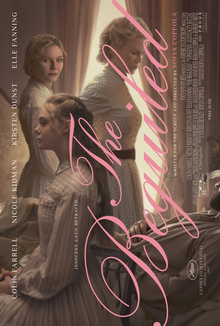
L'inganno/The Beguiled

"L'inganno" (The Beguiled) è un film del 2017 scritto e diretto da Sofia Coppola e ispirato in parte al romanzo del 1966 "A Painted Devil" di Thomas P. Cullinan, e in parte al precedente adattamento cinematografico di Don Siegel, "La notte brava del soldato Jonathan" (The Beguiled), del 1971.
Il film è ambientato nel sud degli U.S.A. durante la  Guerra di Secessione, in un collegio femminile in cui sono rimaste solo 9 donne, comprese la direttrice e la maestra, che conducono una vita quanto più possibile isolata per paura delle violenze della guerra.
Il delicato equilibrio si altera quando una delle ragazze trova un soldato nordista ferito nel bosco e lo porta al collegio per curarlo.
Com'è tipico della Coppola, il focus è un microcosmo femminile claustrofobico. Per effetto dell'intrusione esterna, sotto alla facciata di buone maniere dei personaggi femminili, emerge un'acuta analisi psicologica. I personaggi sono incapsulati nell'oggi, di loro si intuiscono problematiche antecedenti che però non vengono per niente sviluppate. Se da una parte è un peccato, dall'altra aumenta l'alone onirico che avvolge la vicenda.
Il film ha un cast di star: Colin Farrell, Nicole Kidman, Kirsten Dunst, Elle Fanning. La recitazione in generale è ottima (sono riuscita a trovare a tratti sexy perfino Farrel che non è per niente il mio tipo), la Kidman è molto al di sopra delle sue ultime prove che ho visto, ma ho trovato la Dunst (che in genere adoro) meno brava del solito, tanto che le azioni del suo personaggio sul finale non trovano abbastanza giustificazioni rispetto alla sua caratterizzazione precedente.
La fotografia è magnifica, varrebbe la pena vedere il film anche solo per quella: ogni fermo immagine è un quadro, l'uso della luce è pittorico e spettacolare.
Ho adorato anche i costumi, per fortuna è un periodo in cui non ho tempo né soldi, se no mi sarei lanciata a caccia di mussoline bianche sull'onda dell'entusiasmo.
Ho adorato questo film, in particolare per l'empowerment femminile che trasmette (mentre i masculi che erano con me al cinema hanno percepito una sorta di castrazione) e perché l'ho trovato di grande ispirazione a livello artistico. Lo consiglio senz'altro! A questo punto mi è venuta voglia di vedere la versione del 1971 e magari anche di leggere il romanzo.

"The Beguiled" is a 2017 film written and directed by Sofia Coppola and inspired partly by the 1966 novel "A Painted Devil" by Thomas P. Cullinan and partly by Don Siegel's earlier adaptation (The Beguiled) of 1971.
The film is set in the South of the U.S.A. during the Secession War, in a girl's school where remain only 9 women, including the director and the teacher, conducting a life as isolated as possible fearing the violences of the war.
This delicate balance is altered when one of the girls finds a wounded Unionis soldier in the woods and takes him to the college to nurse him.
As is typical of Coppola, the focus is a claustrophobic feminine microcosm. As a result of the external intrusion, beneath the façade of good manners of the female characters, emerges an acute psychological analysis. The characters are encapsulated in the present, so the previous issues that influenced their personality and relations can be percieved, but are not developed at all. While on the one hand it is a pity, on the other it heightens the oniric feel of the story.
The movie has a cast of stars: Colin Farrell, Nicole Kidman, Kirsten Dunst, Elle Fanning. The acting in general is great (at times I found sexy even Farrel who is not my type at all), Kidman is far above the last films I've seen, but I found Dunst (who usually I love) not good as usual, to the point that her character's action in the ending don't find enough justification in her previous characterization.
The photography is magnificent, it would be worth seeing the film just for that: every still image is a painting, the use of light is pictorial and spectacular.
I also fell in love with the costumes, fortunately it is a period I don't have much time or money, if not I would have gone out hunting for white muslin on the wave of enthusiasm.
I loved this movie, especially for the female empowerment it shows (while the males who were with me in the cinema perceived a kind of castration) and because I found it a great artistic inspiration. I would definitely recommend it! At this point I want to see the 1971 version and maybe even read the novel.

lunedì 9 ottobre 2017

L'amante di Lady Chatterley/Lady Chatterley's Lover

Lady Chatterleys Lover.jpg
"L'amante di Lady Chatterley" (Lady Chatterley's Lover) è un romanzo del 1928 di David Herbert Lawrence. Da esso sono stati tratti numerosi adattamenti cinematografici, teatrali e televisivi, ma anche reinterpretazioni letterarie.
Del libro esistono tre versioni a causa delle pesanti modifiche apportate dall'autore in corso d'opera. Le traduzioni italiane e le relative polemiche sono ancora di più. Io ho letto in originale quella considerata definitiva.
La protagonista del romanzo è Constance, diventata Lady Chatterley a seguito del matrimonio con Clifford, appartenente alle fasce più basse della nobiltà inglese. Clifford rimane paralizzato dalla vita in giù durante la Prima Guerra Mondiale e la vitale Constance si trova intrappolata nella sua triste tenuta nelle campagne inglesi avvolte dai fumi delle miniere di carbone, senza poter trovare sfogo alle proprie pulsioni sessuali e costretta dalle regole che la sua posizione sociale le impone. Questo la spingerà a cercare una relazione "vera", anche se con un uomo a lei socialmente inferiore.
La pubblicazione di questo libro fu seguita da fortissime polemiche a causa delle descrizioni esplicite di scene di sesso, dell'uso di parole considerate allora troppo volgari per essere usate in letteratura e della descrizione di una relazione fra una donna nobile e un lavoratore di bassa classe. Fino al 1960 in Inghilterra ne fu pubblicata un'edizione censurata e in vari paesi subì processi per oscenità. A seguito delle critiche e della censura subite dall'opera, l'autore scrisse "A proposito dell''Amante di Lady Chatterley'".
Si dice che il libro sia stato ispirato dalla relazione della moglie di Lawrence, Frieda von Richthofen, con il tenente Angelo Ravagli (che poi sposò dopo aver ottenuto il divorzio) mentre lo scrittore era sempre più sofferente a causa della tubercolosi. Probabilmente è stato ispirato anche dalla relazione di Lawrence, figlio di un minatore e di una maestra, con la nobile Frieda, che al momento del loro incontro era sposata ad un altro uomo.
Ha un romanzo del genere ancora valore al giorno d'oggi? La questione della classe sociale è ormai desueta, non perché non esista più, ma perché si finge che non abbia più importanza. Di sicuro lo scandalo per una relazione del genere sembra anacronistico.
Invece i vari punti di vista sul sesso esplicitati dai personaggi del libro mi sono sembrati ancora molto interessanti, tanto più che mancano del politically correct tanto caro ai contemporanei.
Infine il conflitto fra industrializzazione, vista come una corruzione dell'umanità, e natura è tristemente sempre più attuale.
A questo bisogna aggiungere che "L'amante di Lady Chatterley" è un romanzo davvero ben scritto (cosa in genere scontata con i classici, ma che fa piacere constatare), brillante e coinvolgente, anche se ogni tanto ho trovato il ritmo un po' lento. I personaggi sono tutti tratteggiati a tutto tondo, credibili e interessanti.
E' un classico che risente ben poco del tempo e che consiglio senz'altro.

"Lady Chatterley's Lover" is a 1928 novel by David Herbert Lawrence. It got a lot of movie, theatrical and television adaptations, as well as literary reinterpretations.
There are three versions of the book because of the heavy changes made by the author while it was been written. I have read in original the one he considered definitive.
The protagonist of the novel is Constance, who became Lady Chatterley following her marriage with Clifford, who belongs to the lower English nobility. Clifford got paralyzed from life down during the First World War and the lively Constance is trapped in his sad estate in an English countryside wrapped in the smoke coming from the coal mines, without being able to satisfy her sexual drive and restrained by the rules that her social position demands. This will push her to look for a "true" relationship, though with a socially inferior man.
The publication of this book was followed by strong controversy because of the explicit descriptions of sex, the use of words then considered too gross to be used in the literature and the description of a relationship between a noble woman and a low class man. Until 1960 in England was published a censored edition and it was processed as obscene in various countries. Following the criticism and censure of the work, the author wrote "About 'Lady Chatterley's Lover'".
It is said that the book was inspired by the relationship of Lawrence's wife, Frieda von Richthofen, with Lieutenant Angelo Ravagli (who she later married after getting divorced) while the writer was increasingly suffering from tuberculosis. It was probably also inspired by the relationship of Lawrence, the son of a miner and a teacher, with the noble Frieda, who at the time of their encounter was married to another man.
Is such a novel still valuable nowadays? The question of the social class is now decaying, not because it does not exist anymore, but because people pretend that it does not matter anymore. Certainly the scandal about such a relationship seems anachronistic.
Instead, I think the various perspectives about sex of the book's characters were very interesting, especially because they lack the politically correctness so dear contemporaries.
Finally, the conflict between industrialization, seen as a corruption of humanity, and nature is sadly more and more modern.
To this we have to add that "Lady Chatterley's Lover" is a really well-written novel (generally it's obvious with classics, but it's good to verify it), brilliant and engaging, although occasionally I found the rhythm a bit slow. The characters are all deep, credible and interesting.
It's a classic that suffers very little the wrecks of time and I definitely recommend it.

giovedì 5 ottobre 2017

Treviso Comic Book Festival 2017: shopping


Come vi avevo anticipato, il Treviso Comic Book Festival è stato così bello che ho speso quasi il doppio del mio budget. Ecco cos'ho comprato.

As I mentioned earlier, the Treviso Comic Book Festival was so beautiful that I spent almost twice my budget. Here's what I bought.

Ho preso "Laika" dello studio di illustrazione Rebigo di Genova (12€), la prima antologia del collettivo, costituiuta da 8 storie, dedicata alla cagnetta Laika, in occasione dei 50 anni del suo lancio nello spazio. Mi è piaciuta particolarmente l'idea della bicromia blu e ora. "Laika" è esteticamente stupendo, ma ancora devo leggerlo.

I bought "Laika" from Studio Rebigo of Genoa (12€), the first anthology of the collective, made of 8 stories dedicated to the dog Laika, for the 50th anniversary of her launch in space. I particularly liked the idea of the blue and gold bicromy. "Laika" is aesthetically beautiful, but I still have to read it.

Grazie alla mostra dedicata, mi sono decisa a comprare "Diana e la lingua robotica" di Carolyn Nowak (10€, sconto fiera). Parla del superamento di una storia d'amore finita da parte di una ragazza in un futuro in cui esistono androidi da piacere. L'ho trovato molto carino anche se mi sarebbe piaciuto che la storia fosse sviluppata di più.
Ho anche ottenuto un disegno autografato dall'autrice.


In the same building I also saw the exhibition dedicated to "Diana's Electric Tongue" by Carolyn Nowak (10€ on sale). It talks about the overcoming the end of a love story by a girl in a future where exist pleasure androids. I found it very nice even though I would have liked the story to be more developed.
I also got an autographed drawing from the author.

Ho comprato il numero 3 di Blanca (5€) e un poster sempre di Blanca (4€).

I bought the third issue of Blanca (5€) and a poster by Blanca (4€).

Ho preso una serie di cartoline e un segnalibro dei bravissimi illustratori di Le Vanvere.

I took a set of postcards and a bookmark by the great illustrators of  Le Vanvere.

Non ho resistito a prendere la carinissima shopper di tela ufficiale del festival con l'illustrazione realizzata da Jesse Jacobs (5€).

I did not resist buying the cute official canvas shopper of the festival with the illustration made by Jesse Jacobs (5€).


Ho anche preso una copia gratuita del Lahar Magazine.

I also took a free copy of the Lahar Magazine.

lunedì 18 settembre 2017

Lilith (Luca Enoch)

"Lilith" è un fumetto italiano ideato, scritto e disegnato da Luca Enoch e pubblicato a cadenza semestrale a partire dal 2008, fino alla conclusione nel giugno 2017 con il numero 18.
Al Napoli Comicon del 2016, la serie ha vinto il premio Attilio Micheluzzi come "miglior serie dal tratto realistico".
La protagonista è Lyca, nata in un remoto futuro in cui l'umanità si è rifugiata sottoterra a causa di un parassita alieno che domina la superficie, il Triacanto. Lyca fin dall'infanzia è stata addestrata per sterminarlo viaggiando nel tempo e uccidendo le persone che ne sono portatrici prima che possa mettere radici. E' una missione tragica perché deve usare ogni mezzo per uccidere persone potenzialmente essere innocenti e perché in caso di riuscita non ci sarebbe ritorno, visto che i suoi genitori non si incontrerebbero mai.
Prima di partire, Lyca, ormai adulta, assume il nome di battaglia Lilith. Nei suoi viaggi viene accompagnata da un essere che solo lei può vedere, lo Scuro, una sorta di pantera, che ha il compito di guidarla nelle sue missioni.
Ma di epoca in epoca è sempre più chiaro che c'è qualcosa che non va: il Triacanto prova a comunicare con lei e si verificano strani fenomeni. La Storia stessa esce dai binari a causa dei cambiamenti provocati dalla viaggiatrice temporale e si trasforma in un'ucronia tinta di distopia.
Sono una grande fan dei viaggi nel tempo, delle ucronie e del lavoro di Luca Enoch, quindi avevo grandi aspettative su quest'opera.
Le ambientazioni ucroniche sono il punto forte del fumetto: hanno alle spalle una ricerca storica puntigliosissima e appassionata, quindi risultano realistiche, e sono ancora più interessanti in quanto si tratta di episodi chiave per la Storia e la cultura umana, come la guerra di Troia, la pirateria nei Caraibi fra XVII e XVIII secolo, l'arrivo dei Vichinghi in America e così via, con particolare attenzione a Giappone e Nord America.
Invece, ho trovato il personaggio di Lilith, per quanto ben fatto e con una chiara evoluzione, meno emotivamente coinvolgente di quelli creati dall'autore in precedenza, Sprayliz e Gea. La formazione della protagonista come killer l'ha disumanizzata, quindi non è semplice empatizzare con lei. Le parti comiche dovrebbero essere affidate allo Scuro, ma anche questo personaggio è estremamente ambiguo e perde in simpatia con il passare dei numeri, rendendo il tono generale dell'opera molto serio.
La narrazione è un orologio svizzero, c'è una trama coerente e ben fatta che arriva ad un finale esplosivo ben preparato. Tutte le deviazioni della Storia sono fra loro logicamente connesse. Oltre ad una trama generale, ogni volume ha una sottotrama basata sulla ricerca del Triacanto in un'epoca diversa. L'idea è buona e serve ad ammortizzare la pubblicazione semestrale che rischia di far perdere il filo della narrazione, ma allo stesso tempo la trama complessiva risulta molto lenta, specie all'inizio.
Per quanto riguarda il disegno, è molto dinamico ed espressivo, curatissimo nei particolari. L'inserzione digitale di campiture di grigio può fare storcere il naso a qualcuno, ma permette una resa molto tridimensionale. La formazione autodidatta dell'autore emerge in alcune lievi scorrettezze anatomiche. Continuo ad essere molto perplessa sulle copertine di Luca Enoch, in particolare per quanto riguarda la scelta dei colori.
In definitiva, "Lilith" è  un fumetto interessante e ben fatto, curato in maniera quasi maniacale, ma l'ho trovato inferiore a "Gea" a livello di ritmo e di personaggi.
E' comunque un'opera di grande qualità ed estremamente originale nel panorama italiano, quindi aspetto con ansia un nuovo lavoro completo dell'autore.
Per ulteriori informazioni vi rimando al sito ufficiale.
http://www.sergiobonelli.it/sezioni/22/lilith

lunedì 11 settembre 2017

Monastero di torba, Castelseprio, Castiglione Olona

Il primo weekend di agosto, ho organizzato una gita artistico archeologica con mio marito, mia madre e la mia amica Siobhan.
La nostra prima tappa è stato il sito UNESCO del monastero di Torba (ingresso 6€), sorto nel tardo Impero Romano con funzione difensiva e che sotto il regno longobardo assunse una funzione civile e, in seguito, religiosa, trasformandosi in convento di monache benedettine durato fino al 1482.
Con l'epoca napoleonica poi diventò un nucleo contadino, ma il FAI ha scoperto e restaurato gli affreschi longobardi trasformandolo in un museo.
Siamo stati abbastanza fortunati da fare una visita guidata.

On the first weekend of August, I organized an archeological and artistic trip with my husband, my mother and my friend Siobhan.
Our first stop was the UNESCO site of Torba Monastery (entrance 6€), built in the late Roman Empire with defensive function and that, under the Lombard kingdom assumed a civic and later a religious function, becoming a convent of Benedictine nuns that lasted until 1482.
With the Napoleonic era it was turned into a farm, but FAI discovered and restored the longobard frescoes, transforming it into a museum.
We were lucky and scored a guided tour.

Gli elementi più importanti del complesso sono la Chiesa di Santa Maria e la torre.
La chiesa che si vede oggi è stata eretta nel XI secolo recuperando, in parte, le mura del primo edificio. Nel XII-XIII secolo furono ricostruiti in stile romanico l’abside e parte dei muri perimetrali. L’interno un tempo era completamente affrescato. Oggi rimangono solo dei frammenti.
Sia la chiesa sia la torre sono state costruite con l'inserzione di materiali di spoglio provenienti da sepolcri romani.

The most important elements of the complex are the Church of Santa Maria and the tower.
The church that we see today was erected in the 11th century, recovering in part the walls of the first building. In the XII-XIII centuries the apse and part of the perimeter walls were rebuilt in Romanesque style. The interior was once frescoed, but today there are only fragments.
Both the church and the tower were built with the insertion of materials from taken from Roman tombs.

I primi tre piani della torre sono stati costruiti nel V secolo, probabilmente per ospitare l'autorità civile-militare romana. Il quarto piano, invece, è stato costruito nel VIII secolo, con l’arrivo delle monache a Torba. Nella sala al secondo piano, sono visibili tracce di decorazione risalenti alla fase precedente a quella monastica. Era usata come cripta dell’oratorio superiore e sepolcreto delle badesse, come testimoniato dai frammenti pittorici sulle nicchie in cui venivano sepolte.
Gli affreschi dell'ultimo piano sono dedicati al Cristo, ritratto ancora imperbe.
La cosa più interessante è la sequenza di otto monache senza volto sulla parete Ovest. La leggenda è che il loro volto sia stato cancellato a seguito di infrazioni del codice monastico, più probabilmente questo particolare è dovuto alla qualità della pittura usata.
Come si nota dalla qualità non elevata degli affreschi, è probabile che gli stessi siano stati eseguiti proprio dalle monache entro la fine dell’ VIII secolo, in epoca longobarda.
Nel monastero c'era un refettorio, ora gestito dal FAI, ma i prezzi non erano bassissimi e non eravamo ancora abbastanza affamati, quindi abbiamo proseguito.

The first three floors of the tower were built in the fifth century, probably to accommodate the Roman civil-military authority. The fourth floor, however, was built in the 8th century, with the arrival of the nuns in Torba. In the room at the second floor, there are visible traces of decoration dating from the phase before the monastic one. It was used as the crypt of the upper oratory and burial ground of the abbesses, as evidenced by the pictorial fragments on the niches in which they were buried.
The frescoes on the last floor are devoted to Christ, painted still as a youth without beard.
The most interesting thing is the sequence of eight faceless nuns on the west wall. The legend is that their face has been cancelled as a result of violations of the monastic code, but probably it was caused by the quality of the painting used.
Guessing by the low quality of the frescoes, it is likely that they were executed by the nuns by the end of the VIII century, in the Lombard era.
In the monastery there was a refectory, now run by the FAI, but the prices were not very low and we were not hungry enough, so we went on.

Siamo andati al Parco Archeologico di Castelseprio, anch'esso contenente monumenti UNESCO.
Qui ho finalmente visto dal vivo i bellissimi affreschi della chiesetta di Santa Maria Foris Portas (su cui ero stata interrogata durante il mio esame di Storia dell'Arte Medievale). Questo impianto decorativo ha causato incredibili problemi di datazione agli studiosi a causa della confluenza di elementi bizantini (come le scene tratte da vangeli apocrifi diffusi in Oriente) e romani. All'inizio si pensava che fossero di epoca longobarda (ma i longobardi erano nemici dei bizantini!), ma i nuovi studi stratigrafici e le datazioni al carbonio permettono un'attribuzione al X secolo, durante il periodo dell'impero degli Ottoni.

We went to the Archaeological Park of Castelseprio, which contains UNESCO monuments too.
Here I finally saw the beautiful frescoes of the church of Santa Maria Foris Portas (about which I was interrogated about during my Medieval Art History exam). This decorative system has caused incredible dating problems of to scholars because of the confluence of Byzantine elements (such as the scenes from apocryphal gospels widespreas in the East) and Roman ones. At first it was thought that they were Lombard (but the Lombards were enemies of the Byzantines!), but new stratigraphic studies and carbon dating allowed an attribution to the X century, during the period of the Ottoman Empire.

Ci siamo interrotti causa fame e siamo tornati indietro per pranzare alla Trattoria di Torba, in via Via Cesare Battisti 2 a Torba. Il locale è costituito da due sale e un giardino. L'arredamento è in stile inizio '900, molto carino.
Abbiamo preso come primi lasagne, melanzane alla parmigiana e pasta al nero di seppia con condimento di mare. Come secondo ci siamo divisi una burrata e un mix di formaggi.
Ci è piaciuto tutto molto, soprattutto i formaggi.

We stopped because we were hungry went back to Torba to have lunch at the Trattoria di Torba, in via Cesare Battisti 2. The restaurant consists of two rooms and a garden. The decor is in an early '900 style, very nice.
We took lasagna, parmigiana aubergines and squid ink pasta with seafood. We also shared a burrata and a mix of cheeses.
We liked everything, especially the cheeses.

Dopo mangiato, abbiamo finito di visitare il Parco archeologico, un "castrum" cinto da mura gote. All'interno c'erano il complesso paleocristiano di S. Giovanni (basilica e battistero), una cisterna con pozzo, la chiesa romanica di S. Paolo, case private, di varia epoca, e le dimore occupate dai canonici fino al XVI secolo. I resti delle chiese erano quelli un po' più consistenti, delle abitazioni private rimanevano solo le fondamenta.
All'interno delle mura, la visita più interessante è stato l'"Antiquarium", ospitato nel duecentesco Conventino di S. Giovanni, in cui si trova un piccolo museo in cui viene ricostruita tramite una serie reperti la storia del complesso.

After eating, we ended up visiting the Archaeological Park, a "castrum" surrounded by gothic walls. Inside there was the early Christian complex of St. John (Basilica and Baptistery), a cistern and well, the Romanesque church of St. Paul, private houses of various ages, and the dwellings occupied by canons until the sixteenth century. The remnants of the churches were the somewhat larger ones, of the private homes were left only the foundation.
Inside the walls, the most interesting visit was the "Antiquarium", housed in the thirteenth century Convent of St. John, where there is a small museum that reconstructs the history of the complex through a series of finds.

Facciamo un viaggio nel tempo e andiamo a Castiglione Olona, città natale del cardinale Branda Castiglioni che la trasformò (come Pio II fece con Pienza) seguendo l'ideale del Rinascimento.
Per prima cosa siamo andati al Castello di Monteruzzo, una villa ottocentesca ispirata ad architetture più antiche e abitata da famiglie aristocratiche milanesi. Il castello purtroppo era chiuso, ma il panorama sulla città era meraviglioso.

We travel trough time and go to Castiglione Olona, ​​the birthplace of Cardinal Branda Castiglioni who transformed it (as Pius II with Pienza) following the ideal of the Renaissance ideal city.
First we went to Monteruzzo Castle, a nineteenth-century villa inspired by more ancient architecture and inhabited by aristocratic families from Milan. The castle unfortunately was closed, but the view over the city was wonderful.

Abbiamo proseguito visitando il Palazzo Branda Castiglioni (ingresso 3€), che il famoso cardinale aveva fatto costruire per sé. Il palazzo è costituito da due parti, una del XIV e una del XV secolo.
Abbiamo avuto la fortuna di fare una visita guidata.

We continued visiting Palazzo Branda Castiglioni (entrance 3€), which the famous cardinal had built for himself. The palace consists of two parts, one of the 14th and one of the 15th century.
We were lucky enough to get a guided tour.

Dopo aver visto la bella loggetta, siamo passati al primo piano, dove si trovava una quadreria che ospitava ritratti del XVII secolo del casato Castiglioni e un grande camino. Siamo poi passati nella Camera del Cardinale, completamente affrescata nel 1423 con un giardino fiorito popolato da bambini. Al centro c'era un antico letto a baldacchino in legno pregiato del XVI secolo, le cui coperte erano ricavate da un abito talare e i cui pilastri erano affumicati, probabilmente per disinfettarlo dopo una morte per peste.

After seeing the beautiful loggia, we went to the first floor, where there was a picture gallery that housed portraits of the seventeenth century of the Castiglioni family and a large fireplace. We then went to the Cardinal's Room, completely frescoed in 1423 with a flower garden filled with children. At the center there was an antique 16th-century canopy bed made of precious wood, whose blankets were made from a priest robe and which pillars were smoked, probably to disinfect it after a plague caused death.

Il pezzo forte però era lo Studio del Cardinale con un affresco raffigurante una veduta immaginaria di Veszprem, in Ungheria, dove il cardinale era stato conte. Quest'opera d'arte è attribuita a due grandi pittori del rinascimento: Masolino da Panicale e Lorenzo di Pietro (detto il Vecchietta).
L'arredo è completato da un bellissimo mobile da sacrestia del XVII secolo in noce, da un mappamondo normale e da uno astrologico.
La nostra visita è finita al piano inferiore con la Cappella di San Martino, la cui ricca decorazione è stata attribuita al Vecchietta, che era alle dipendenze del cardinale dal 1434 circa.

The main attraction, however, was the Cardinal's Study with a fresco depicting an imaginary view of Veszprem, Hungary, where the Cardinal was count. This artwork is attributed to two great Renaissance painters: Masolino da Panicale and Lorenzo di Pietro (known as Vecchietta).
The furniture is complemented by a beautiful 17th-century sacristy furniture in walnut, a normal globe and an astrological one.
Our visit ended on the lower floor with the Chapel of San Martino, which rich decoration was attributed to Vecchietta, who worked for the cardinal since 1434.

Purtroppo era troppo tardi per visitare molto altro in città, ma siamo entrati velocemente nella Chiesa del Santissimo Corpo di Cristo (oggi nota come Chiesa di Villa), sulla piazza principale, di fronte al palazzo, attirati dalle gigantesche statue di santi in facciata. Si tratta del il primo edificio con cupola brunelleschiana al di fuori della Toscana, anch'essa commissionata dal cardinal Branda Castiglioni, costruita tra il 1437 ed il 1444 sul luogo di un oratorio del XII secolo.

Unfortunately, it was too late to visit more in the city, but we quickly entered the Chiesa del Santissimo Corpo di Cristo (now known as Villa Church) on the main square, in front of the palace, attracted by the gigantic statues of saints on the façade. It is the first building with  Brunelleschi style dome outside Tuscany, also commissioned by Cardinal Branda Castiglioni, built between 1437 and 1444 on the site of a 12th-century oratory.

Mi ha divertito soprattutto il trittico pittorico raffigurante la Vergine delle Grazie tra i Santi Rocco e Sebastiano, attribuito a Galdino da Varese (XV secolo) per via di Rocco che si cala la calzetta in maniera sexy.

I was especially amused by the pictorial triptych depicting the Virgin of Grace among Saint Roch and Saint Sebastian, attributed to Galdino da Varese (15th century) as Rocco lowers his socks in a sexy way.
Related Posts Plugin for WordPress, Blogger...