Visualizzazione post con etichetta Jane Austen. Mostra tutti i post

lunedì 19 dicembre 2016

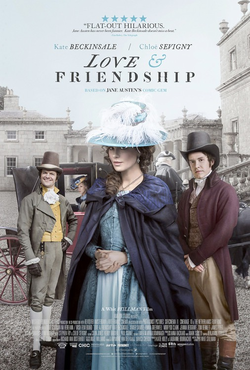
Amore e inganni/Love & Friendship

Love & Friendship poster.png
"Amore e inganni" (Love & Friendship) è un film del 2016 diretto dal regista statunitense Whit Stillman, liberamente ispirato al romanzo "Lady Susan" di Jane Austen del 1794 (che ho recensito qui).
Inghilterra, anni '90 del 1700. Lady Susan è una bellissima vedova in difficoltà economiche, con una figlia in età da marito, Frederica. Ma Lady Susan è anche una donna priva di scrupoli, che usa il suo fascino e la sua parlantina per ottenere ciò che vuole: un marito ricco per sé e la figlia (la quale invece sfuggirebbe più che volentieri alle manovre della madre), qualche affascinante flirt...
A seguito di pettegolezzi sulla sua condotta, è costretta a lasciare la residenza dove alloggiava per andare ospite dal fratello del defunto marito e da sua moglie Catherine. Lì è ospitato anche Reginald, ricco, giovane e bel fratello di Catherine. Sembra lo scenario perfetto per un nuovo piano di Susan, ma le cose si complicano quando intervengono Frederica e il suo indesiderato spasimante, il ricco, ma stupido Sir James Martin.
Andando a vedere questo film avevo paura che non avrebbe retto il confronto con il libro, che, essendo un romanzo epistolare trae il suo fascino dal mostrare le vicende filtrate dai punti di vista dei singoli personaggi attraverso le lettere. Invece l'ho trovato davvero brillante e divertente, una raffica dietro l'altra di battute e osservazioni argute. Come nel libro, Susan, ben lontana dalle successive eroine della Austen, più positive, ma anche più ingenue, emerge come il personaggio più affascinante.
L'unica cosa che non ho apprezzato di questo film sono stati i costumi, il che mi ha stupito perché in genere nei film tratti da libri della Austen mi piacciono molto. Non so se sia perché l'epoca è leggermente anteriore a quella degli altri romanzi o perché la costumista ha accentuato certi caratteri.
Ma è un difetto minimo in confronto ai pregi. Se volete un film leggero, che parli di flirt e inganni, ma con un umorismo non stupido, ve lo consiglio senz'altro.

"Love & Friendship" is a 2016 film shot by the U.S.A. director Whit Stillman, loosely based on the 1794 novel "Lady Susan" by Jane Austen (which I reviewed here).
England, the 90s of 1700. Lady Susan is a beautiful widow in financial difficulties, with a daughter of marriageable age, Frederica. But Lady Susan is also a woman without scruples, who uses her charm and her eloquence to get what she wants: a rich husband for herself and her daughter (which instead would very much like escape from her mother's maneuvers), some handsome flirt...
Following rumors about her conduct, she is forced to leave the residence where she was staying to go as a guest to the house of her brother-in-law and his wife Catherine. There is also hosted Reginald, Catherine's rich, young and handsome brother. It seems the perfect setting for a new plan, but things get complicated due to the intervention of Frederica and her unwanted suitor, the wealthy but stupid Sir James Martin.
Going to see this movie I was afraid it would be awful in comparison with the book, which, being an epistolary novel, derives its charm from showing the events trough the viewpoints of the single characters. Instead I found it really funny, a continue series of jokes and witty remarks. As in the book, Susan, far from the later heroines by Austen, more positive, but also more naive, emerges as the most fascinating character.
The only thing I did not like about this movie were the costumes, which surprised me because usually in films based on Austen's books I like them very much. I do not know whether it is because the period is slightly earlier than the one of the other novels, or because the costume designer accentuated certain things.
But it is a small flaw in comparison to the merits. If you want a light film which talks about flirting and cheating, but with a humor that isn't stupid at all, I would definitely recommend it.

venerdì 22 aprile 2016

Orgoglio e pregiudizio e zombie/Pride, Prejudice and Zombies (Seth Grahame-Smith)

PrideandPrejudiceandZombiesCover.jpg
"Orgoglio e pregiudizio e zombie" (Pride, Prejudice and Zombies) è un romanzo del 2009 dello scrittore e sceneggiatore statunitense Seth Grahame-Smith, che riprende il grande classico della Austen aggiungendo in chiave parodica gli zombie che vanno tanto di moda ultimamente. Nel 2016 ne è stato tratto un film dallo stesso titolo.
Visto che ho deciso di leggere il libro dopo aver visto il film (che ho recensito qui), più che una recensione del solo libro, questa sarà un confronto fra i due.
L'idea di prendere un classico inserendo un elemento che ne stravolga totalmente il tono, soprattutto un elemento alla moda come gli zombie, mi è parsa intelligente e potenzialmente anche molto divertente. Peraltro Seth Grahame-Smith è anche l'autore di "Abraham Lincoln, Vampire Hunter" a sua volta adattato in un film che ha avuto un discreto successo (e che io devo ancora recuperare).
"Orgoglio e pregiudizio e zombie", a differenza del film, che verso la metà se ne distacca quasi completamente, segue la trama del romanzo a cui si ispira, limitandosi ad aggiungere elementi come l'apocalisse zombie, l'allenamento shaolin delle sorelle Bennet e così via. E' quasi un peccato perché alcune delle idee del film erano interessanti, in particolare l'idea che gli zombie conservassero un certo raziocinio, e speravo di vederle più approfondite leggendo il libro. D'altra parte nel film mancano quasi completamente alcuni personaggi ed elementi, come Charlotte, l'amica di Elizabeth.
Le aggiunte di Grahame-Smith tendono spesso all'esagerazione con effetti comici, come la scena in cui Elizabeth conversa per delle ore a testa in giù reggendosi solo su due polpastrelli per dimostrare l'efficacia del suo allenamento.
Nonostante sia volutamente un libro trash, ho trovato delle carenze nella realizzazione. Si tratta soprattutto di un fastidioso contrasto fra l'originale e le aggiunte, che, pur cercando di imitarlo, non ci riescono completamente (peraltro l'ho letto in originale, per cui non può essere dovuto alla traduzione). Oltre che dallo stile, il contrasto deriva anche dai contenuti: ci sono allusioni sessuali che stonano del tutto con la sensibilità austeniana, e anche l'inserzione di litri di vomito, dopo un primo sorriso all'idea che si possa "vomitare educatamente", coerente con un mondo vittoriano infestato da zombie, riesce soltanto a disgustare.
In conclusione, nonostante la bella idea di base, non consiglio particolarmente il libro: è leggibile e a tratti divertente, ma non bello. Piuttosto vi consiglio il film, che ho trovato più spudoratamente trash e quindi più divertente e che, nonostante abbia parecchi difetti, ha anche qualche idea originale in più, tanto che avrei quasi voglia di vedere un seguito.

"Pride and Prejudice and Zombies" (Pride, Prejudice and Zombies) is a 2009 novel by the American writer and screenwriter Seth Grahame-Smith, who takes up the classic Austen novel adding in a parodistic way the zombies that are so fashionable lately. In 2016 it was adapted into a movie of the same title.
Since I decided to read the book after watching the movie (which I reviewed here), rather than a review of the book alone, this is a confrontation between the two.
I thought the idea of inserting in a classic an element that totally distorts its tone, especially a trendy one like zombies, was clever and potentially very funny. Plus, Seth Grahame-Smith is also the author of "Abraham Lincoln, Vampire Hunter" also adapted into a film that has been quite successful (and that I still haven't watched).
"Pride and Prejudice and Zombies", unlike the film, which from the middle changes almost completely, follows the plot of the original novel adding only elements like the zombie apocalypse, the shaolin training of the Bennet sisters and so on. It's almost a shame because some of the film's ideas were interesting, especially the idea that zombies retained some reason, and I was hoping to understand them more in-depth reading the book. On the other hand the film misses almost entirely some characters and elements, such as Elizabeth's friend Charlotte.
The additions by Grahame-Smith often tend to exaggerate with comic effects, such as the scene where Elizabeth converses for hours upside down on two fingertips to show the effectiveness of her training.
Despite being a deliberately trashy book, I found some deficiencies in its realization. It is above all an annoying contrast between the original and the added parts, that try to imitate it, but don't succeed completely. In addition to the style, the contrast also derives from the contents: there are sexual innuendos that totally clash with Austen's sensitivity, and also the insertion of liters of vomit, after a first smile at the idea of "throwing up politely", consistent with a Victorian world infested with zombies, only succeeds in disgusting the reader.
In conclusion, despite the interesting idea, I don't particularly recommend the book: it is readable and at times funny, but not good enough. I rather recommend the movie, that I found most shamelessly trashy and consequently funnier and that, despite its many flaws, has some more original ideas, that almost made me crave for a sequel.

martedì 19 aprile 2016

Pride + Prejudice + Zombies (film)

"Pride + Prejudice + Zombies" è un film anglo-statunitense del 2016 scritto e diretto da Burr Steers. Si tratta dell'adattamento cinematografico del libro "Pride and Prejudice and Zombies" scritto nel 2009 da Seth Grahame-Smith.
Si tratta di un adattamento del più famoso romanzo di Jane Austen con l'aggiunta degli zombie che vanno tanto di moda ultimamente. Il risultato è una storia d'amore sullo sfondo di un Regno Unito ottocentesco in piena apocalisse zombie, che mischia ai problemi di classe sociale del romanzo originale anche toni horror e trash che spesso sconfinano (volutamente) nel comico.
Ho trovato l'idea di per sé geniale, nei limiti di un'opera di questo genere, e la realizzazione piuttosto buona. I difetti più evidenti erano le pistole di Cechov inutilizzate, ovvero elementi della trama che sembravano lasciar presagire colpi di scena successivi, ma che invece non venivano assolutamente ripresi. Peccato anche per il finale aperto, avrei voluto che la storia si concludesse. Visto che il film mi ha molto divertito, ho deciso di supplire alle ambiguità leggendo il libro.
Per quanto riguarda la realizzazione degli elementi horror, io in genere ho lo stomaco piuttosto debole, ma non ho avuto nessun problema durante la visione del film. Il trucco degli zombie era abbastanza finto da non darmi fastidio, ma abbastanza realistico da non risultare ridicolo.
Quello che risultava piuttosto ridicolo era Darcy, un po' per l'aria perennemente ingrugnata che pure è in linea con il carattere del personaggio, ma soprattutto per la pettinatura terrificante con la frangetta napoleonica.
Nonostante tutto l'ho trovato un film divertente e con una trama sensata, che ha fornito a me e alle mie amiche una serata trash degna di questo nome.

"Pride + Prejudice + Zombies" is a 2016 Anglo-American film written and directed by Burr Steers. It is the film adaptation of the book "Pride and Prejudice and Zombies" written in 2009 by Seth Grahame-Smith.
It is an adaptation of the most famous novel by Jane Austen with the addition of zombies, that lately seem to be really popular. The result is a love story on the backdrop of a nineteenth-century United Kingdom in the middle of a zombie apocalypse, which mixes the social class problems of the original novel to horror and trash tones which often (and deliberately) turn into comic.
I found the idea brilliant, within the limits of a work of this kind, and the realization rather good. The most obvious defects were the unused Chekhov guns, or plot elements that seemed to forecast plot twists, but that were forgotten. Too bad also for the open ending, I wish the story had a real conclusion. Since the film amused me, I decided to make up for the ambiguities reading the book.
As for the realization of the horror elements, I usually have a pretty weak stomach, but I had no problems during the movie. The zombies make up was fake enough not to bother me, but realistic enough not to be ridiculous.
What was rather ridiculous was Darcy, a little for being perpetually grumpy, though it isin line with his character, but especially for the his terrible Napoleonic bangs.
Despite everything I found it a fun movie with a sensible plot, which provided me and my friends a trash night worthy of this name.

sabato 12 settembre 2015

Jane Austen Week: and the winner is...

Dopo aver letto tutti i romanzi di Jane Austen, è giunto il momento di una doverosa classifica!
  1. Orgoglio e Pregiudizio: Sarò banale, ma in fin dei conti, se è il romanzo più famoso della Austen un motivo c'è. Ha tutti gli ingredienti vincenti: la storia d'amore, con protagonisti convincenti (leggi: un'eroina intelligente e testarda) e colpi di scena, buoni personaggi secondari e una certa dose di ironia e satira sociale. In più sono molto affezionata al film con la Knightley che mi ha spinto a iniziare a leggere quest'autrice.
  2. Northanger Abbey: divertentissimo! Prende in giro i romanzi sentimentali e la mania del romanzo gotico, costruendo però allo stesso tempo una storia d'amore credibile. Fantastica anche l'anti-eroina non bellissima e un po'ignorante e stupidotta che ne è protagonista.
  3. Persuasione, Emma: Persuasione ha un'eroina un po'troppo debole, che però è interessante per la sua età più avanzata rispetto alle classiche protagoniste della Austen. La storia fila bene e ha un inaspettato momento tragico che non si trova in nessun altro romanzo dell'autrice. C'è satira sociale e ottimi personaggi secondari. Invece Emma ha il vantaggio di un'eroina brillante e con un carattere forte che non ha nessuna voglia e nessun bisogno di sposarsi. Ci sono ironia e buoni personaggi secondari (spesso molto irritanti) ma, nonostante i colpi di scena, il libro è fondamentalmente povero di avvenimenti.
  4. Ragione e Sentimento: Ragione e Sentimento ha una storia ricca e interessante, ma è più moralista di tanti altri e gli manca quel guizzo di ironia che porta all'eccellenza altri romanzi dell'autrice. In più il finale di una delle protagoniste non è del tutto convincente.
  5. Mansfield Park: un romanzo moralista che si prende troppo sul serio, con un'eroina debole.

Non è un romanzo, ma in questo post ci tengo a citare Lady Susan, un racconto dell'autrice, che, non fosse per il finale sottotono (peraltro tipico della Austen), preferirei a Orgoglio e pregiudizio. Infatti per una volta la protagonista è una donna senza scrupoli. La forma epistolare del racconto permette un gioco di punti di vista che rende difficile capire da che parte sia la verità.
Insomma, ho finito i romanzi, ma mi rimangono ancora i racconti!

***

After reading all the novels by Jane Austen, it is time to rank them!
  1. Pride and Prejudice: I may be banal, but in the end, if it is the most famous novel of Austen there is a reason. It has all the winning ingredients: a love story, starring compelling (read: a smart and headstrong heroine) charcaters, with a lot of twists, good secondary characters and a certain amount of irony and social satire. Plus I'm very fond of the movie with Keira Knightley that made me want to start reading this author.
  2. Northanger Abbey: it's funny! It's a parody of sentimental novels and of the craze the craze for gothic novels, but at the same it's a credible love story. It also has a great anti-heroine, not particularly beautiful, a bit ignorant and  patsy.
  3. Persuasion, Emma: Persuasion has a slightly too weak heroine, but it is interesting for her age older than that of usual Austen's heroines. The story developes well and has an unexpected tragic moment that unique in the novels by the author. There are social satire and great secondary characters. Instead, Emma has the advantage of a brilliant heroine with a strong character and who has no desire and no need to get married. There are irony and good  (even if often irritating) secondary characters but, despite the twists and turns, the book is fundamentally lacking in events.
  4. Sense and Sensibility: Sense and Sensibility has a rich and interesting history, but it is pruder than many others and it lacks that flicker of irony that takes the author's other novels to greatness. In addition, the ending of one of the protagonists is not entirely convincing.
  5. Mansfield Park: a prude novel that takes itself too seriously, with a weak heroine.


It is not a novel, but in this post I want to mention Lady Susan, a short story by the author, that, if it wasn't for the below par ending (typical of Jane Austen), I would prefer to Pride and Prejudice. In fact for once the protagonist is a woman without scruples. The epistolary form of the story allows a game of point of views that makes difficult to figure out which way is the truth.
In short, I finished the novels, but I still have the shorts stories!

venerdì 11 settembre 2015

Northanger Abbey (Jane Austen)

"Northanger Abbey" è un romanzo di Jane Austen pubblicato postumo nel 1818 insieme a Persuasione, ma finito 15 anni prima. Nonostante sia stato il primo romanzo scritto dall'autrice, lo stile è quello della Austen matura grazie alla revisione del 1817. E' stato adattato per il teatro e la televisione, ma è uno dei lavori meno conosciuti dell'autrice.
Eppure è stato il romanzo della Austen che ho trovato più divertente in assoluto. Infatti è una parodia del romanzo sentimentale in cui viene inserita anche una parodia della moda dei romanzi gotici, che all'epoca spopolavano. Essendo la parodia di un genere, la storia di per sé è piuttosto banale, ma vale la pena leggerla per come viene raccontata, a partire dal memorabile incipit: "Nessuno che avesse conosciuto Catherine Morland nella sua infanzia avrebbe mai immaginato che fosse nata per essere un'eroina. La sua condizione sociale, il carattere del padre e della madre, il suo aspetto e la sua indole, era tutto ugualmente contro di lei".
I personaggi principali sono molto interessanti: la protagonista non è bellissima, non è particolarmente brillante né istruita ed è una fanatica dei romanzi gotici, il protagonista maschile, a differenza delle sue rigide controparti nei romanzi "seri" della Austen, ha un discreto senso dell'umorismo e i cattivi (che non rivelerò) sono ben tratteggiati. Gli altri personaggi risultano un po'piatti, ma la storia non ne risente.
L'autrice molto più presente come narratrice che in tutte le altre sue opere, con risultati piuttosto buoni.
E' un libro consigliatissimo per farsi due risate, sia che siate fan del romanzo sentimentale, di Jane Austen e del romanzo gotico sia che li odiate.

"Northanger Abbey" is a novel by Jane Austen published posthumously in 1818 together with Persuasion, but finished 15 years earlier. Although it was the first novel written by the author, the style is that of the mature Austen thanks to the 1817 revision. It was adapted for stage and television, but it is one of the lesser known works of the author.
Yet it was the Austen novel that I found fuond the funniest. Indeed is a sentimental novel's parody in which is inserted also a parody of the Gothic novels fashion, which depopulated at the time. Being a parody of a genre, the story in itself is rather banal, but it is worth reading for the way in which it was told, starting from the memorable opening: "No one who had ever seen Catherine Morland in her infancy would have supposed her born to be an heroine. Her situation in life, the character of her father and mother, her own person and disposition, were all equally against her".
The main characters are very interesting: the protagonist is not beautiful, not particularly bright nor educated and is a fanatic of gothic novels, the male lead, in contrast to its rigid counterpart of the "serious" Austen novels, has sense of humor and the foes (of which I won't reveal the identity) are well outlined. The other characters are a bit flat, but the history is not affected by it.
The author is much more present as the narrator that in all her other works, with pretty good results.
It 's a highly recommended book for a laugh, whether you are a fan of sentimental novel, Jane Austen and gothic novels or you hate them.

giovedì 10 settembre 2015

Persuasione/Persuasion (Jane Austen)

"Persuasione" è un romanzo di Jane Austen del 1816, finito quindi l'anno prima della morte dell'autrice. Ha avuto vari adattamenti, soprattutto come serie tv.
La protagonista è Anne Elliot, una ventisettenne (quindi per l'epoca una zitellona) appartenente ad una famiglia nobile, ma colpita dai debiti. Per caso Anne si trova a dover frequentare gli stessi ambienti del capitano Wentworth, con cui aveva stretto un legame amoroso otto anni prima, ma di cui aveva rifiutato la proposta di matrimonio perché era stata persuasa da un'amica di famiglia che l'unione sarebbe stata socialmente inappropriata.
Il personaggio di Anne, anche se interessante per via della sua età, mi ha irritato perché l'ho trovato debole e insulso, niente da spartire con la testarda e ironica Elizabeth Bennet di "Orgoglio e Pregiudizio". Infatti, pur essendo sempre ignorata e bistrattata dalla sua famiglia, non fa niente per migliorare la propria condizione e subisce passivamente le avversità. In effetti è una sorta di Cenerentola.
Secondo me il punto di forza del romanzo sono i personaggi secondari, il romantico capitano Benwick, i Croft, una simpaticissima coppia di lupi di mare, ma anche l'assurdo padre della protagonista, il bel baronetto che non fa altro che guardarsi allo specchio. Il "cattivo" principale invece mi è parso interessante, ma non del tutto convincente.
Sono interessanti anche le sottotrame, le storie d'amore parallele e le macchinazioni degli antagonisti.
Nonostante la protagonista, questo romanzo è riuscito ad appassionarmi, anche perché è più ricco di eventi rispetto a molti altri dell'autrice.

"Persuasion" is a 1816 novel by Jane Austen, finished the year before the death of the author. It had several adaptations, especially as TV series.
The heroine is Anne Elliot, a twenty-seven year old woman (then nearly a spinster for her times) belonging to a noble, but affected by debts, family. By chance Anne has to attend the same circles of Captain Wentworth, with whom she had formed a bond of love eight years ago, but of whom she refused a proposal because she was persuaded by a family friend that the union would have been socially inappropriate.
I found the character of Anne, though being interesting because of her age, weak and insipid, nothing to do with the stubborn and ironic Elizabeth Bennet of "Pride and Prejudice". In fact, despite being ignored and mistreated by her family, she does nothing to improve her condition and is passive towards adversity. In fact sje is a kind of Cinderella.
I think the strength of the novel is in the secondary characters, the romantic Captain Benwick, the Crofts, a very nice couple of sea dogs, but also the absurd father of the main character, the handsome baronet who loves to admire himself at the mirror. Instead I found it interesting, but not entirely convincing the main antagonist.
I also found interesting the subplots, the parallel love stories and the machinations of the antagonists.
Despite the protagonist, this novel managed to interested me, also because it is more eventful than most others by the author.

mercoledì 9 settembre 2015

Emma (Jane Austen)


"Emma" è un romanzo di Jane Austen del 1815 da cui sono stati tratti vari film, telefilm e perfino un paio di libri. E' l'unico romanzo della Austen che ha per protagonista una donna senza problemi economici. Oltre ad essere ricca, Emma è bella, intelligente e decisa a non sposarsi. Nonostante questo e la sua giovane età si picca di essere in grado di combinare matrimoni, il che causa fraintendimenti e problemi di ogni genere.
Non mi metterò di sicuro a discutere la scrittura della Austen che nonostante i due secoli trascorsi è sempre gradevole e coinvolgente.
La scrittrice temeva che una protagonista così fortunata non fosse simpatica a nessuno, ma io più di Emma ho trovato irritante suo cognato, Mr. Knightley, in quanto si pone come modello di buon senso e virtù rispetto a lei. Mi ha irritato anche tutta la rigidità teorica delle classi sociali sostenuta da Emma, anche se poi quanto si vede in proposito nel romanzo mostra molte più possibilità di cambiare la propria posizione e sottigliezze di quanto i discorsi non lascino intendere.
I misteri e gli equivoci amorosi sono senz'altro interessanti, ma il vero punto forte del romanzo secondo me è la comicità di alcuni personaggi secondari, che se da una parte sembrano esagerati, dall'altra sono anche troppo realistici: il vecchio padre ipocondriaco, la signora chiacchierona, la giovane moglie troppo piena di sé.

"Emma" is a1815  novel by Jane Austen adapted into various films, TV series and even a few books. It's he only Austen's novel whose protagonist is a woman without economic problems. Besides being rich, Emma is beautiful, intelligent and determined not to marry. Despite this and her young age she prides herself on her ability to arrange marriages, which causes misunderstandings and problems of all kinds.
I surely won't discuss Austen's writing that despite being two centuries old is always pleasant and engaging.
The writer was concerned that a so lucky protagonist wouldn't be liked by anyone, but rather then Emma I found irritating his brother-in-law, Mr. Knightley, as he has the attitude of a role model of good sense and virtue towards her. I found also annoying all the stiffness of the social classes in the theories supported by Emma, ​​even if what in the novel is shown a much better chance of changing social positionof and social subtleties  than the impression I got from the speeches.
The love mysteries and misunderstandings are certainly interesting, but I think the real highlight of the novel is the humor of some of the secondary characters, that if one side seem exaggerated, on the the other are all too realistic: the old hypochondriac father, the verbose old Mrs., the young wife too full of herself.

martedì 8 settembre 2015

Mansfield Park (Jane Austen)

"Mansfield Park" è un romanzo di Jane Austen del 1814, che come gli altri dell'autrice è stato adattato sia per il cinema sia per il teatro.
Inizia con tre sorelle di cui la prima fa un ottimo matrimonio con un uomo molto ricco, la seconda un matrimonio discreto e la terza uno pessimo che la spinge a rompere i contatti con le prime due. Quando però la terza sorella si trova in difficoltà per la sua cattiva condizione economica e per i troppi figli, si decide a chiedere aiuto alle altre. La sorella ricca, su consiglio della seconda sorella, decide di aiutarla accogliendo in casa la maggiore delle sue figlie e accollandosi le spese del suo mantenimento e della sua educazione. Così Fanny Price, una bambina di nove anni non particolarmente bella né robusta, arriva a Mansfield Park, la residenza dei ricchi zii. Per lei il cambiamento è molto duro finché il cugino Edward decide di prenderla sotto la sua ala protettrice. Fanny nella casa degli zii viene sempre trattata con minor riguardo rispetto ai cugini, ma comunque riesce ad ambientarsi, finché, quando ha diciotto anni, gli equilibri familiari non vengono sconvolti dall'arrivo dei fratelli Crawford, una giovane donna e un uomo estremamente affascinanti.
Di tutti i romanzi della Austen questo è quello che mi è piaciuto meno perché l'ho trovato meno spiritoso di tanti altri e più smaccatamente moralista.
Fanny è una sorta di Cenerentola, ma è anche bigotta, debole, passiva e sempre terrorizzata dal mondo. Rispetto ad Anna di Persuasione, che pure ho trovato troppo debole, ha la scusa della giovinezza, ma, anche se è un personaggio realistico per via della sua particolare situazione di debito nei confronti degli zii, non riesce a starmi simpatica. Il tocco di vivacità maggiore nel romanzo viene dai personaggi negativi, mentre gli altri sono ben delineati, ma, a parte la zia taccagna, mancano di quel tocco umoristico che rende indimenticabili altri romanzi dell'autrice.  Perfino il protagonista maschile è rigido e freddo.
In generale il difetto maggiore del romanzo è la carenza di umorismo, c'è troppo prendersi sul serio perché possa risultare davvero divertente oltre che educativo (e considerando quanta importanza viene data al lato educativo dei romanzi ai giorni nostri e quanto sia cambiata la morale attuale, non è certo un vantaggio). Inoltre la prima parte secondo me è troppo lunga e lenta rispetto alla seconda che invece è ricca di avvenimenti. Sul finale avrei preferito che certi cambiamenti di sentimenti fossero trattati più approfonditamente, come per Marianne in "Sense and Sensibility", invece la conclusione è piuttosto veloce.
In definitiva lo sconsiglio come primo romanzo dell'autrice e in generale, anche se come sempre è molto ben scritto, non lo consiglio particolarmente se non a chi come me volesse leggere tutti i romanzi della Austen.

"Mansfield Park" is a 1814 novel by Jane Austen, which like the others by the author has been adapted for cinema and for tv.
It starts with three sisters, of which the first scores a great marriage with a wealthy man, the second a medium level marriage and the third a bad one that pushes her to cut the ties with the first two. But the third sister has more and more problems for her poor economic condition and for the too many children, and decides to seek help from the others. The rich sister, on advice of the second sister, decides to help her welcoming in her home the eldest daughters of the poor sister and assuming the costs of her maintenance and education. So Fanny Price, a not particularly beautiful or strong nine year old girl, arrives to Mansfield Park, the residence of her rich uncles. For her, the change is very hard until her cousin Edward decides to take her under his wing. Fanny in the house of her uncles is always treated with less respect than her cousins, but still manages to settle, until, when she is eighteen, the family balance upset by the arrival of theextremely fascinating Crawford brothers, a  young woman and a man.
Of all Austen's novels, this is the one I liked least because I found it less witty than many others and more overtly moralistic.
Fanny is a kind of Cinderella, but also sanctimonious, weak, passive and always terrified by the world. Compared with Anne of Persuasion, although I found both too weak, she has the excuse of youth, but, although she is a realistic character because of her special situation of debt towards her uncles, she failed to gain my fondness. The fresher feel of the novel comes from the negative characters, while the others are well defined, but, apart from a stingy Aunt, lack that touch of humor that makes unforgettable other novels by the author. Even the male lead is severe and aloof.
In general, the major flaw of the novel is the lack of humor, it takes itself too seriously to be really fun as well as educational (and considering how much importance is given to the educational side of  novels in present days and how much morality has changed, it is certainly not an advantage). In addition, in my opinion the first part is too long and slow compared to the second which instead is quite eventful. About the ending, as for Marianne in "Sense and Sensibility", I would have preferred that certain changes in the feelings of te character were depicted in detail, however the conclusion is pretty fast.
Ultimately I do not recommend it as the first novel of the author to read and in general, although as always is very well written, I would not recommend it especially, if not to people who, like me, want to read all Jane Austen's novels.

lunedì 7 settembre 2015

Ragione e sentimento/Sense and Sensibility (Jane Austen)

File:Sense and Sensibility Illustration Chap 12.jpg
Ho deciso di dedicare questa settimana a Jane Austen! Di suo avevo già letto "Orgoglio e Pregiudizio" che mi era piaciuto di più, ma "Emma" mi ha appassionato così tanto che ho immediatamente recuperato e letto altri romanzi dell'autrice.
Insomma, perché portarsi la Kinsella in spiaggia quando c'è la buona zia Jane che vi darà comunque una buona storia d'amore, ma con protagoniste più sensate e un alone di cultura a nobilitare la vostra lettura?

"Ragione e sentimento" è un romanzo di Jane Austen del 1811. In Italia ha avuto altri titoli: "Elinor e Marianne", "L'eterno contrasto", "Senno e sensibilità", "Sensibile amore", "Sensibilità e buon senso". Come molte opere dell'autrice ha avuto svariati adattamenti televisivi e cinematografici.
E' la storia di due sorelle (ce n'è una terza che però è del tutto irrilevante per la trama), Elinor e Marianne, di 19 e 17 anni, che affrontano i propri problemi amorosi in modo diverso, una in modo più razionale e l'altra lasciandosi trasportare dai sentimenti.
Come molte delle protagoniste della Austen, le due sorelle si trovano in una situazione economica precaria rispetto alla "buona società" di cui dovrebbero far parte, e la loro unica speranza di migliorare la propria posizione è il matrimonio, che è anche, come sempre, il fulcro e lo scopo ultimo del romanzo.
La narrazione è ricca di avvenimenti e capovolgimenti, a differenza di altri romanzi come Emma, ma similmente a Orgoglio e Pregiudizio o Persuasione.
 Secondo me è evidente fin dall'inizio per che tipo di comportamento propenda l'autrice fra ragione e sentimento, ma secondo certa critica invece la Austen è stata incerta fino all'ultimo. C'è anche chi dice che dietro al personaggio di Marianne si nasconda l'autrice e dietro a quello di Elinor la sorella maggiore Cassandra.
L'ho trovato un romanzo coinvolgente e interessante, anche se non ho particolarmente apprezzato l'accenno di morale rispetto al dibattito fra ragione e sentimento e il finale di Marianne, anche se coerente, mi ha lasciato vagamente insoddisfatta.

I decided to dedicate this week to Jane Austen Week. By her I already read "Pride and Prejudice", that I liked more than this novel, but "Emma" absorbed me so much that it made me want to read other novels by the author.
I mean, why taking Kinsella to the beach when there is good Aunt Jane that will still give you a good love story, but with more sensible protagonists and an aura of culture to dignify your reading?

"Sense and Sensibility" is a 1811 novel by Jane Austen. Like many works of the author it had several tv series and film adaptations.
It's the story of two sisters (there is a third one but she is totally irrelevant to the plot), Elinor and Marianne, aged 19 and 17, who face their own love problems in a different way, one in a more rational way and the other letting herself being guided by her feelings.
Like many of Austens main character, the two sisters are in a precarious economic situation in the context of the "good society" that they should be a part of, and their only hope of improving their position is marriage, which is, as always, the focus and the ultimate purpose of the novel.
The narrative is full of events and reversals, unlike other novels such as Emma, ​​but like Pride and Prejudice and Persuasion.
 I think it's obvious from the start what kind of behavior the author prefers between sense and sensibility, but according to some critics Austen was uncertain until the last. Some even say that behind the character of Marianne hides the author and behind that of Elinor, her older sister Cassandra.
I found this novel engaging and interesting, although I didn't particularly liked the hint of a moral about the debate between reason and feeling and the ending of Marianne, although consistent, left me vaguely unsatisfied.
Related Posts Plugin for WordPress, Blogger...