Visualizzazione post con etichetta Amore. Mostra tutti i post

giovedì 13 settembre 2018

I miei Giugno, Luglio e Agosto via Instagram/My June, July and August via Instagram

Eccomi di nuovo! Ultimamente fra lavoro d'ufficio, progetti di fumetto e illustrazione in corso (nella foto sopra un'immagine del fumetto a cui sto lavorando) e tutti gli impegni della vita quotidiana, non ho avuto più tempo per il blog, ma sono viva!
Non voglio garantire che tornerò con costanza e nemmeno che torno per restare perché al momento è tutto in forse (ad ottobre scadrà il mio stage e non so cosa succederà), ma intanto ecco un riassunto di quello che mi è successo nel frattempo (se vi interessa seguire le mie avventure, continuo a postare parecchio su Instagram, i disegni su @mentaconiglio e le foto di vita quotidiana su @pizzazaurusregina).

I'm back! Lately between my work at the office, my cartoon and illustration projects in progress (in the picture above you can see an image from the comic I'm working on) and all the commitments of everyday life, I haven't had time for the blog, but I'm alive!
I don't want to tell you  that I will return or be consistent and not even that I will come back to stay because at the moment I don't know what will happen in my future (in October my internship will expire and I still wasn't told anything), but here is a summary of what I did in the meantime (if you're interested in following my adventures, I keep posting a lot on Instagram, my drawings on @mentaconiglio and the photos of my everyday life on @pizzazaurusregina).

GIUGNO/JUNE

Ho donato il sangue (e ho avuto un giorno di permesso dal lavoro, yeee!).

I gave blood (and I had a day off work, yeee!).


E' venuta a trovarmi da Londra la mia amica Prociona. Fra le altre cose mi ha fatto scoprire Cards Against Humanity che è un gioco da tavolo divertentissimo in cui si hanno delle carte con cui bisogna creare la frase più divertente possibile, che di solito è cattivissima. Divertente da fare sobri, ancora di più da sbronzi, è un gioco da festa perfetto.

My friend Prociona came to visit me from London. Among other things she made me discover Cards Against Humanity that is a very funny board game in which you have cards with which you have to create the funniest phrase possible, which is usually something evil. It's funny to do when you're sober, even more when you're drunk, is a perfect party game.

Sono stata con Cargo, il gruppo di autoproduzioni a fumetti di cui faccio parte, a Vignola per il Betty B, una fiera del fumetto relativamente nuova. Vignola è abbastanza piccola, ma me ne sono perdutamente innamorata, fra il castello, la famosa scala a chiocciola del Vignola, le ciliegie, la torta Barozzi, il lambrusco e i piatti deliziosi dell'Osteria della Luna ed Enoteca Tondelli. Ho scritto un articolo di consigli per visitare la città che è stato pubblicato qui.

I've been with Cargo, the comic collective that I'm part of, in Vignola for Betty B, a relatively new comic fair. Vignola is quite small, but I fell madly in love with it, between the castle, the famous spiral staircase by the architect Vignola, the cherries, the Barozzi cake, the Lambrusco wine and the delicious dishes of Osteria della Luna ed Enoteca Tondelli. I wrote an article of advice to visit the city that was published here (in italian only).

Per tutta una serie di intoppi fortunati, sono riuscita ad avere un biglietto gratuito per visitare con la mia amica RagazzAcidella la mostra di Harry Potter che si è tenuta a Milano. C'erano un sacco di begli oggetti interessanti, ma era molto piccola e in definitiva è stata un po' deludente. Invece il weekend con RagazzAcidella è stato divertentissimo.

For a whole series of lucky hitches, I managed to get a free ticket to visit the Harry Potter show in Milan with my friend RagazzAcidella. There were a lot of nice and interesting items, but it was very small and in the end it was a bit disappointing. Instead the weekend with RagazzAcidella was very funny.

A giugno sono anche stata al tradizionale Pride!

In June I also went to the traditional Pride!

La Pelosa Metà per l'anniversario di matrimonio ha voluto una partita a paintball con gli amici e l'ha avuta! Siamo stati al paintball Apokas di Paderno Dugnano, un po' scassone, ma economico e gestito da ragazzi simpaticissimi e ci siamo divertiti un sacco.

For our wedding anniversary the Pelosa Half wanted a paintball match with our friends and he had it! We went to the Apokas paintball in Paderno Dugnano, a bit run down, but cheap and run by very nice guys. We had a lot of fun.

Mi sono intrippata abbestia con il gioco per cellulare Harry Potter: Hogwarts Mystery. La grafica è stupenda, il gameplay minimale e ripetitivo e la storia non sempre convincente, ma per me è come una droga.

I got addicted to the mobile game Harry Potter: Hogwarts Mystery. The graphics are beautiful, the gameplay minimal and repetitive and the story is not always convincing, but for me it's like a drug.

Ho visto il primo film dello Studio Ponoc, "Mary e il fiore della strega", che ho recensito qui.

I saw Studio Ponoc's first film, "Mary and the Witch's Flower," which I reviewed here.

Ho provato i panini di pesce di Pescaria (che ho recensito qui) e il pokè di I Love Poké vicino al Duomo, che è stato una bella scoperta.

I tried the fish panini of Pescaria (which I reviewed here) and the pokè of I Love Poké near Duomo, which was a nice find.

LUGLIO/JULY

A luglio ho passato quasi tutti i weekend al mare in Liguria da mio suocero. Non ho fatto granché a parte rilassarmi.

In July I spent almost all weekends at the seaside in Liguria at my father-in-law's. I didn't do much except relaxing.

 Ho partecipato alla #potterweekprompts di Taryn Knight (@taryndraws) che consisteva nel fare sette disegni a tema Harry Potter per una settimana. Sono piuttosto contenta del risultato!

I participated in Taryn Knight's (@taryndraws) #potterweekprompts which consisted of making seven Harry Potter-themed drawings for a week. I'm quite happy with the result!

 Presa dal sacro fuoco dello shopping, ho preso un autobus lento e costoso per andare da Primark ad Arese, dove ho fatto un gran bello shopping, procurandomi finalmente una maglietta di Pusheen e la borsa-libro dei miei sogni.

Burned by the sacred shopping fire, I took a slow and expensive bus to go to Primark in Arese, where I did great purchases, finally getting a Pusheen t-shirt and the bag-book of my dreams.

AGOSTO/AUGUST

Ad agosto ho avuto due settimane di sospensione stage (non erano ferie perché poi me le fanno recuperare...). Durante la prima sono stata di nuovo in Liguria, stavolta con mia nonna, i miei e mio fratello. Stavolta ho fatto un sacco di vita sociale vedendo di nuovo RagazzAcidella (e insistendo per andare da lei a Genova per mangiare da Mamacita, il mio ristorante messicano preferito in Italia) e la Bolla, con cui ho visitato per la prima volta Albisola (molto carina!).

In August I had two weeks of stage suspension (they were not holidays because they added the time to  my stage...). During the first weeh I was in Liguria again, this time with my grandmother, my parents and my brother. This time I had a lot of social life seeing RagazzAcidella again (and insisting on going to visit her in Genoa to eat at Mamacita, my favorite Mexican restaurant in Italy) and Bolla, with whom I visited Albisola for the first time (very nice!).


Durante la mia seconda settimana libera sono andata con la Pelosa Metà in Valle D'Aosta, dove non ero mai stata. E' stata una bellissima vacanza, abbiamo visitato una grotta di ghiaccio, tantissimi castelli, fatto passeggiate e mangiato tantissimi piattini "leggeri" come polenta, fonduta e lardo.

During my second free week I went with the Hairy Half in Valle D'Aosta, where I had never been. It was a wonderful holiday, we visited an ice cave, lots of castles, went for walks and ate many "light" dishes such as polenta, fondue and lard.

Ad agosto sono anche riuscita a fare un weekend di grigliate e giochi da tavolo con gli amici.

In August I also managed to spend a weekend of barbecue and board games with friends.

Durante i miei giorni liberi avevo intenzione di andare avanti con il fumetto che sto disegnando, ma alla fine ho lasciato perdere e ho ripreso a fare timbri e stampare il tessuto. Il mio pezzo forte è stato un vestito stampato con gli animagi di Harry Potter. Poi ho stampato anche una camicia con foglie di quercia e ghiande e una maglietta con scoiattoli e piante sullo scollo.

During my free days I wanted to go on with the comic I'm drawing, but in the end I didn't do it and I carved new stamps and printed fabric. The highlight was a dress I printed with the Harry Potter Animagi. Then I also printed a shirt with oak leaves and acorns and a t-shirt with squirrels and plants on the neckline.

domenica 15 aprile 2018

Signore delle Ombre/Lord of Shadows (Cassandra Clara)

"Signore delle Ombre" (Lord of Shadows) è un romanzo del 2017 di Cassandra Clare. 
Fa parte dell'universo di The Shadowhunter Chronicles che è composto da romanzi urban fantasy con una forte componente romantica, ambientati in luoghi ed epoche diversi, ma basati sulla stessa premessa, cioè che tutte le leggende sono vere e demoni, licantropi, vampiri, fate e molte altre creature fantastiche si nascondono fra di noi. Per difendere i comuni esseri umani esistono delle persone speciali, gli Shadowhunters, che grazie al loro addestramento, a rune magiche e al loro sangue parzialmente angelico, riescono a vedere e combattere queste creature.
"Signore delle Ombre" è il seguito di "La Signora della Mezzanotte" (che ho recensito qui) e sarà seguito da un terzo libro. La trilogia costituisce la serie "The Dark Artifices", che a sua volta è la quarta serie dell'universo Shadowhunters, dopo "The Infernal Devices" (che ho recensito qui), "The Last Hours" (che deve ancora essere pubblicata) e "The Mortal Instruments" (di cui ho recensito i primi tre libri qui), da cui sono stati tratti anche un film (che ho recensito qui) e una serie tv (che ho recensito qui).
Questa nuova serie è ambientata a Los Angeles 5 anni dopo il sesto e ultimo libro della saga "The Mortal Instruments". La protagonista è Emma Carstairs, che indaga sulla morte dei suoi genitori intanto che il rapporto con Julian Blackthorn, il suo "parabatai", con cui ogni relazione amorosa le è preclusa dalla legge Shadowhunters, diventa sempre più intenso.
In questa secondo romanzo la trama si complica intrecciandosi all'instabile situazione politica in cui tutto il popolo fatato viene vincolato da trattati ingiusti dopo essersi schierato dalla parte sbagliata nell'ultima guerra. A questo si aggiungono le storie di tantissimi personaggi vecchi e nuovi.
Ho fatto davvero fatica a leggere questo secondo libro. Sicuramente la scrittura non è incredibile (e la traduzione è ancora peggio), i personaggi forse sono troppi, alcune situazioni sono davvero ingenue, ma penso che il problema principale del libro sia che trovo insopportabili i protagonisti. La protagonista è una terribile Mary Sue, il protagonista un Marty Stu emo. Invece mi piacciono molto alcuni dei personaggi secondari.
Leggerò anche l'ultimo libro (magari stavolta in inglese che scorre meglio) per completezza e per scoprire il destino dei personaggi che mi stanno simpatici, ma in generale non sono soddisfatta.


"Lord of Shadows" is a 2017 novel by Cassandra Clare.
It is part of the universe of The Shadowhunter Chronicles which is composed of urban fantasy novels with a strong romantic element, set in different places and times, but based on the same premise, that all the legends are true and demons, werewolves, vampires, fairies and many other fantastic creatures lurk among us. To defend the common human beings exist special people, the Shadowhunters, who, thanks to their training, to magic runes and to their partly angelic blood, can see and fight these creatures.
"Lord of the Shadows" is the sequel of "Lady Midnight" (which I reviewed here) and is going to be followed by a third book. This trilogy makes the series "The Dark Artifices", which is the fourth series of the Shadowhunters universe, after "The Infernal Devices" (which I reviewed here), "The Last Hours" (which has yet to be published) and "The Mortal Instruments"  (of which I reviewed the first three books here), which was also adapted into a movie (which I reviewed here) and a TV series (which I reviewed here).
This new series is set in Los Angeles 5 years after the sixth and last book of "The Mortal Instruments". The protagonist is Emma Carstairs, who investigates the death of her parents while her relationship with Julian Blackthorn, her "parabatai", with whom every love affair is precluded by the Shadowhunters law, becomes more and more intense.
In this second novel, the plot becomes complicated intertwining the unstable political situation in which the fairies are bound by unjust treaties after having chosen with the wrong side in the last war. This main plot is enhanched by the stories of many old and new characters.
I really struggled to read this second book. Certainly the writing is not incredible (and the italian translation is even worse), the characters are too many, some situations are really naive, but I think the main problem of the book is that I hate the protagonists. The main character is a terrible Mary Sue, the protagonist is a Marty Stu emo. Instead I really like some of the secondary characters.
I think I will also read the last book (maybe this time in English) for completeness and to discover what will the characters I like do, but in general I am not satisfied.

venerdì 13 aprile 2018

Lasciami entrare/Let the Right One In

"Lasciami entrare" (Låt den rätte komma in) è un film svedese del 2008 diretto da Tomas Alfredson e sceneggiato da John Ajvide Lindqvist, autore dell'omonimo romanzo del 2004 di cui è l'adattamento. Il film ha vinto svariati premi nazionali e internazionali.
Si tratta di una storia romantica che include dei vampiri, ma non esiste niente di così diverso da Twilight. 
In primo luogo il protagonista è un dodicenne vittima di bullismo, Oskar, che incontra Eli, una ragazzina che si è appena trasferita nel quartiere, in una periferia di Stoccolma in cui si compiono efferati omicidi. Ma, mentre il rapporto fra i due diventa sempre più profondo, i nuovi vicini rivelano un lato inquietante...
Il film sfugge facili divisioni in bene e male e gioca sull'ambiguità dei mezzi toni. Anche se non c'è molto "vero" horror, un paio di momenti splatter ci sono, ma molto meno disturbanti di alcune situazioni appena accennate. Nessuno è innocente, soprattutto i bambini, ma allo stesso tempo anche i personaggi più spregevoli risultano particolarmente umani. Il film racconta con delicatezza le fasce più marginali della società, fatte di ubriaconi, emarginati, teppisti... e la violenza silenziosa che si compie tutti i giorni sotto i nostri occhi.
Ho iniziato a leggere il libro trovo che per una volta il film sia all'altezza. Gli elementi più fastidiosi del libro (pedofilia, gore...), sullo schermo sono più smorzati. Considerando il medium visivo l'ho trovata un'ottima scelta. Anche i tagli nella trama (concentrati soprattutto sulla storia dei personaggi secondari), mi sono parsi molto ben fatti, anche se ho trovato il finale un po' brusco.
L'atmosfera è davvero "svedese", minimal, fredda, con lunghi silenzi, riflessiva. Alcuni senz'altro potrebbero trovare il film lento. In realtà quello che non viene detto conta almeno quanto il detto.
Io l'ho trovato davvero molto bello, un gioiellino.
Ne esiste anche un remake statunitense che mi è stato detto essere mal fatto e banalizzato rispetto all'originale e che quindi non ho intenzione di recuperare.

"Let the Right One In" (Låt den rätte komma in) is a 2008 Swedish movie directed by Tomas Alfredson and written by John Ajvide Lindqvist, author of the 2004 novel of the same name of which it is the adaptation. The movie won several national and international awards.
It's a romantic story that includes vampires, but it is really different from Twilight.
First of all, the protagonist is a 12-year-old bullied boy, Oskar, who meets Eli, a young girl who has just moved into the neighborhood, in a suburb of Stockholm affected by brutal murders. But as the relationship between the two gets deeper and deeper, the new neighbors reveal a disturbing side...
The movie escapes easy divisions into good and evil and plays on the ambiguity of half-tones. Although there is not much "real" horror, there are a couple of splatter moments, that anyway much less disturbing than some situations that are only hinted at. No one is innocent, especially children, but at the same time even the most despicable characters are deeply human. The movie shows with empathy the most marginal sections of society, made of drunkards, marginalized people, thugs... and the silent violence that takes place every day before our eyes.
I started reading the book and I think the movie is at the same level. The most disturbing elements of the book (pedophilia, gore...), were softened on the screen. Considering the visual medium I found it a great choice. Even the cuts in the plot (concentrated mainly on the secondary characters) seemed very well done, even if I found the ending a bit too quick.
The atmosphere is really "Swedish", minimal, cold, meditative with long silences. Some people may certainly find the movie slow. Nontheless I found that what is not said counts at least as much as what is said.
I think it is a gem, I liked it a lot.
In the U.S.A. was made a remake, but I heard really bad things about it, so I'll pass.

giovedì 22 marzo 2018

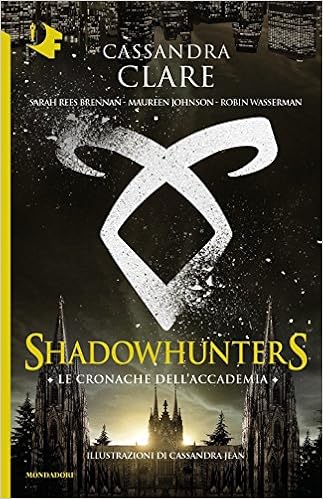
Le cronache dell'Accademia Shadowhunters/Tales from the Shadowhunter Academy (Cassandra Clare, etc.)

"Le cronache dell'Accademia Shadowhunters" (Tales from the Shadowhunter Academy) è una serie di racconti del 2016 ambientati nell'universo "Shadowhunters" creato da Cassandra Clare ed è uno dei quattro companion book della serie. Le aurici sono la stessa Cassandra Clare, Sarah Rees Brennan, Maureen Johnson e Robin Wasserman.
I racconti vedono protagonista Simon Lewis, uno dei personaggi principali della parte della serie ambientata ai giorni nostri. Dopo gli eventi della guerra contro Valentine, Simon, che ha perso la memoria, tornando ad una specie di punto zero mentre il resto del mondo sembra andato avanti, decide di diventare uno shadowhunter per cercare di recuperare i suoi ricordi e rientrare a fare parte del mondo magico a cui ormai i suoi amici appartengono.
Diventate un cacciatore di demoni però prevede la frequenza dell'Accademia a Idris, il paese degli shadowhunters. L'accademia è mezza diroccata, in pessime condizioni igieniche e serve pessimo cibo. Lì Simon si fa nuovi amici e nuovi nemici, soprattutto fra chi pensa che gli unici veri shadowhunters siano quelli di sangue puro.
All'interno dei racconti, i nuovi personaggi risultano più credibili di quelli vecchi. C'è un buon colpo di scena, ma per il resto il libro si regge tutto su Simon, il protagonista più umano e divertente delle prime saghe.
Lo consiglio ai fan di Simon, gli altri possono passare.

"Tales from the Shadowhunter Academy" is a 2016 series of stories set in the "Shadowhunters" universe created by Cassandra Clare and is one of the four companion boock of the series. THe authors are Cassandra Clare, Sarah Rees Brennan, Maureen Johnson and Robin Wasserman.
The stories feature Simon Lewis, one of the main characters of the part of the series set in our time. After the events of the war against Valentine, Simon, who lost his memory, returning to a kind of zero point while the rest of the world seems to have gone on, decides to become a shadowhunter to try to recover his memory and return to be part of the magical world to which his friends are now belonging.
To become a demon hunter, however, he has to attend the Academy in Idris, the country of the shadowhunters. The academy is half in ruins, has a poor hygiene and serves bad food. There Simon makes new friends and new enemies, especially among those who think that the only true shadowhunters are those of pure blood.
Within the stories, the new characters are more credible than the old ones. There is a good twist, but otherwise the book stands on the character of Simon, the most humorous and entertaining one of the first sagas.
I recommend it to Simon's fans, other people can pass.

mercoledì 21 febbraio 2018

La forma dell'acqua/The shape of water

Sabato scorso, per festeggiare San Valentino in ritardo, io e la Pelosa Metà siamo andati al cinema a vedere "La forma dell'acqua - The Shape of Water", l'ultimo film diretto da Guillermo del Toro, vincitore del Leone d'oro per il miglior film alla 74ª Mostra internazionale d'arte cinematografica di Venezia, di due Golden Globe per il miglior regista e la miglior colonna sonora originale e di ben tredici Oscar.
Il film è ambientato a Baltimora negli anni '60, durante la guerra fredda. La protagonista è una donna muta che convive con l'amico Giles, disegnatore pubblicitario fallito, e lavora come addetta alle pulizie in un laboratorio segreto governativo. Il suo mondo cambia quando viene portato al laboratorio per essere studiato un misterioso uomo anfibio e con lui arriva il colonnello Strickland, un uomo pieno di sé e violento verso la creatura nonostante sia chiaramente senziente.
Ho apprezzato la scelta di attori fuori dai canoni di bellezza standard e soprattutto di personaggi legati da un comune senso di emarginazione che li rende interessanti e umani. In effetti i personaggi con meno spessore sono quelli con meno problematiche, maschi bianchi in posizioni di potere, che diventano quasi macchiette.
 Tuttavia, nonostante l'ambientazione storica ben fatta e qualche scena molto cruda o anche troppo realistica, non si tratta di una storia che pone al centro una critica sociale, ma di una storia d'amore che è fondamentalmente una fiaba.
Sono i personaggi e l'unione a volte stridente fra realistico e fiabesco, uniti alla splendida fotografia e alle bellissime musiche, a rendere impossibile rimanere indifferenti davanti a questo film.
Io l'ho trovato meraviglioso, lo consiglio senz'altro.

Un mio veloce acquerello ispirato al film/A quick watercolour of mine inspired by the movie
Last Saturday, as a late Valentine's Day celebration, the Hairy Half and I went to the cinema to watch "The Shape of Water", the last film directed by Guillermo del Toro, winner of the Golden Lion for the best film at the 74th Venice Film Festival, of two Golden Globes for the best director and the best original soundtrack and of thirteen Oscars.
The film is set in Baltimore in the 1960s, during the Cold War. The protagonist is a mute woman who lives with her friend Giles, a failed advertiser artist, and who works as a cleaner in a secret government laboratory. Her world changes when  a mysterious amphibious man is brought to the laboratory to be studied and with him arrives Colonel Strickland, a man full of himself and violent towards the creature despite it is clearly sentient.
I appreciated the choice of actors out of the beauty standards and above all of characters linked by a common sense of marginalization that makes them interesting and human. In fact the shallower characters were those with less problems, white males in positions of power, who became almost caricatures.
 However, despite the well-done historical setting and some very brutal or even too realistic scenes, it is not a story that focuses on social criticism, but on a love story that is basically a fairy tale.
It is because of the characters and the sometimes jarring union between realistic and fairylike elements, combined with an awesome photography and beautiful music, that it is impossible to remain indifferent to this film.
I found it wonderful, I definitely recommend it.

lunedì 9 ottobre 2017

L'amante di Lady Chatterley/Lady Chatterley's Lover

Lady Chatterleys Lover.jpg
"L'amante di Lady Chatterley" (Lady Chatterley's Lover) è un romanzo del 1928 di David Herbert Lawrence. Da esso sono stati tratti numerosi adattamenti cinematografici, teatrali e televisivi, ma anche reinterpretazioni letterarie.
Del libro esistono tre versioni a causa delle pesanti modifiche apportate dall'autore in corso d'opera. Le traduzioni italiane e le relative polemiche sono ancora di più. Io ho letto in originale quella considerata definitiva.
La protagonista del romanzo è Constance, diventata Lady Chatterley a seguito del matrimonio con Clifford, appartenente alle fasce più basse della nobiltà inglese. Clifford rimane paralizzato dalla vita in giù durante la Prima Guerra Mondiale e la vitale Constance si trova intrappolata nella sua triste tenuta nelle campagne inglesi avvolte dai fumi delle miniere di carbone, senza poter trovare sfogo alle proprie pulsioni sessuali e costretta dalle regole che la sua posizione sociale le impone. Questo la spingerà a cercare una relazione "vera", anche se con un uomo a lei socialmente inferiore.
La pubblicazione di questo libro fu seguita da fortissime polemiche a causa delle descrizioni esplicite di scene di sesso, dell'uso di parole considerate allora troppo volgari per essere usate in letteratura e della descrizione di una relazione fra una donna nobile e un lavoratore di bassa classe. Fino al 1960 in Inghilterra ne fu pubblicata un'edizione censurata e in vari paesi subì processi per oscenità. A seguito delle critiche e della censura subite dall'opera, l'autore scrisse "A proposito dell''Amante di Lady Chatterley'".
Si dice che il libro sia stato ispirato dalla relazione della moglie di Lawrence, Frieda von Richthofen, con il tenente Angelo Ravagli (che poi sposò dopo aver ottenuto il divorzio) mentre lo scrittore era sempre più sofferente a causa della tubercolosi. Probabilmente è stato ispirato anche dalla relazione di Lawrence, figlio di un minatore e di una maestra, con la nobile Frieda, che al momento del loro incontro era sposata ad un altro uomo.
Ha un romanzo del genere ancora valore al giorno d'oggi? La questione della classe sociale è ormai desueta, non perché non esista più, ma perché si finge che non abbia più importanza. Di sicuro lo scandalo per una relazione del genere sembra anacronistico.
Invece i vari punti di vista sul sesso esplicitati dai personaggi del libro mi sono sembrati ancora molto interessanti, tanto più che mancano del politically correct tanto caro ai contemporanei.
Infine il conflitto fra industrializzazione, vista come una corruzione dell'umanità, e natura è tristemente sempre più attuale.
A questo bisogna aggiungere che "L'amante di Lady Chatterley" è un romanzo davvero ben scritto (cosa in genere scontata con i classici, ma che fa piacere constatare), brillante e coinvolgente, anche se ogni tanto ho trovato il ritmo un po' lento. I personaggi sono tutti tratteggiati a tutto tondo, credibili e interessanti.
E' un classico che risente ben poco del tempo e che consiglio senz'altro.

"Lady Chatterley's Lover" is a 1928 novel by David Herbert Lawrence. It got a lot of movie, theatrical and television adaptations, as well as literary reinterpretations.
There are three versions of the book because of the heavy changes made by the author while it was been written. I have read in original the one he considered definitive.
The protagonist of the novel is Constance, who became Lady Chatterley following her marriage with Clifford, who belongs to the lower English nobility. Clifford got paralyzed from life down during the First World War and the lively Constance is trapped in his sad estate in an English countryside wrapped in the smoke coming from the coal mines, without being able to satisfy her sexual drive and restrained by the rules that her social position demands. This will push her to look for a "true" relationship, though with a socially inferior man.
The publication of this book was followed by strong controversy because of the explicit descriptions of sex, the use of words then considered too gross to be used in the literature and the description of a relationship between a noble woman and a low class man. Until 1960 in England was published a censored edition and it was processed as obscene in various countries. Following the criticism and censure of the work, the author wrote "About 'Lady Chatterley's Lover'".
It is said that the book was inspired by the relationship of Lawrence's wife, Frieda von Richthofen, with Lieutenant Angelo Ravagli (who she later married after getting divorced) while the writer was increasingly suffering from tuberculosis. It was probably also inspired by the relationship of Lawrence, the son of a miner and a teacher, with the noble Frieda, who at the time of their encounter was married to another man.
Is such a novel still valuable nowadays? The question of the social class is now decaying, not because it does not exist anymore, but because people pretend that it does not matter anymore. Certainly the scandal about such a relationship seems anachronistic.
Instead, I think the various perspectives about sex of the book's characters were very interesting, especially because they lack the politically correctness so dear contemporaries.
Finally, the conflict between industrialization, seen as a corruption of humanity, and nature is sadly more and more modern.
To this we have to add that "Lady Chatterley's Lover" is a really well-written novel (generally it's obvious with classics, but it's good to verify it), brilliant and engaging, although occasionally I found the rhythm a bit slow. The characters are all deep, credible and interesting.
It's a classic that suffers very little the wrecks of time and I definitely recommend it.

venerdì 6 ottobre 2017

Valerian e la città dei mille pianeti/Valerian and the City of a Thousand Planets

"Valerian e la città dei mille pianeti" (Valérian et la Cité des mille planètes) è un film del 2017 diretto da Luc Besson, basato sul fumetto francese "Valérian and Laureline", sceneggiato da Pierre Christin e disegnato da Jean-Claude Mézières dal 1967 al 2010. Prima di cominciare con la recensione vera e propria, premetto che non ho mai letto il fumetto, quindi non sono in grado di fare paragoni.
Il film è ambientato in un remoto futuro in cui gli esseri umani viaggiano nello spazio e convivono con razze aliene. Gli agenti del governo umano Valerian e Laureline devono svolgere alcune missioni che paiono intrecciarsi stranamente al destino di un popolo che si credeva scomparso...
La sequenza iniziale è splendida e tutto il film è visivamente straordinario, specialmente la corsa nei vari ambienti della stazione spaziale.
La trama di per sé sarebbe abbastanza lineare, ma, soprattutto nella seconda parte del film, ci sono dei buchi logici colossali che sarebbero stati facilmente evitabili. Ad esempio Valerian è in grado di sfondare pareti corazzate con la tuta da combattimento, mentre Laureline con la stessa tuta non riesce a sfondare una gabbia di bambù. Oppure, Valerian sfonda parecchie pareti pressurizzate di una stazione spaziale senza farsi problemi. Oppure, Valerian passa tutto il film a infrangere regole per poi fare una tirata sul suo senso del dovere sul finale. Insomma, i buchi logici sono tanti, più o meno grossi e si fanno sentire parecchio.
Non aiutano i protagonisti, che non stimolano l'empatia dello spettatore nemmeno a pagarli.
Lui è talmente arrogante e pieno di sé che l'avrei preso a schiaffi dall'inizio alla fine, mentre il problema di lei è la recitazione di Cara Delevingne che stilla sesso in qualsiasi tipo di situazione, ma non è mai completamente convincente. In più, i personaggi che dovrebbero essere i buoni della situazione continuano a sacrificare innocenti per raggiungere i propri scopi dimenticandosi di loro subito dopo.
Invece ho apprezzato la recitazione di Rhianna, su cui si è detto tanto nel bene e nel male.
In conclusione, per quanto esteticamente bello, questo film non riesce a funzionare nemmeno togliendo l'audio. Se ne può salvare giusto qualche clip. Guardate i trailer ed evitate il cinema.

"Valerian and the City of a Thousand Planets" (Valérian et la Cité des mille planètes) is a 2017 movie directed by Luc Besson, based on the French comic book "Valérian and Laureline" written by Pierre Christin and drawn by Jean-Claude Mézières from1967 to 2010. Before starting with the actual review, I have to say that I've never read the comic, so I can not make comparisons.
The movie is set in a remote future where humans travel in space and live with alien races. Valerian and Laureline are officers of the human government for which they have to go on various missions that seem strangely intertwined with the destiny of a race who was supposed to have disappeared...
The initial sequence is awesome and the whole movie is visually extraordinary, especially the run in the various space station environments.
The plot itself would be fairly linear, but, especially in the second part of the movie, there are colossal plot holes that would easily have been avoided. For example, Valerian with his battle suit is able to break through steel walls, while Laureline with the same suit can not break through a bamboo cage. Or, Valerian breaks several pressurized walls of a space station without any second tought. Or, Valerian goes breaks rules for the whole movie and in the end makes a speech about his sense of duty. In short, the logical holes are many, big and small, and cannot be ignored.
The protagonists don't help, as they can't stimulate the spectator's empathy.
The male lead is so arrogant and full of himself that I would have slapped him from beginning to end, while the problem of the female lead is the acting of Cara Delevingne who is sexy in any kind of situation, but is never completely convincing. In addition, the protagonists, who should be the good guys, continue to sacrifice innocent people to achieve their goals and forget them immediately afterwards.
Instead, I liked Rhianna's acting, about which was said so much, good and not so good.
In conclusion, though aesthetically beautiful, this movie doesn't even in mute mode. Only short pieces can be saves. Watch the trailers and avoid the cinema.

giovedì 21 settembre 2017

Tokyo ESP


"Tokyo ESP" (東京ESP) è uno shōnen manga scritto e disegnato da Hajime Segawa, serializzato dalla Kadokawa Shoten  sulla rivista "Shōnen Ace" dal 2010 al 2016. La serie si è conclusa con il sedicesimo volume. Nel 2014 dal fumetto è stato tratto un anime, prodotto dalla Xebec.
 In Italia l'opera è stata pubblicata dalla dalla Panini Comics.
La protagonista è Rinka Urushiba, una liceale di famiglia poverissima che vive a Tokyo. Un giorno vede dei pesci luminosi nuotare nel cielo e, dopo averne toccato uno, sviene. Crede si tratti di un'allucinazione, ma in seguito a questo episodio scopre di aver acquisito delle capacità extrasensoriali: è diventata in grado di attraversare la materia.
Rinka non è un caso isolato: a Tokyo varie persone hanno acquisito capacità speciali. Si moltiplicano i crimini causati da ESP  e Rinka, trascinata dal suo compagno di scuola Azuma, decide di aiutare a combatterli grazie all'addestramento ricevuto da suo padre, ex poliziotto.
Ma è solo l'inizio, lentamente si rivela uno spaventoso complotto...
Tokyo ESP, al contrario di molti shōnen, è un manga completo. C'è sì un protagonista che deve diventare sempre più forte e scontrarsi con nemici sempre più potenti, ma con il supporto di una trama complessa (non il solito torneo) ed emozionante che rimane abbastanza coerente lungo tutto il fumetto (è la prima volta che i riferimenti biblici in un manga non mi fanno rizzare i capelli) e che non disdegna di parlare anche di amicizia e amore.
Verso metà del manga, Rinka lascia in modo un po' incongruo il ruolo della protagonista a Ren Jomaku, un'altra liceale, sicuramente perché i poteri della nuova arrivata sono la chiave della seconda parte del manga, ma forse perché intanto Rinka era diventata un personaggio troppo forte e maturo e il mangaka voleva mostrare una nuova storia di crescita (e abbassare l'età del personaggio principale).
Il tono è avventuroso e a tratti tragico, ma non mancano tocchi di comicità.
I personaggi tendono a riflettere lo stile esagerato degli shōnen, con cattivi malvagissimi, persone che diventano amiche dopo essersi picchiate all'ultimo sangue... ma c'è comunque un superamento di questa bidimensionalità nella maggior parte dei personaggi, a partire da Rinka che inizialmente non è affatto convinta di voler fare l'eroina. Segawa riesce a creare psicologie e relazioni complesse nonostante numero molto alto di personaggi.
Il disegno è uno dei punti forti di "Tokyo ESP", gradevole, dinamico, con anatomie credibili, curatissimo nei particolari, con divertenti riferimenti pop (il padre di Rinka sembra Wolverine, il maestro sembra Yoda e così via).
In sostanza direi che è uno dei manga migliori che ho letto negli ultimi anni. Lo consiglio assolutamente. A questo punto sono curiosa di vedere l'anime.

"Tokyo ESP" (東京 ESP) is a shōnen manga written and drawn by Hajime Segawa, serialized by Kadokawa Shoten in the magazine "Shōnen Ace" from 2010 to 2016. The series ended with the 16th volume. In 2014, it got an anime version produced by Xebec.
The protagonist is Rinka Urushiba, a very poor high school student living in Tokyo. One day she sees bright fishes swimming in the sky and after touching one of them she faints. She thinks it was an hallucination, but after this episode she discovers she has acquired extrasensory abilities: she can pass trough matter.
Rinka is not an isolated case: in Tokyo, several people have acquired special powers. In the aftermath the crimes caused by ESP multiply and Rinka, dragged by her schoolmate Azuma, decides to help fight them through the training she received by his father, a former policeman.
But it's just the beginning, slowly a scary plot gets disclosed...
Tokyo ESP, unlike many shōnen, is a complete manga. There is a protagonist who must grow stronger and fight with increasingly powerful enemies, but with the support of a complex plot (not the usual tournament) that remains coherent throughout the comic (this is the first time biblical references in a manga don't make me shiver) and that talks about friendship and love as well.
Toward the half of the manga, Rinka, a bit incongruouly, leaves the role of the protagonist to Ren Jomaku, another high school student, surely because the powers of the newcomer are the key to the second part of the manga, but perhaps also because Rinka had become too strong and mature and the mangaka wanted to show a new coming of age story (and lower the age of the main character).
The tone is adventurous and at times tragic, but there are comic touches.
The characters tend to reflect the exaggerated style of shōnen, with really really evil bad guys, people who become friends after trying to kill each other... but this two-dimensionality is overcome in most characters, starting with Rinka who at first is not so convinced about becoming an hero. Segawa creates complex psyche and relationships despite a very high number of characters.
The drawings are ione of the strong points of "Tokyo ESP", pleasing to the eye, dynamic, with credible anatomies, a lot of details, and funny pop references (Rinka's father looks like Wolverine, the teacher looks like Yoda, and so on).
To cut it short, this is one of the best manga I have read in recent years. I absolutely recommend it. At this point I'm curious to watch the anime.

mercoledì 6 settembre 2017

Amami lo stesso/Please Love the Useless Me (Aya Nakahara)

"Amami lo stesso" (in originale "Dame na Watashi ni Koishite Kudasai") è un manga josei (quindi dedicato ad un pubblico di donne adulte) di Aya Nakahara, pubblicato da Shueisha sulla rivista "You" a partire dall'aprile 2013. Il fumetto è concluso e conta un totale di 10 tankobon. Tuttavia l'autrice ha già annunciato un seguito, che sarà sottotitolato "Returns". Nel 2016 da questo manga è stato tratto un telefilm (che recensirò a breve).
In Italia "Amami lo stesso" è stato pubblicato da Panini Comics nella collana Planet Shojo.
La protagonista è Michiko Shibata, una donna che si avvicina ai fatidici 30 anni, è squattrinata e non ha un vero fidanzato, limitandosi a mantenere ragazzi giovani e carini. Michiko all'improvviso perde il lavoro e si trova nei guai. Ad aiutarla sarà la persona più improbabile, il suo odiatissimo ex-capo, che le offre un lavoretto part-time nel caffè che ha appena aperto. Ma l'eccessiva ingenuità (che sconfina nel'idiozia) della ragazza, la spingerà a cacciarsi in guai ancora più grossi.
Si tratta del primo josei dell'autrice, che avevo già adorato in "Lovely Complex", sua opera più famosa e mio shojo preferito.
Come in "Lovely Complex", il manga è caratterizzato da un umorismo scanzonato, che si incentra soprattutto sulla stupidità della protagonista, sul suo amore irrefrenabile per la carne e sul suo bizzarro rapporto con il capo, che la aiuta, ma la maltratta anche costantemente.
E' una storia di formazione abbastanza banale e con un finale prevedibile, ma lo svolgimento riesce a non annoiare mai, grazie anche a comprimari memorabili come Akira (il mio personaggio preferito!), la scorbutica ex fidanzata del capo o l'adorabile Mogami, collega di Michico. Altri personaggi sono meno riusciti, in particolare il fratello del capo, che risulta decisamente eccessivo, ma sono una minoranza.
Le situazioni sono abbastanza realistiche, l'autrice riesce in gran parte ad evitare eccessi tipici degli shojo. Ci sono comunque, anche per una questione di comicità, situazioni paradossali. Mi ha dato un po' fastidio la scelta di una protagonista che non solo è vergine, ma che non è nemmeno mai stata baciata: mi è sembrata un po' troppo improbabile rispetto alla vita reale di una ventinovenne, ma anche troppo puritana rispetto al target adulto dei lettori.
Ho trovato molto fastidioso anche l'atteggiamento dei personaggi nei riguardi del matrimonio, ma temo che sia abbastanza realistico rispetto al Giappone, soprattutto quello di qualche anno fa.
I punti forti di "Amami lo stesso", quindi sono l'umorismo e i personaggi principali. Anche se all'inizio mi ha un po' depressa (ho ventinove anni e sono più o meno disoccupata), man mano che la pubblicazione procedeva mi sono trovata a leggere questo fumetto con sempre più allegria, finché non è diventata una lettura che mi metteva il buonumore.
Se vi piacciono i manga allegri e un po' ingenui ve lo consiglio senz'altro, specialmente se volete provare un approccio un po' più leggero allo josei.

"Please Love the Useless Me" (in original "Dame na Watashi ni Koishite Kudasai") is a josei manga (hence dedicated to a grown-up female audience) by Aya Nakahara, published by Shueisha in the magazine "You", starting April 2013. The comic is completed and counts a total of 10 tankobon. However, the author has already announced a sequel, which will be subtitled "Returns". In 2016 this manga was made into a tv series (which I will review soon).
The protagonist is Michiko Shibata, a woman who approaches the fateful age of 30, and who is poor and does not have a true boyfriend, as she just supports young and cute guys. Michiko suddenly loses her work and is in trouble. The one to help her is the most unlikely person, her hated ex-boss, who offers her a part-time job in the coffee he has just opened. But the excessive naivety of the girl will push her into even greater troubles.
This is the first josei of the author, whom I adored in "Lovely Complex", her most famous work and my favorite shojo.
Like in "Lovely Complex", the manga is characterized by a funny tone, which focuses mainly on the hero's stupidity, her love for meat, and her bizarre relationship with her boss, who helps her but also constantly mistreats her.
It's a fairly banal coming of age story with a predictable ending, but its developement is never boring, thanks to memorable characters like Akira (my favorite!), the ill-tempered ex-girlfriend of the boss or the adorable Mogami, a colleague of Michico. Other characters are less successful, especially the boss's brother, who is definitely excessive, but they are a minority.
The situations are quite realistic, the author largely succeeds in avoiding the typical excesses of the shojo genre. There are, however, paradoxical situations, even because of the funny tone. It bothered me a bit the choice of a protagonist who is not only a virgin, but who has never even been kissed: it seemed me a little improbable for a 29-year-old woman but also too puritan for a target of adult readers.
I also found the attitude of the characters about marriage very annoying, but I'm afraid it's pretty realistic about Japan, especially a few years ago.
So, the strong points of "Please Love the Useless Me" are the humor and the main characters. Even though I got a bit depressed at the beginning (I'm twenty-nine and I'm pretty much unemployed) as the publication went on I found myself reading this comic with increasing happiness until it became a reading that put me in a great mood.
If you like funny and a bit naive manga I'll definitely recommend it to you, especially if you want to try a lighter approach to josei.

mercoledì 9 agosto 2017

Passenger series (Alexandra Bracken)

La saga "Passenger" è costituita da due romanzi, "Passenger", pubblicato nel 2016, e "Traveller" ("Wayfarer" in originale), pubblicato nel 2017, scritti dalla statunitense Alexandra Bracken.
La protagonista è Henrietta Spencer, una sedicenne di Manhattan che, al suo debutto come violinista professionista, si ritrova all'improvviso scaraventata su di una nave pirata nel XVIII secolo. Lì incontra Nicholas Carter, un giovane che vuole conquistare una vita degna di essere vissuta nonostante sia nato da una schiava.
Da queste premesse si sviluppa una storia d'amore e d'azione, piena di intrighi, che si sviluppa lungo vari luoghi ed epoche grazie all'espediente dei viaggi nel tempo, che mi piace moltissimo. Nella saga i viaggi nel tempo sembrano essere legati più alla magia che alla tecnologia. C'è un vago tentativo di spiegazione scientifica, ma ci sono vari elementi che tendono al soprannaturale.
Ho trovato la narrazione molto avvincente, grazie alla trama intricata (ma coerente) e ai continui cambi di scenario. I personaggi principali sono abbastanza stereotipati, ma interessanti e credibili. Mi è piaciuta la scelta di un protagonista mulatto che viene discriminato per il colore della sua pelle. Altri personaggi, come sono meno realistici, ma nel contesto funzionano. Ho apprezzato l'inserzione di personaggi omosessuali.
L'elemento che ho trovato più debole è stata la scrittura in stile romanzaccio d'amore, pienissima di aggettivi (l'autrice sembra amare moltissimo le metafore basate sulla seta e sul miele). Bisogna però sottolineare che ho letto la saga in italiano, probabilmente in originale è molto migliore.
In conclusione penso che questi romanzi non siano in sé incredibili, ma che sarebbero un'ottima base per una serie tv.

The "Passenger" saga is made of two novels, "Passenger", released in 2016, and "Wayfarer", published in 2017, written by US author Alexandra Bracken.
The protagonist is Henrietta Spencer, a sixteen-year-old Manhattan girl who, at her debut as a professional violinist, suddenly finds herself on a pirate ship in the 18th century. There she meets Nicholas Carter, a young man who wants to conquer a worthy life despite being born form a slave.
From these premises develops a story of love and action, full of intrigues, which evolves along various places and ages thanks to the device of the time travels that I really like. In the saga, time travel seems to be more tied to magic than to technology. There is a vague attempt to give a scientific explanation, but there are various elements that tend to the supernatural.
I found the narrative very enthralling, thanks to the intricate (but consistent) plot and the ever-changing scenarios. The main characters are quite stereotyped, but interesting and credible. I liked the choice of a mulatto protagonist who is discriminated because of the color of his skin. Other characters are less realistic, but work ok in the context. I enjoyed the inclusion of homosexual characters.
The element I found to be weaker the romantic novel-like writing, with many adjectives (the author seems to love metaphors based on silk and honey). But I have to point out that I read the saga in Italian, probably the original is much better.
In conclusion I think these novels are not incredible in themselves, but that they would be a great basis for a TV series.

giovedì 29 giugno 2017

Azalea rossa/Red Azalea (Anchee Min)

"Azalea Rossa" (Red Azalea) è l'autobiografia della scrittrice cinese Anchee Min, pubblicata nel 1992  in inglese negli  Stati Uniti, dove l'autrice è emigrata.
Il libro è diviso in tre parti: l'infanzia negli anni '60, il trasferimento in un campo di lavoro (in quel periodo era politica dello stato trasferire gli studenti dalle città a lavorare in campagna) e la sua formazione come attrice cinematografica per film di propaganda durante la Rivoluzione Culturale, dopo essere stata selezionata all'interno del campo da un talent scout. Il libro si conclude effettivamente con la morte di Mao nel '96, anche se l'autrice fa un brevissimo resoconto degli anni successivi fino al suo trasferimento negli Stati Uniti nel 1984.
Ognuno dei tre periodi vede un momento di conflitto con l'ideologia maoista in cui la protagonista a inizio libro crede ciecamente. Ma Anchee Min non ha remore nemmeno a parlare della sua vita sentimentale e sessuale, ed è particolarmente interessante la storia della sua relazione con una compagna del campo di lavoro in un mondo in cui non è considerata problematica tanto l'omosessualità quanto il sesso in generale.
La scrittura è scorrevole e coinvolgente, con qualche tono da romanzo rosa e un certo erotismo che sono il marchio di fabbrica dell'autrice. Una curiosità è che i nomi dei personaggi sono stati volutamente tradotti dall'autrice tenendo conto del significato e non della pronuncia. Quello che è davvero avvincente però sono i fatti narrati e soprattutto la descrizione di una Cina di cui l'Occidente di quegli anni sapeva molto poco e che ormai è scomparsa.
Questa autobiografia si situa più o meno nello stesso periodo in cui è ambientata quella di Jung Chang, "Cigni selvatici: tre figlie della Cina" (trovate la mia recensione qui), che ha solo cinque anni più di Anchee Min. Nonostante la quasi contemporaneità e la condivisione di molti episodi storici rilevanti, i due libri sono piuttosto diversi e quindi è ancora più interessante leggerli entrambi a breve distanza.

"Red Azalea" is the autobiography of the Chinese writer Anchee Min, published in 1992 in English in the United States, where the author emigrated.
The book is divided into three parts: her childhood in the 1960s, her transfer to a labor camp (at that time it was a state policy to transfer students from cities to work in the countryside) and her formation as an actress for propaganda movies during the Cultural Revolution, after being selected in the countryside by a talent scout. The book de facto ends with the death of Mao in 1996, although the author makes a brief account of the following years until her transfer to the United States in 1984.
Each of the three periods sees a moment of conflict with the Maoist ideology in which the protagonist at the beginning of the book believes blindly. But Anchee Min does not even hesitate to talk about her sexual and emotional life, and the story of her relationship with a girl at the labor camp is particularly interesting in a world where homosexuality is not considered as problematic as sex in general.
The writing style is fluid and engaging, with some romantic novel tones and some eroticism that are the trademark of the author. One curiosity is that the names of the characters have been deliberately translated by the author, taking into account the meaning and not the pronunciation. What is really addictive, however, are the facts told and, above all, the description of a China about which the West of those years knew very little and which has now disappeared.
This autobiography is more or less set in the same period as the one by Jung Chang, "Wild Swans: Three Daughters of China" (you can find my review here), who is only five years older than Anchee Min. While they share many relevant historical episodes, the two books are quite different so it is even more interesting to read them both in short order.

venerdì 9 giugno 2017

Sulla via lattea/On the milky road

"Sulla via lattea" (On the milky road) è un film del 2017 del regista serbo Emir Kusturica.
Il film è basato sul cortometraggio "Our Life", scritto a quattro mani dal regista Emir Kusturica e da sua figlia Dunja.
La storia è ambientata durante la guerra dei Balcani. Il protagonista è Kostia (interpretato dallo stesso Kusturica), un uomo che i traumi della guerra hanno trasformato in una sorta di Don Chisciotte che trasporta il latte da una fattoria alla trincea cavalcando un mulo e seguito da un falco ammaestrato, reggendo un ombrello aperto per ripararsi dalle pallottole.
Alla fattoria ci sono un'anziana signora, Milena, una bellissima ex ginnasta innamorata di Kostia, e un orologio napoleonico gigante con il vizio di ferire chi cerca di sistemarlo.
Milena è la sorella di un eroe di guerra e contrabbanda da un campo profughi alla fattoria una moglie per il fratello, una bella donna di origine italiana con una sanguinosa storia alle spalle.
Naturalmente Kostia e la nuova arrivata si innamorano con conseguenze disastrose.
La prima parte ricorda lo stile festoso e tragicomico di "Underground" e "Gatto nero, gatto bianco" (fra l'altro all'interno del film il regista si cita più volte). La seconda parte è una vera e propria fiaba, con magia, animali che aiutano i protagonisti, cattivi senza sfumature e immagini fortemente simboliche.
In generale l'ho trovato un bel film (Kusturica è uno dei miei registi preferiti e la sua scelta di trattare temi impegnati con toni surreali mi piace sempre moltissimo). Purtroppo lo stacco fra le due parti si sente. Ho anche trovato pessima l'idea di dare la parte della protagonista a Monica Bellucci, che secondo me è un'attrice scarsa, considerando anche che la recitazione di Sloboda Micalovic (Milena) invece era ottima.
Se vi piace il regista, vale comunque la pena di recuperare questo film: è girato benissimo e ci sono scene difficili da dimenticare (l'orologio e le oche che fanno il bagno nel sangue, per citarne solo due). Tuttavia non è uno dei migliori di Kusturica.

"On the Milky Road" is a 2017 movie by the Serbian director Emir Kusturica.
The film is based on the short film "Our Life", written by Kusturica with his daughter Dunja.
The story is set during the Balkan War. The protagonist is Kostia (played by Kusturica himself), a man who war trauma transformed into a kind of Don Quixote that carries milk from a farm to the trench by riding a mule and followed by a learned hawk, holding an umbrella open to take cover from the bullets.
At the farm there are an old lady, Milena, a beautiful ex-gymnast in love with Kostia, and a giant Napoleonic clock with the vice to hurt anyone trying to fix it.
Milena is the sister of a war hero and smugls from a refugee camp to the farm a wife for her brother, a beautiful woman of Italian origin with a bloody story behind her.
Of course, Kostia and the newcomer fall in love with disastrous consequences.
The first part remembers the festive and tragicomic style of "Underground" and "Black Cat, White Cat" (among the other things in the film the director cites his old works several times). The second part is a real fairy tale, with magic, animals that help the protagonists, bad guys with no depth and highly symbolic images.
In general, I found it a nice movie (Kusturica is one of my favorite directors and I always love his choice of dealing with hard themes using surreal tones). Unfortunately, the difference between the two parts is a bit too much. I also found the idea of ​​giving the part of the female lead to Monica Bellucci a bad idea, because I think she is a poor actress, moreover considering that the acting of Sloboda Micalovic (Milena) was excellent.
If you like the filmmaker, it's still worth recovering this movie: it's beautiful and there are scenes difficult to forget (the clock and the geese bathing in blood, to name just two). However, it is not one of Kusturica's best.

mercoledì 10 maggio 2017

Legion

"Legion" è una serie televisiva statunitense del 2017, ideata e prodotta da Noah Hawley.
E' ispirata all'omonimo personaggio dei fumetti Marvel Comics, il figlio del potentissimo telepate Charles Xavier, che soffre di disturbi mentali e ha personalità multiple, ognuna delle quali controlla un suo potere.
E' la prima serie prodotta dalla Marvel Television a non far parte del Marvel Cinematic Universe, quindi è scollegata dai film dedicati agli X-Man.
Al momento conta una sola stagione costituita da 8 episodi di durata compresa fra 50 e 60 minuti.
Il protagonista è David Haller, un trentenne rinchiuso in una clinica psichiatrica a causa della schizofrenia diagnosticatagli durante l'adolescenza. In ospedale arriva una nuova paziente, Sydney Barrett, una ragazza che detesta il contatto fisico. David si innamora di lei immediatamente. E' l'inizio di un'avventura che vede coinvolto un gruppo di ricerca segreto, un corpo speciale del governo e poteri sovrannaturali a profusione.
"Legion" si può definire un telefilm sotto LSD per la sua abbondanza di scene oniriche, per il fatto di essere in parte ambientato in parte nella mente del protagonista (e non solo), ma anche perché c'è un forte richiamo stilistico agli anni '70 (anche se l'epoca della narrazione non è mai specificata).
Ho trovato la recitazione degli attori, e specialmente del protagonista, davvero molto buona (sebbene io abbia visto la versione doppiata e possa esprimermi solo in parte).
Gli effetti speciali sono stupendi e anche scenografia e musica sono ottime.
La narrazione è particolarmente efficace per la sua ambiguità: non si sa se quello che si vede è vero o se siamo nella mente di David, non si sa se i personaggi sono davvero quelli che dicono di essere e non ci sono fastidiosi spiegoni a rovinare l'effetto straniante.
Insomma, non il classico telefilm sui supereroi, per niente. C'è chi l'ha trovato lento e lo ha abbandonato (certo, per apprezzarlo appieno bisogna superare le prime due puntate), ma io l'ho trovato stupendo dall'inizio.
Quello che mi ha deluso è stato il finale troncato che di fatto non è un finale. Non mi resta che attendere trepidante la seconda stagione.

"Legion" is a US 2017 television series, created and produced by Noah Hawley.
It's inspired by the homonymous Marvel Comics character, son of the powerful telepath Charles Xavier, who suffers from mental illness and has multiple personalities, each of which controls one of his powers.
It's the first series produced by Marvel Television not connected with the Marvel Cinematic Universe, so it's also unconnected with the X-Man films.
It currently has a single season of 8 episodes lasting between 50 and 60 minutes.
The protagonist is David Haller, a thirty-year-old man closed in a psychiatric clinic due to the schizophrenia diagnosed him during adolescence. A new patient arrives in the hospital, Sydney Barrett, a girl who hates physical contact. David falls in love with her immediately. It is the beginning of an adventure involving a secret research group, a special government corp, and a lot of supernatural powers.
"Legion" can be defined a TV show under LSD for its abundance of dreamy scenes, because it is partially set in the mind of the protagonist (and not only his), but also because there is a strong stylistic appeal to the 70s (although the era of the narration is never specified).
I found the acting, especially the one of the protagonist, really good (although I saw the dubbed version and can judge only partly).
The special effects are wonderful and the setting and music are great too.
The narration is particularly effective for its ambiguity: we don't know whether what we see is true or whether we are in David's head, we do not know whether the characters are really who they say they are and there are no annoying explanations to ruin the alienating effect.
In short, it isn't the classic superhero show, not at all. Someone found it slow and abandoned it (of course, to appreciate it completely you have to overcome the first two episodes) but I found it awesome from the start.
What I was disappointed was the ending which in fact is not an ending at all. I just have to wait for the second season.
Related Posts Plugin for WordPress, Blogger...