Visualizzazione post con etichetta alberghi. Mostra tutti i post

mercoledì 15 novembre 2017

Piazzetta (Molina di Quosa)

Quest'anno, per partecipare a Lucca Comics, io e il mio gruppo di autoproduzione a fumetti, sfruttando uno sconto, abbiamo alloggiato con Air Bnb in una casa storica a Molina di Quosa, la Piazzetta. Era enorme, con un arredamento rustico che mi è piaciuto molto, in legno e mattoni, con un giardino, il parcheggio, tre stanze e tre bagni su due piani, salotto e cucina.
Ci è molto piaciuta.

This year, to take part to Lucca Comics, I and my comic artists group, using a discount, stayed with Air Bnb in an historic house in Molina di Quosa, the Piazzetta. It was huge, with a rustic decor that I really liked, wood and brick, with a garden, parking, three rooms and three bathrooms on two floors, living room and kitchen.
We really liked it.

Non avevo mai sentito nominare Molina di Quosa, ma ho scoperto che è in una posizione fantastica, a 20 minuti di macchina sia da Lucca sia da Pisa e in una zona di bei sentieri per il trekking. Sono riuscita a fare una veloce passeggiata in zona la mattina della domenica e c'erano dei panorami bellissimi.

I had never heard about Molina di Quosa, but I found it to be in a great location, a 20 minutes drive from both Lucca and Pisa and in an area of hiking trails. I was able to take a quick walk around the area on Sunday morning and there were some beautiful views.

martedì 3 ottobre 2017

Treviso Comic Book Festival 2017

Il penultimo weekend del mese sono andata per la seconda volta al Treviso Comic Book Festival con Cargo, il collettivo di fumettisti di cui faccio parte.
Il TCBF secondo noi è uno dei festival di fumetto migliori in circolazione perché dà molta attenzione alle autoproduzioni e gli elementi che non sono fumetto o illustrazione sono ridotti al minimo (per esempio non ci sono cosplayer e i gadget sono pochissimi e molto specifici).
Abbiamo alloggiato all'Appartamento Buranelli, una mansarda molto bella, ampia, ben arredata e con tutti i comfort, in posizione centralissima. La proprietaria era molto gentile e simpatica e la terrazza con vista sui tetti della città era talmente bella che abbiamo deciso di cenare a casa per poter mangiare lì.
La mattina del sabato ho visto una serie di cortometraggi animati a tema cibo molto carini (seguiranno a breve le recensioni) proiettati dall'associazione Cineforum Labirinto.

The third weekend of the month I went for the second time at the Treviso Comic Book Festival with Cargo, the cartoonist collective of which I'm part.
The TCBF is one of the best cartoon festivals in Italy because it gives a lot of attention to self-productions and because elements that are not comics or illustrations are minimized (for example, there are no cosplayers and the gadgets are very few and very specific).
We stayed at Appartamento Buranelli, a very nice, spacious attic, well furnished and with all comforts, in a central location. The owner was very nice and the terrace overlooking the rooftops of the city was so beautiful that we decided to dine at home to eat there.
On Saturday morning I watched a series of very nice animated short films about food (a review will follow soon) projected by the Association Cineforum Labirinto.

Abbiamo pranzato vicino di fronte all'isolotto della Pescheria, dove si svolge il mercato del pesce, all'osteria tradizionale Muscoli's. Visto che eravamo a Treviso abbiamo preso spritz normali e al rabarbaro e dei favolosi cicchetti con salmone, pesce spada, funghi freschi, spendendo circa 8€ a testa (per uno spritz e tre cicchetti).

We had lunch near Peschiera Island, where the fish market is held, at the traditional tavern Muscoli's. Since we were in Treviso we drank spritz and rhubarb sprits and ate fabulous cicchetti (a sort of traditional open sandwitch) with salmon, swordfish, fresh mushrooms, spending about 8€ per head (for a spritz and three cicchetti each).

Nel pomeriggio sono stata allo stand quasi tutto il tempo, ma sono riuscita anche a vedere la bellissima mostra dedicata ai 50 anni di fumetto di Giorgio Cavazzano, uno dei più famosi fumettisti Disney italiani e non solo.

In the afternoon I stayed at the stand almost all the time, but I also managed to see the beautiful exhibition dedicated to the 50-years of comics of Giorgio Cavazzano, one of the most famous Disney cartoonists in Italy and beyond.

La domenica ha diluviato tutto il giorno. Dopo una ricchissima e buonissima colazione da Kiribiri in Borgo Giuseppe Mazzini 43 (il personale però, anche se gentile, era un po' disattento), ho passato la mattina allo stand.

On Sunday, it poured all day. After a very good breakfast at Kiribiri in Borgo Giuseppe Mazzini 43 (the staff though, though kind, was a bit unattentive), I spent the morning at the stand.

Ho pranzato con la convenzione espositori da TVBurger, un'hamburgereria gourmet in Borgo Giuseppe Mazzini 50. Ho preso il panino veggie che era buono, ma quello che mi è piaciuto di più sono state le patatine, spaziali. Il servizio era un po' lento, ma il personale era davvero molto molto gentile. Il locale era carino e moderno, i bagni così così (in quello delle donne la porta non si chiudeva).

I had lunch with the exhibitor discount at  TVBurger, a gourmet burger place in Borgo Giuseppe Mazzini 50. I took the veggie burger that was good but what I liked most were the fries, delicious. The service was a little slow, but the staff was really very nice. The restaurant was nice and modern, the bathrooms so and so (in the women's restroom the door did not close).

Nel pomeriggio ho visto varie mostre. A Casa Robegan ho visto quella dedicata agli ultimi lavori dell'autrice Alice Socal, nata a Mestre, ma residente in Germania. Non tutto mi ha convinto al 100%, ma c'erano delle soluzioni molto brillanti.

In the afternoon I saw various exhibitions. At Casa Robegan I saw the one dedicated to the latest works by the author Alice Socal, born in Mestre, but living in Germany. Not everything convinced me completely, but there were brilliant solutions.

Nello stesso palazzo ho visto anche la mostra dedicata a "Diana e la lingua robotica" di Carolyn Nowak. I disegni erano carini, ma niente di speciale. Però quello della trama che ho capito tramite la mostra mi ha convinto a comprare il fumetto.

In the same building I also saw the exhibition dedicated to "Diana's Electric Tongue" by Carolyn Nowak. The drawings were cute, but nothing special. But the pieces of plot I understood through the exhibition convinced me to buy the comic.

Sempre a Casa Robegan c'era una mostra interessantissima sul fumetto di 18 autori baltici. Quello che mi è piaciuto di più sia come temi sia come disegni è stata Elina Sildre, ma quella che mi ha fatto più ridere è stata la lituana Miglė Anušauskaitė.

Also at Casa Robegan there was an interesting exhibition on the comic strip about 18 Baltic authors. The one I liked most for the themes and drawings was Elina Sildre, but the one that made me laugh most was the Lithuanian Miglė Anušauskaitė.

Ho poi visto a Palazzo Manin la mostra di Nina Bunjevac, nata in Canada da genitori serbi, che usa la cura maniacale che mette nelle proprie tavole per esorcizzare i propri mostri.

At Manin Palace I saw the exhibition about Nina Bunjevac, born in Canada by Serbian parents, who uses the manic care she puts in her boards to exorcise her monsters.

Nello stesso palazzo c'era la mostra su "Viaggio in Islanda" dell'illustratore Guido Scarabottolo, molto concettuale e non del tutto soddisfacente, anche se alcune tavole erano geniali.

In the same building there was the exhibition on "Viaggio in Islanda" (Trip to Iceland) by the illustrator Guido Scarabottolo, very conceptual and not quite satisfactory, although some tables were genial.

In quella sala c'erano anche dei quadri che raffiguravano una Istanbul del passato e mi hanno messo nostalgia. Sono anche stati lo spunto per un passante per attaccare un bottone infinito a me e alla mia amica Siobahn.

In that room there were also paintings that depicted Istanbul in the past and made me nostalgic. They were also the cue for a passerby to start to talk endlessly to me and my friend Siobahn.

A Cà dei Ricchi abbiamo visto la mostra dedicata al geniale e pazzissimo "Codex Seraphinianus" del 1981 di Luigi Serafini, una sorta di gigantesca enciclopedia immaginaria raffigurante flora, fauna, macchinari e paesaggi inesistenti.

At Cà dei Ricchi, we saw the exhibition dedicated to the brilliant and crazy 1981 "Codex Seraphinianus" by Luigi Serafini, a sort of gigantic imaginary encyclopaedia depicting non-existent flora, fauna, machinery and landscapes.

Infine ho visto la mostra "La fine dei giochi" dedicata allo scioglimento del collettivo Blanca, che mi piaceva molto.

Finally I saw the exhibition "The end of the games" dedicated to the break up of the collective Blanca, which I liked very much.

Abbiamo cenato al volo ad una bancarella di Casa Veccia, un microbirrificio, allestita nel cortile dell'Ex ISRAA in Borgo Mazzini 27. La birra era buona e molto interessante e i panini croccanti e saporiti.
Avrei voluto vedere ancora più mostre, film e incontri, ma sono tornata a casa decisamente arricchita. Culturalmente parlando. Decisamente impoverita a livello di portafogli, ma di questo vi parlerò in un post dedicato.

We ate dinner at a stand by Casa Veccia, a microbrewery, set up in the courtyard of Ex ISRAA in Borgo Mazzini 27. The beer was good and very interesting and the sandwiches crispy and tasty.
I would have liked to see even more exhibitions, movies and meetings, but I have come back home definitely enriched. Culturally speaking. Decisively impoverished at the portfolios level, but I will talk about it in a dedicated post.

lunedì 21 agosto 2017

Viaggio di nozze in cina: 6 e 7 giugno, arrivo a Shanghai/Honeymoon in China: 6th and 7th of June, arrive in Shanghai

Oggi partiamo da Xi'an. Prendiamo la metropolitana fino alla stazione di Xi'an North.
Il viaggio fino a Shanghai, anche se prendiamo un comodo treno proiettile, dura più di 7 ore. Dormicchiamo, mangiamo un po' di schifezze che abbiamo comprato al supermercato il giorno prima e io ne approfitto per aggiornare il diario di viaggio.
Arriviamo alla stazione di Shanghai Hongquiao che sono già le 17:30 e ci mettiamo un'oretta ad arrivare con la linea 10 della metropolitana alla fermata di Nanjing East Road, vicino a cui si trova il nostro ostello. La mappa che ci eravamo salvati sul cellulare è misteriosamente scomparsa, ma riusciamo a trovare la via giusta grazie alle indicazioni che mi sono scritta.
Una volta lì ci mettiamo un sacco per trovare l'ostello, e intanto inizia a realizzare. Finalmente realizziamo che il Shanghai Blue Mountain Bund Youth Hostel si trova dentro all'albergone in fondo alla via. Entrando, scopriamo che ad ogni piano corrisponde un albergo o un ostello con target diversi.
La ragazza in cassa è gentilissima e parla un inglese perfetto. La hall sembra proprio quella di un ostello, come quello di Xi'an che ci ha un po' deluso. I corridoi interni ricordano più un ospedale psichiatrico, claustrofobici, bui e asettici. Ho il terrore che il nostro alloggio si riveli una fregatura.
E invece la nostra stanza è bellissima. E' completa di tutto, asciugamani, bollitore con tazze e bustine di cortesia, ciabatte, sapone, shampoo, prese perfettamente funzionanti, divano... ma la vera sorpresa è lo stilosissimo angolo bar con vista sui grattacieli del Bund.
Usciamo per cercare un ristorante di ravioli ripieni di brodo, una specialità di Shanghai, consigliato dalla Lonely, Jiājiā Soup Dumplings in 90 Huanghe Rd. Lo troviamo chiuso per ristrutturazione e finiamo per prendere qualcosa a caso dal supermercato che mangiamo in albergo prima di crollare.

Today we leave Xi'an. We take the subway to Xi'an North Station.
The trip to Shanghai, although we take a confortable bullet train, lasts more than 7 hours. We sleep, eat some junk food we bought at the supermarket the day before and I update mu travel diary.
We arrive at Shanghai Hongquiao Station, that is already 17:30 and in another hour, taking Metro Line 10, we arrive at Nanjing East Road, near which our hostel is located. The map we had saved on our cell phones has mysteriously disappeared, but we find the right street thanks to the directions I wrote down.
Once there we have troubles finding hostel, and in the meantime it begins to rain. Finally, we realize that the Shanghai Blue Mountain Bund Youth Hostel is inside the hotel at the bottom of the street. Entering, we find that to every floor corresponds a different hostel or hostel.
The girl at the desk is very kind and speaks a perfect English. The lobby looks like a hostel like the one in Xi'an, and it makes us a little disappointed. The interior corridors are more like a psychiatric hospital, claustrophobic, dark and aseptic. I fear that our accommodation will turn out awful.
But our room is beautiful. It's complete with everything, towels, kettle with cups and courtesy teabags, slippers, soap, shampoo, perfectly working sockets, sofa... but the real surprise is the stylish bar corner overlooking the skyscrapers of the Bund.
We go out to find a restaurant specialized in soup dumplings, a Shanghai specialty, recommended by Lonely Planet, Jiājiā Soup Dumplings in 90 Huanghe Rd. We find it closed for renovation and we end up buying something random at a supermarket to eat at the hotel before collapsing.

La mattina seguente, per prima cosa, dobbiamo risolvere i nostri problemi economici: abbiamo quasi finito i soldi ritirati a Pechino e ce ne siamo fatti mandare altri, però dobbiamo andare in banca a ritirarli e abbiamo un po' paura, visto che l'ultima volta abbiamo dovuto girare sei banche.
Per fortuna Nanjing Road (o forse tutta Shanghai) è un ambiente internazionale e riusciamo a ritirarli al primo colpo, anche se ci mettiamo un'ora.
Prendiamo la metropolitana e scendiamo a Henan Zhonglu per andare ai giardini Yuyuan. Incappiamo in una serie di negozietti e nell'annesso, enorme bazaar. La prima cosa che faccio con la mia ritrovata ricchezza è comprare uno zaino peloso a forma di panda 40 CNY.

The next morning, first of all, we have to solve our economic problems: the money withdrawn in Beijing has almost ended, we were sent more, but we have to go to the bank to withdraw it and we are a little afraid, since the last time we had to go to six banks.
Fortunately, Nanjing Road (or perhaps all of Shanghai) is an international environment and we manage to do it at the first shot, even it takes an hour.
We take the subway and get off at Henan Zhonglu to go to the Yuyuan Gardens. We see a series of shops and the huge bazaar. The first thing I do with my newlyfound wealth is to buy a fluffy panda bakpack for 40 CNY.

Proseguiamo con i giardini Yuyuan (40 CNY). Furono realizzati nel 1577 da Pan Yunduan, un funzionario della dinastia Ming, per i suoi anziani genitori. I giardini hanno subito molti cambiamenti, prima lasciati andare in rovina dalla famiglia, poi ristrutturati nel 1760 da alcuni ricchi commercianti, gravemente danneggiati durante la guerra dell'oppio del diciannovesimo secolo, e infine restaurati e aperti al pubblico nel 1961.
Sembrano usciti da una favola: contengono padiglioni con arredi stupendi (mi innamoro di una serie di mobili rustici che imitano dei rami), sale, laghetti pieni di ninfee, rocce bucherellate, fiumicelli. Le porte dei muri che separano le varie aree sono tutte diverse, di forme bizzarre. Troviamo anche un tetto sormontato da un drago che sembra il compimento di Casa Batllo di Gaudì. E ovunque è pieno di animali, dalle carpe giganti e tartarughe negli stagni a uccelli di vario tipo.
Sono i giardini che mi sono piaciuti di più in tutta la Cina.

We arrive to the Yuyuan Gardens (40 CNY). They were built in 1577 by Pan Yunduan, an official of the Ming Dynasty, for his elderly parents. The gardens underwent many changes, as first they were left in ruins by the family, then restored in 1760 by a group of wealthy merchants, seriously damaged during the ninteenth century opium war and finally restored and opened to the public in 1961.
They seem to have come out of a fairy tale: they have pavilions with gorgeous furnishings (I fall in love with a set of rustic furniture that imitates branches), halls, ponds full of water lilies, rocks, riverbanks. The doors of the walls that separate the various areas all have different, bizarre shapes. We also find a roof surmounted by a dragon that looks like the completion of Gaudi's Casa Batllo. And everywhere is full of animals, giant carps and turtles in the ponds and birds of various kinds.
These are the gardens I liked most in China.

Per mangiare decidiamo di tornare al bazaar. Scegliamo a caso un self service, sperando di riuscire ad assaggiare tanti piatti diversi senza spendere troppo. In realtà spendiamo molto più che in tutti i precedenti ristoranti, 210 CNY in due. In parte è perché i self service non sono poi così economici, ma soprattutto perché a Shanghai e dintorni il cibo costa molto più che al nord.
Io pretendo i ravioli con il brodo che sogno dalla notte prima, che trovo in versione al granchio e con cannuccia (interessantissimo il brodo, non male il raviolo) e un altro tipo di ravioli leggermente fritti, molto buoni. La Pelosa Metà prende del pollo fritto, del riso e un piatto gigantesco di fantastici involtini primavera che ci dividiamo (sì, esistono anche in Cina, ma il ripieno è diverso da quello che ho provato in Italia, più cremoso e con un sapore diverso).

We decide to go back to the bazaar to eat. We randomly choose a self service, hoping to be able to taste many different dishes without spending too much. We actually spend a lot more than in all the previous restaurants, 210 CNY in two. In part, it is because self-services in China are not so cheap, but mainly because in Shanghai and it's area, food costs far more than in the north.
I demand the soup dumplings I dream of from the night before, which I find in a version with crab and a straw (the soup was really interesting, the dumpling not bad) and another kind of slightly fried dumplings, very good. The Hairy Half takes fried chicken, rice and a giant plate of fantastic spring rolls that we share (yes, they exist in China, but the filling is different from the one I tried in Italy, creamy and with a different flavor).

Lungo la strada per la meta successiva, entro in un paio di negozietti e poi finiamo in un supermercato dove passiamo un sacco di tempo.
Compriamo qualche regalino, qualche snack, una serie di tè da portare a casa, e io compro anche un portachiavi e una ciotola a tema coniglio, che è il mio segno zodiacale cinese (purtroppo ho rotto la ciotola appena tornata in Italia).

Along the way to the next destination, I enter a couple of shops and then end up in a supermarket where we spend a lot of time.
We buy some gift, some snacks, a set of teas to take home, and I also buy a rabbit keyring and a rabbit bowl, as it is my Chinese zodiac sign (unfortunately I broke the bowl when I was just arrived in Italy).

Abbiamo speso un sacco di soldi e perso quasi tutto il pomeriggio, corriamo alla prossima meta, la concessione francese. Ormai quasi tutti i musei che volevo visitare sono chiusi (chiudono prestissimo anche in una grande città internazionale come Shanghai, fra le 16:30 e le 18).
Successivamente alle guerre dell'Oppio di metà XIX secolo, il governo cinese fu costretto a cedere parte del suo territorio alle potenze europee vincitrici. A Shanghai in particolare, al di fuori delle mura della città cinese, vennero concesse aree di territorio a varie potenze, aree che sono poi tornate a far parte della Cina in vari successivi periodi storici. Nella città moderna ancora rimangono tracce delle più longeve. La più famosa è quella francese, restituita alla Cina solo nel 1943 e poi diventata una delle aree più cool della città anche grazie ai suoi edifici di stampo europeo.
Vaghiamo fra i viali alberati, fra le case basse uscite dall'800 europeo, all'ombra dei grattacieli, fra negozi artistoidi e pop e negozi di abbigliamento lussuosi, incontrando almeno un paio di caffetterie italiane (e vari vestiti con stampe a pasta).

We spent a lot of money and lost most of the afternoon, so we run to our next visit, the French concession. By now, almost all the museums I wanted to visit are closed (they close very early altrough they are in a major international city like Shanghai, between 16:30 and 18).
After the mid-nineteenth-century opium wars, Chinese government was forced to surrender part of its territory to the winning European powers. In Shanghai in particular, outside the walls of the Chinese city, were granted areas to various powers, areas which were returned to China in various historical periods. In the modern city still remain traces of some of them. The most famous is the French one, returned to China only in 1943 and that became one of the coolest areas in the city thanks to its European-like buildings.
We wander through the tree-lined avenues, among the low houses dating back to the 1800's, in the shade of skyscrapers, between artist shops and and luxurious clothing stores, meeting at least a couple of Italian cafes (and various pasta patterned dresses).

Andiamo a vedere da fuori il palazzo al n°76 di Xingye Road dove, nel 1921, è stato fondato il Partito Comunista Cinese (PCC). Anche questo palazzo è in stile occidentale, cosa che trovo un po' buffa.
Vediamo da fuori anche una chiesa ortodossa al n°55 di in Xinle Road, costruita a causa dell'enorme afflusso di lavoratori russi negli anni '30.

We go to see from the outside the palace at No. 76 of Xingye Road where in 1921 was founded the Chinese Communist Party (PCC). This palace is also in Western style, which I find a bit funny.
We also see an orthodox church at No. 55 of Xinle Road, built due to the huge immigration of Russian workers in the 1930s.

Proseguiamo con una passeggiata nel parco Fuxin, famoso per la sua statua di Marx ed Engels, per il giardino delle rose e per i vecchietti impegnati in balli, thai chi e karaoke, che però, quando passiamo noi, non ci sono.

We continue with a walk in Fuxin Park, famous for its Marx and Engels statues, for the roses garden, and for old people who dance, practise thai chi and karaoke there, but don't meet any of them.


Arriviamo infine alla Moller House, una palazzo scandinavo, con tanto di guglie gotiche, costruito negli anni 50 dall'industriale svedese Eric Moller.
A questo edificio è legata una leggenda: si dice che un indovino avesse predetto a Moller che, una volta completato, sarebbe successa una tragedia e che quindi lo svedese avesse allungato i tempi di costruzione. In effetti Moller morì in un incidente aereo solo 5 anni dopo il completamento del palazzo.
Oggi la Moller House è diventata un albergo, l'Héngshān Moller Villa, con l'aggiunta di un edificio costruito nello stesso stile.
E' un peccato non potersi avvicinare più di tanto perché sembra uscita da una favola, con i tetti a punta e i giardini geometrici. In mezzo ai grattacieli è completamente incongrua, mentre starebbe bene a Disneylend.

Finally, we arrive at Moller House, a Scandinavian palace with Gothic pinnacles built in the 1950s by the Swedish industrialist Eric Moller.
A legend is linked to this building: it is said that a fortune teller foretold Moller that, oncethe it was completed, a tragedy would have taken place and that so the Swede lengthened the construction times. In fact Moller died in an air crash just five years after the completion of the palace.
Today Moller House has become a hotel, the Héngshān Moller Villa, with the addition of a building built in the same style.
It's a shame not being allowed to get closer to it because it seems to have come out of a fairy tale, with pointed rooftops and geometric gardens. In the middle of the skyscrapers it is completely incongruous, while it would look at home in Disneylend.

Passiamo all'ostello a rinfrescarci e andiamo a cena da Shanghai Grandmother, in 70 Fuzhou Road, un ristorante molto consigliato dalla Lonley.
E' molto bello, anzi, ha un'atmosfera quasi troppo chic per i nostri gusti, ed è molto affollato, tanto che dobbiamo aspettare un po' per avere un tavolo, nonostante sia costituito da due grandi stanze su due piani.
Scegliamo anguille di fiume caramellate (molto buone all'inizio, stucchevoli dopo un po'), melanzane alla brace in salsa di soia, e gamberi agrodolci con ananas. Beviamo un tè. Paghiamo un totale di 165 CNY. Il pasto non è stato affatto male, ma siamo un po' delusi, abbiamo mangiato meglio in posti più economici. La cucina di Shanghai è molto più costosa e meno saporita di quella del nord, con una tendenza a sapori dolciastri.

We go to the hostel to freshen up and we go to dinner at Shanghai Grandmother, in 70 Fuzhou Road, a restaurant very recommended by Lonley Planet.
It is very nice, in fact, it has an atmosphere almost too chic for our tastes, and it is very crowded, so we have to wait a bit for a table although the place is made up of two really large rooms.
We choose caramelized river eels (very good at first, a bit sickening after a while), grilled eggplants in soy sauce, and sweet and sour shrimps with pineapple. We drink a tea. We pay a total of 165 CNY. The meal was not bad at all, but we're a bit disappointed, we ate better in cheaper places. Shanghai's cuisine is much more expensive and less tasty than the northern one, with a tendency to sweeter flavors.

Concludiamo la giornata alla grande con una passeggiata sul Bund (un termine anglo-indiano per l'argine di una riva fangoso), il lungofiume. Sulla nostra riva si trovano edifici art deco e neoclassici costruiti nei primi anni del XX secolo, simbolo del potere straniero sulla città.
Sull'altra si trova Pǔdōng, l'area più moderna di Shanghai, traboccante di grattacieli futuristici dalle forme improbabili, che ospitano le più potenti banche e società di trading della città, oltre a ristoranti e negozi alla moda e ad alberghi lussuosissimi. Lo spettacolo di luci è stupendo. Fa impressione pensare che prima del 1992 su quella riva non c'era niente, è uno dei segni tangibili del boom economico cinese.
La riva è affollatissima, piena di bancarelle e di turisti cinesi che, oltre ai grattacieli, fotografano noi, come fossimo animali esotici. Da quel che ci è stato detto, gli abitanti di Shanghai che vogliono ammirare i grattacieli lo fanno direttamente da alcuni punti panoramici di Pudong ignoti ai turisti.
Incontriamo anche varie spose vestite di rosso che, come da tradizione cinese, fanno il servizio fotografico del matrimonio prima di sposarsi, in modo da non costringere gli ospiti ad attendere il pranzo (non un'idea stupida, in effetti).

We end the day with a walk on the Bund (an Anglo-Indian word for the bank of a muddy shore), the riverfront. On our shore there are art deco and neoclassical buildings built in the early twentieth century, a symbol of foreign power over the city.
On the other is Pǔdōng, the most modern area of ​​Shanghai, overflowing with unlikely futuristic skyscrapers, hosting the city's most powerful banks and trading companies, as well as trendy restaurants and fashion stores and luxurious hotels. The lights show is gorgeous. It is impressive to think that before 1992 on that shore there was nothing, it is one of the tangible signs of the Chinese economic boom.
The shore is crowded, filled with stalls and Chinese tourists who, in addition to skyscrapers, photograph us as we were exotic animals. From what we have been told, people from Shanghai who want to admire skyscrapers do it directly from some of Pudong's scenic spots unknown to tourists.
We also meet various brides dressed in red, who, as it goes in Chinese tradition, make wedding photographic services before getting married, to avoid forcing guests to wait for lunch (in fact, not a stupid idea).

giovedì 10 agosto 2017

Viaggio di nozze in cina: 3 giugno, arrivo a Xi'an/Honeymoon in China: 3rd of June, arrive in Xi'an

Oggi partiamo da Pingyao. Dobbiamo andare alla stazione di Pingyao Ancient Town, quella da cui partono i treni proiettile. Visto che è molto lontana dalla città vecchia, abbiamo approfittato del servizio di auto dell'ostello (a pagamento). La stazione è molto moderna e pulita e dà un'impressione di efficienza. Altro che la gente accampata della stazione di Shanghai!
Prendiamo per la prima volta un treno ad alta velocità. L'arredamento interno ricorda un aereo, con tavolini pieghevoli e poltrone imbottite. Il viaggio è comodissimo.
Arriviamo a Xi'an in sole tre ore.

Today we leave Pingyao. We have to go to Pingyao Ancient Town station, the station dedicated to the bullet trains. Since it is very far from the Old Town, we took advantage of the hostel's car service (for a fee). The station is very modern and clean and gives an impression of efficiency. Not like the people clumped in Shanghai station!
We take a high speed train for the first time. The interior remembers us of an airplane, with folding tables and upholstered armchairs. The trip is very confortable.
We arrive in Xi'an in only three hours.

Una volta arrivati prendiamo la linea 2 della metro e scendiamo a Zhonglou (uscita D)  per arrivare all'ostello che si trova poco lontano al n°4 di Nanchang Road, in posizione abbastanza centrale.
 Abbiamo alloggiato al Facebook Youth Hostel (444 Yuan per 3 notti in camera matrimoniale con bagno privato). La reception è 24 su 24 e offre servizio di deposito bagagli. 
Gli spazi comuni hanno decorazioni colorate e disegni sulle pareti. C’è anche un bar.
 Le camere ci colpiscono subito come  pulite e luminose. Ci sono un bollitore elettrico, ciabatte da doccia e perfino dei preservativi omaggio, ma mancano le tazze e le prese elettriche sono un po' molli. 

Once arrived, we take the metro line 2 and get off at Zhonglou (exit D) to get to the hostel which is not far, in Nanchang Road n°4, in a fairly central location.
 We stayed at the Facebook Youth Hostel (444 Yuan for 3 nights in a double room with private bath). Reception is 24 on 24 and offers luggage storage.
The common areas have colorful decorations and designs on the walls. There is also a bar.
 The rooms strike us immediately as clean and bright. There is an electric kettle, shower slippers and even complimentary condoms, but there aren't cups and the electric sockets are a little off.

Andiamo a visitare la Torre della Campana, che si trova vicino alla Torre del Tamburo (35 CNY per vedere una sola torre, biglietto combinato 50 CNY). Le due torri sono accessibili solo tramite sottopassaggi, in una zona centrale e piena di negozi e centri commerciali, all'incrocio di Xi Dajie, Dong Dajie, Bei Dajie e Nan Dajie.
 Entrambi gli edifici risalgono al XIV secolo e sono state ricostruite nel XVIII. La campana veniva suonata all'alba e il tamburo al tramonto. Ora rimangono gli edifici restaurati, in cui si tengono mostre temporanee e spettacoli musicali. Vale la pena visitarli anche per i panorami che offrono e per la bella illuminazione notturna.
Quando siamo andati alla torre della campana c'era una bellissima mostra di dipinti tradizionali per commemorare Qi Baishi, un pittore cinese vissuto a metà fra XIX e XX secolo.

We go to the Bell Tower, located near the Drum Tower (35 CNY to see a single tower, combined ticket 50 CNY). The two towers are accessible only through underpasses, in a central area full of shops and malls at the crossroads of Xi Dajie, Dong Dajie, Bei Dajie and Nan Dajie.
 Both buildings date back to the 14th century and were rebuilt in the 18th century. The bell was played at dawn and the drum at sunset. Now remain the restored buildings, where are held temporary exhibitions and musical performances. It is worth to visit them also for the panoramas they offer and for the beautiful night lighting.
When we went to the Bell Tower there was a beautiful exhibition of traditional paintings to commemorate Qi Baishi, a Chinese painter who lived between the nineteenth and twentieth centuries.

Inizia a piovere, ma non ci facciamo fermare e andiamo a vedere il quartiere musulmano, abitato dalla comunità Hui fin dall’epoca Ming (1368-1644 d.C.).
I centri commerciali, le strade larghe e gli edifici modernissimi lasciano il posto ad un intrico di vicoletti affollati da pedoni, motorini e camioncini, con bancarelle e negozi su entrambi i lati che vendono di tutto, chincaglierie e soprattutto cibo. In effetti ad alcune bancarelle sono appese carcasse animali, ma sembra comunque tutto pulito e gustoso.

It begins to rain but we do not stop and we go to see the Muslim quarter, inhabited by the Hui community since the Ming era (1368-1644 AD).
The malls, the wide streets and the modern buildings leave place to alleyways crowded with pedestrians, scooters and little trucks, with stalls and shops on both sides selling everything, trinkets and especially food. In fact, there are animal carcasses on some stalls, but everything still looks clean and tasty.

Compriamo un ombrello nuovo a 10 CNY (il nostro si è rotto, maledetta stagione delle piogge), qualche souvenir e assaggiamo un dolce di riso che non è niente di speciale (3 CNY) e dell'ottimo latte di cocco appena estratto (15 CNY).

We buy a new umbrella for 10 CNY (our broken, damn rainy season), some souvenirs and we try a rice cake that is nothing special (3 CNY) and good freshly extracted coconut milk (15 CNY ).

Nella confusione non riusciamo a trovare la grande moschea, famosa per la sua commistione di stile arabo e cinese.

In the confusion we can not find the great mosque, famous for its combination of Arabic and Chinese styles.

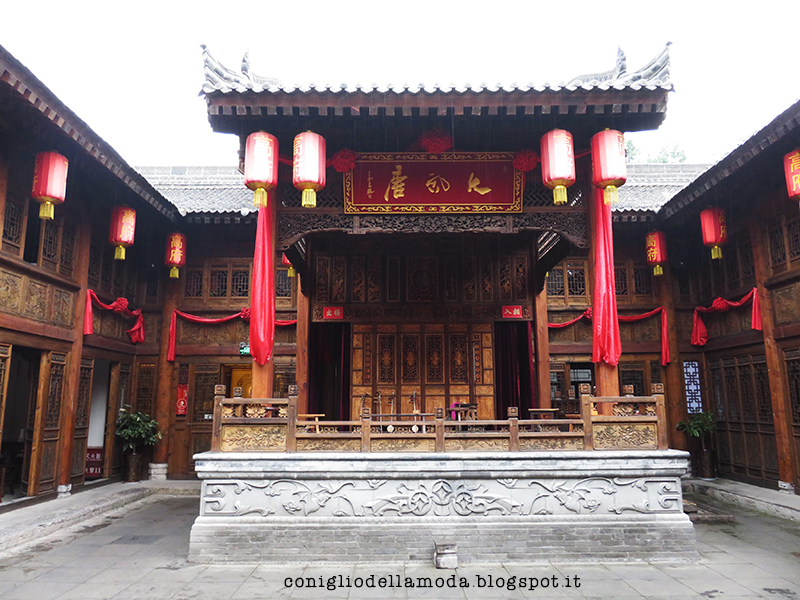
Finiamo per andare a visitare l'Ancient Styled Folk House, al 144 di Bei Yuan Men Xian. È una grande casa tradizionale di epoca Ming e Quing, in cui ammirare mobili antichi, calligrafie, dipinti, porcellane, fotografie e quant'altro. Il museo, aggiungendo qualche yuan al biglietto, offre anche una serie di spettacoli e laboratori tradizionali. Per un totale di 80 CNY decidiamo di visitare anche una piccola, ma interessante mostra sugli abiti di epoca Ming, Quing e repubblicana, e di vedere uno spettacolo di ombre cinesi. Le ombre cinesi ci lasciano allibiti: non sono ombre create con le mani come vengono erroneamente definite in Italia, ma dettagliatissime figurine trasparenti e colorate, mosse grazie a dei bastoncini sullo sfondo di uno schermo illuminato, mentre un narratore nascosto fornisce di sonoro lo spettacolo in un tono stilizzato che è quasi un canto (ci dicono che l'accento è quello locale). Secondo mio marito, quello che abbiamo visto è uno spezzone di "Il viaggio in Occidente" di Wú Chéng'ēn, da cui è stato tratto anche "Dragonball".
Invece, evitiamo come la peste lo spettacolo di teatro tradizionale, traumatizzati dal personaggio della cantante di "Lanterne Rosse".

We end up visiting the Ancient Styled Folk House, at 144 of Bei Yuan Men Xian. It is a big traditional house of the Ming and Quing period, where you can admire antique furniture, calligraphy, paintings, porcelain, photographs and more. The museum, adding a few yuan to the ticket, also offers a bunch of traditional shows and workshops. For a total of 80 CNY, we also decide to visit a small, but interesting exhibition about Ming, Quing and Republican fashions, and to see a Chinese shadows show. Chinese shadows leave us atonished: they are not shadows created with hands as they are mistakenly defined in Italy, but detailed transparent and colorful figures, moved by sticks in the background of a lit screen, while a hidden narrator gives a soundtrack to the show in a stylized tone that is almost a song (we are told that the accent is the local one). According to my husband, what we saw is a piece of "Journey to the West" by Wú Chéng'ēn, that is at the base of "Dragonball" too.
Instead, we carefully avoid traditional theater, traumatized by the character of the singer in "Raise the Red Lantern".

Per cena voglio provare un piatto tipico di  Xi’an, il Pào mó (羊肉 泡 馍).
È uno stufato di montone, maiale o manzo che utilizza come base pane senza lievito spezzettato. Andiamo a mangiarlo da Mǎ Hong Xiǎochǎo Pàomóguǎn in 46 Hongbu Jie. Qui un cameriere che parla un inglese stentato ci spiega che sono disponibili quattro versioni del piatto, tutte halal, visto che ci troviamo ancora nel quartiere musulmano: si può scegliere fra carne di maiale o manzo e zuppa leggera (清淡, qīngdàn) o piccante (辣, là). Noi scegliamo le due varianti del montone.
Paghiamo in cassa (una cifra ridicolmente bassa) e ci vengono dati due panini a testa, che dobbiamo sbriciolare in una ciotola. Ci viene versato anche del tè caldo gratuito.
Una volta preparata la base della zuppa, la portiamo alla cucina a vista, dove ci viene dato un numero. Dopo un po' un cameriere ci porta le nostre ciotole trasformate in giganteschi piatti di zuppa, serviti con aglio marinato e salsa piccante a parte. Sono favolosi, soprattutto quella leggera. Così favolosi che esagero e la notte sto malissimo, ma ne è valsa la pena.

For dinner I would like to try a typical dish of Xi'an, Pào mó (羊肉 泡 馍).
It is a mutton, pork or beef stew that uses as a base broken bread without yeast. We eat it at Mǎ Hong Xiǎochǎo Pàomóguǎn in 46 Hongbu Jie. Here, a waiter speaking in a rough English explains that there are four versions of the dish, all halal, as we are still in the Muslim neighborhood: we can choose between pork or beef and light (清淡, qīngdàn) or spicy (辣, there) soup. We choose the two mutton varieties.
We pay at the cashier (a ridiculously low amount) and we each get two breads loaves, which we have to crumble in a bowl. We also get free hot tea.
Once we have prepared the base of the soup, we bring it to the open kitchen, where we are given a number. After a while a waiter brings us our bowls transformed into gigantic soup dishes, served with  a side of marinated garlic and spicy sauce. They are fabulous, especially the light one. So fabulous that I eat too much and I feel sick in the middle of the night, but it was worth it.
Related Posts Plugin for WordPress, Blogger...