Visualizzazione post con etichetta gyaru. Mostra tutti i post

mercoledì 28 novembre 2012

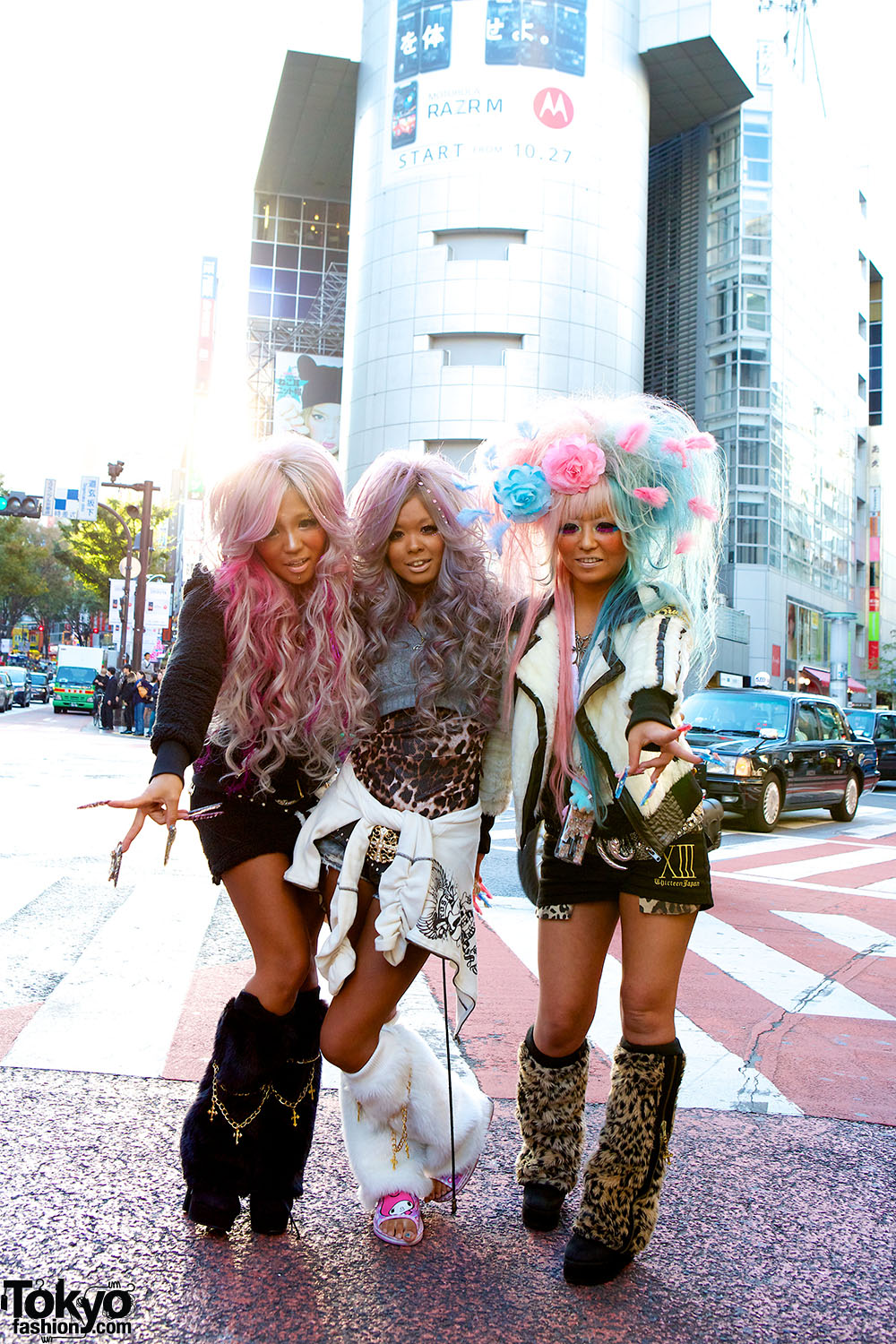
Kuro gyaru, il ritorno?/Kuro gyaru, the comeback?

Ritornano le gyaru abbronzatissime? Secondo il blog di streetfashion Tokyofashion.com, ci sono le premesse per dei cambiamenti molto forti nella cultura gyaru, che negli ultimi anni è stata relegata in secondo piano dall'ascesa dello stile legato al quartiere Harajuku, a Tokyo (il gyaru invece ha il suo centro nel quartiere di Shibuya) e ha privilegiato tendenze più conservatrici, prima fra tutte quella della pelle chiara (shiro gyaru). Di sicuro un ritorno delle gyaru dalla pelle scura è quello che si auspica il gruppo Black Diamond, fondato proprio da membri di questa subcultura per promuovere la sua espansione.
Ma attenzione, questa tendenza non è un ritorno dello stile manba, sembra che le kuro gyaru moderne abbiano caratteristiche diverse, in primo luogo l'amore per la marca D.I.A. e uno stile più sexy.
Vedremo come andrà. Io onestamente non amo molto questo stile, specie se alla pelle scura vengono abbinati un trucco chiarissimo e capelli che sembrano parrucche. Sono per un effetto più naturale, ma è ovvio che non è quello che cercano le kuro gyaru. Voi cosa ne pensate?

Questo è l'articolo da cui ho tratto foto e notizie:

Super tanned gyaru fashion will have a comeback? According to the 
street fashion 
blog Tokyofashion.com, there are the conditions for a great change in gyaru culture, which in recent years has been relegated to the background by the rise of the style related to the Harajuku district in Tokyo (gyaru instead has its center in the district of Shibuya) and has favored more conservative tendencies, most notably that of pale skin (shiro gyaru). Surely a return of 
 dark-skinned 
gyaru is the biggest hope of the group Black Diamond, founded by members of this subculture to promote its expansion. 
But beware, this trend is not a return of mamba style, it seems that modern kuro gyaru have different features, primarily the love for the brand DIA and a more sexy style.

We'll see how it goes. I honestly don't love this style, especially when dark skin is paired with a pale makeup and hair that look like wigs. I prefer a more natural style, but it is obvious that is not what kuro gyaru are looking for. What do you think?


Here's the article where I found the photo and news:

giovedì 23 febbraio 2012

Cotton candy salopette

Orecchini/Earrings: Alchemian, regalo (Bi)/Alchemian, present (Bi)

Cappello, spille/Hat, brooches: fatte io/selfmade
Sciarpa/Scarf: regalo dalla Cina (Lilith)/present from China (Lilith)
Maglietta/Tee: usata (nonna)/used (granny)
Salopette /Overall: usata, mercato di via Papiniano, Milano/used, Papiniano street open air market, Milan
Scarpe/Shoes: mercato di via Benedetto Marcello, Milano, regalo (mamma) (5€)/Benedetto Marcello street open air market, Milan, present (mom) (5€)

Questo look è ispirato allo stile gyaru amekaji (salopette, cappelli con il pon pon, colori brillanti) un po'mischiato con il fairy key. Notate quanto ho speso per il tutto :P

This outfit is inspired to amekaji, a gyaru style with overalls, flashy colours, pom pom hats, mixed with a bit of fairy key. Notice how much I spent :P

venerdì 10 febbraio 2012

Morte del mori? Morte del gyaru? Che sta succedendo?/Death of mori? Death of gyaru? What's happening?

Hans Holbein

 Su internet si stanno diffondendo voci sulla graduale scomparsa di due mode giapponesi di gran successo: il gyaru, che è una delle più famose e durature mode giapponesi, e il mori, che negli ultimi anni ha avuto un'importanza notevole.
Quali sarebbero le prove di questo declino?

Per quanto riguarda il gyaru ho trovato degli articoli che ne parlavano. Ve li linko:
Per brevità (e per chi non capisce bene l'inglese) faccio un breve riassunto:nel 2011 il Tokyo Fashion week ha escluso i marchi gyaru più popolari e anche la Tokyo Girls Collection ha eliminato gli elementi gyaru più eccessivi. Pare che la motivazione sia un generale declino del gyaru, che gli articoli imputano al diffondersi a Shibuya dei fast food della moda come H&M, Forever 21, Zara e Bershka, che costano moooolto meno delle marche gyaru, cosa che conta parecchio in un periodo di crisi economica.
In più la moda di Shibuya è sempre più simile a quella di Harajuku. Inoltre l'attitudine ribelle delle gyaru delle origini sembra essere praticamente scomparsa. Shibuya poi ha perso la sua esclusività perchè le marche gyaru hanno aperto succursali altrove e iniziato a vendere online.
Per quanto riguarda il mori non ho fonti dirette, ma pare che molte riviste dedicate a questo stile abbiano chiuso i battenti e sulla rete si mormora che questo avviene perchè la moda è in declino.
Quanto c'è di vero in queste voci? Mah.
Certo il gyaru è molto diverso da quello degli anni 80-90, ma è anche vero che è una moda "veloce", con cambiamenti di stile continui. L'attuale tendenza retrò, sweet, bon ton e con la pelle chiara potrebbe essere solo una nuova fase. Secondo me poi l'espansione delle marche con nuove succursali e vendita online è un guadagno per il gyaru piuttosto che una perdita. Di sicuro, comunque, all'estero esistono comunità gyaru grandi e influenti, per cui di morte non si può parlare.
Per quanto riguarda il mori, penso che sia andata come per lo stile oji (ve lo ricordate?). Lo stile oji ha influenzato pesantemente la moda dell' inverno 2010, ma la sua nascita è coincisa con un ritorno del retrò e del preppy e con un'espansione del mori, tutti stili simili. Adesso di oji non si parla più. Secondo me piuttosto che essere scomparso è stato inglobato in una tendenza più globale: ancora adesso vedo sui giornali elementi tipicamente oji (bretelle, scarpe da uomo, cappelli da uomo, cravattini, ecc.), magari un po'più all'acqua di rose o chiamati con un altro nome.
Magari il mori più estremo, quello da migliaia di sovrapposizioni di straccetti bianchi, è in declino, possibile, ma moltissimo della sensibilità mori è passato nella moda globale, e sto pensando a tendenze arrivate anche da noi: retrò, stampe e accessori con animali della foresta (cervi, gufi, scoiattoli...), pelliccia, orologi da tasca...
Secondo me piuttosto che una sconfitta questa è una vittoria.

Cosa ne pensate? Avete altre notizie in proposito?

⌛❂❀
On the Internet are spreading rumors about the gradual disappearance of two highly successful Japanese fashions: gyaru, which is one of the most famous and enduring Japanese fashions, and mori, that in the last years had a remarkable success.What are the evidences of this decline?

I have found two articles about gyaru's decline. Here are the links:


For brevity I'll do a quick recap: in 2011 the Tokyo Fashion Week has excluded
most popular gyaru brands and also the Tokyo Girls Collection eliminated the most extreme elements of gyaru. It seems that the motivation is a general decline of gyaru, that the articles blame on the spread in Shibuya of fast fashion stores like H&M, Forever 21, Zara and Bershka, that cost considerably less than gyaru brands, that matters a lot in a period of economic crisis. In addition, Shibuya's fashion is more and more similar to Harajuku's. Plus, Shibuya lost its exclusivity because gyaru brands opened branches elsewhere and started selling online.
Moreover, the original rebellious attitude of gyaru seems to have practically disappeared.
As for mori I don't have direct sources, but it seems that many magazines dedicated to this style have been discontinued  and
on the net there are rumours that this is because the fashion is in decline.
How much truth there is in these rumors? Mah.Contemporary gyaru is surely different from that of 80s-90s, but it is 
a "fast" fashion, with constant style changes. The current retro, sweet, bon ton and fair skin trends may just be a new phase. In my opinion, the expansion of the brands with new branches and online selling is a gain for gyaru rather than a loss. A a matter of fact there are large and influential foreign gyaru communities, so we certainly can not speak about a death of this style.As for mori, I think it's destiny is similar to the one of the oji style (you remember it?). Oji style heavily influenced 2010's winter fashion, but his birth coincided with the return of retro and preppy and expansion of the mori, that are all similar styles. Now we no longer speak of oji. In my opinion, rather than being dead it has been incorporated into a more global trend: even now I see in the newspapers typical oji elements (braces, men's shoes, men's hats, ties, etc..), Maybe a little diluited or called by another name.Perhaps the most extreme mori, the one with thousand of layers of ragged lace, is in decline, but much of mori sensitibility passed into global fashion trends, and I'm also thinking of our countries: retro, forest animals prints and accessories (deer, owls, squirrels ...), fur, pocket watches ...In my opinion this is a victory rather than a defeat .
What do you think? Do you have more news about this topic?

mercoledì 7 dicembre 2011

Ganguro (interpretazione)/Ganguro (interpretation)


Questo post sullo stile ganguro è basato sul saggio "Black is beautiful: il look delle ganguro-gyaru" di Toshio Miyake, contenuto nella raccolta di saggi del 2001 "La bambola e il robottone", a cura di Alessandro Gomarasca. I miei commenti sono tra parentesi quadre. Se volete approfondire potete farmi domande (il libro è fuori commercio e fra breve dovrò restituirlo alla biblioteca), sperando di essere in grado di rispondere.

In Giappone per essere considerati membri a pieno titolo della società bisogna non solo essere maggiorenni, ma anche avere un lavoro fisso e nel caso delle donne anche essere sposate, il che implica rigorose e impegnative cerimonie iniziatiche come gli esami di ammissione, l'assunzione e il matrimonio. Il divertimento ha comunque spazio, ma è uno spazio marginale, mentre per lo stile di vita ganguro è un elemento centrale e non limitato a un'unica fascia di età.
Le ganguro sono caratterizzate da una subalternità sociale, sessuale, generazionale e culturale. Per estrazione familiare o gusti personali, la maggior parte delle ganguro sarebbe comunque esclusa dal percorso giovanile modello (ovviamente il diffondersi di questo stile come moda ne ha annacquato gli aspetti sottoculturali). In opposizione -almeno apparente, infatti non esiste un esplicito programma dissociativo-ai valori dominanti e della progettualità a lungo termine, propongono uno stile di vita all'insegna della celebrazione del "qui ed ora", del privato, dello svago e del look. Questo desiderio di cambiamento si esprime attraverso la manipolazione del proprio aspetto. La pelle scura si pone come simbolo di alterità sociale e razziale, manifestando vicinanza all'"altro" come straniero e come minoranza interna e allo stesso tempo proponendo una sorta di meticciato tramite l'aggiunta di capelli chiari e lenti colorate.
La strategia di protesta si configura con un'estremizzazione per eccesso o per difetto. Tramite stili volutamente infantili per gli adulti o volutamente adulti per le ragazzine, le ganguro esprimono insoddisfazione verso una rigida equivalenza generazionale e sociale. Anche la combinazione di capi di griffe europee costosissime e materiali poveri, griffe tarocche e capi di seconda mano si contrappone per eccesso e per difetto agli standard di accettabilità del ceto medio. Ma è soprattutto nella sfera della sessualità che le ganguro si contrappongono al modello normativo, elitario e conservatore di donna, la ryōsai kenbo (buona moglie e saggia madre). Questo modello viene completamente negato dalla carnalità, l'esibizionismo, la sfrontatezza e il narcisismo delle ganguro.
Gli spettatori più attenti della scena ganguro sono le stesse ragazze che ne fanno parte, ponendo in secondo piano lo sguardo maschile, fino ad allora arbitro supremo della femminilità.
Ovviamente tutto ciò non basta a fare delle ganguro un modello di emancipazione femminile: le loro esibizioni e provocazioni le espongono a violenze verbali e fisica. Molte quindi finiscono per diventare dipendenti dalla protezione fisica delle bande maschili yanky, emblema del maschio macho e violento. Analogamente le ganguro più estreme, quelle che abbandonano prima scuola e genitori spesso sono quelle che si sposano prima e fanno figli. In sostanza sembra che siano gli elementi che rendono più attraente di primo acchito la cultura ganguro a renderla più precaria sul lungo termine. La cultura ganguro sembra quindi condividere l'ansia per il futuro che caratterizza molte culture giovanili giapponesi.
[Ho scritto questo post al presente storico per renderlo più scorrevole, ma ricordo che questa moda è morta e sepolta da anni]


This post about ganguro style is based on the essay "Black is beautiful: il boom delle ganguro-gyaru" (Black is beautiful: the ganguro-gyaru boom) by Toshio Miyake, published in the 2001 collection of essays "La bambola e il robottone" (the doll and the giant robot), by Alessandro Gomarasca. My comments are in brackets.
If you want to know more you can ask me questions, hoping to be able to answer.

In Japan, to be considered full members of society one must not only be of age, but also have a steady job and in the case of women also to be married. All of this implies strict and demanding initiation ceremonies such as entrance examinations, jaob recruitment and marriage. Fun still has space, but it is a marginal space, while for the ganguro lifestyle is central and not restricted to a single age group.
Ganguro are characterized by a social, sexual, generational and cultural subordination. For family background or personal taste, most ganguro would be excluded from the model path for young people (note that the spread of this style as fashion has watered down the subcultural aspects). In opposition -at least apparently, in fact there is an explicit dissociative program- dominant values ​​and long-term planning, ganguro lifestyle is dedicated to the celebration of the "here and now", the private, leisure and look. This desire for change is expressed through the manipulation of appearance. The dark skin stands as a symbol of social and racial otherness, showing proximity to '"other" as a foreigner and as a minority and at the same time proposing a sort of hybridization by the addition of light hair and colored lenses.
The strategy of protest is configured with an esxtremization. Using
deliberately childish styles for adults or deliberately adult styles for young girls, ganguro express dissatisfaction with the strict equivalence of generational and social. The combination of expensive European brand and cheap materials, fake brand items and second hand offset by excess and defect the standards of acceptability of the middle class. But it is especially in the sphere of sexuality that ganguro are opposed to the regulatory, elitist and conservative model of woman, the ryōsai kenbo (good wife and wise mother). This model is completely negated by the carnality, exhibitionism, narcissism, and effrontery of ganguro.
The most attentive spectators of the scene are the same
ganguro girls who put into the background the male gaze, until then, the supreme arbiter of femininity.
Obviously this is not enough to make
ganguro a model of female emancipation: their performances and provocations expose them to verbal and physical violence. Many end up becoming dependent on the physical protection of yanki male bands, the emblem of the macho and violent male. Similarly, most extreme ganguro, those who drop out of school and leave parents at a young age, are often the first ones who get married and have children. In essence it seems that the elements that make ganguro culture attractive at first glance are the same to make it precarious on the long term. The ganguro culture seems to share the anxiety about the future that characterizes many Japanese youth culture.
[I wrote this post using present time to make it smoother, but remember that this fashion is dead and buried for years]

mercoledì 30 novembre 2011

Ganguro


Questo post sullo stile ganguro è basato sul saggio "Black is beautiful: il look delle ganguro-gyaru" di Toshio Miyake, contenuto nella raccolta di saggi del 2001 "La bambola e il robottone", a cura di Alessandro Gomarasca. I miei commenti sono tra parentesi quadre. Se volete approfondire potete farmi domande (il libro è fuori commercio e fra breve dovrò restituirlo alla biblioteca), sperando di essere in grado di rispondere.
A questo post descrittivo farà seguito un post che tenterà di spiegare questa moda in termini antropologici e sociologici.

Nel 1997 appaiono le ganguro, che domineranno la scena gyaru fino al 1999. Il tratto distintivo di questo stile è la pelle scura, che viola il tabù femminile della pelle diafana, simbolo per eccellenza della ragazza per bene in Giappone. Le ganguro continuano ad appartenere prevalentemente ai ceti medio-bassi, ma questo stile oltrepassa i confini demografici che prima delimitavano il fenomeno gyaru, arrivando a comprendere dalle teenager kogyaru alle gyaru-mama, madri che seguono lo stile gyaru.
Dal contatto con altri stili di strada le ganguro assimilano tratti caratteristici: la passione per l'abbronzatura dei surfisti e la fascinazione dance-musicale per la cultura afro-americana. La diffusione commerciale e mediatica di questi gusti è esemplificata dal successo dalla cantante Namie Amuro, che ha scatenato un fenomeno di imitazione di massa. Rispetto allo stile Amuro, però, le ganguro manifestano tratti molto più esasperati.
Per descrivere il nuovo stile si usano tre termini: ganguro, cioè gan (viso) kuro (scuro) o gangan (molto) kuro (scuro), che è il termine più generico e ricorrente, gonguro, gon (super) kuro (scuro), e yamamba [spesso abbraviato in mamba], "strega di montagna", una figura della tradizione popolare giapponese canonizzata nei teatri nō e kabuki.
Le
yamamba portano all'estremo le caratteristiche del nuovo stile. Il colore di capelli di ganguro e gonguro oscilla fra il castano e il biondo, quello delle yamamba è ancora più chiaro, spesso argenteo o bianco con riflessi policromatici. Per accentuare la pelle scura le yamamba si dipingono attorno agli occhi dei cerchi bianco-rosa o bianco-azzurri, a volte arricchiti con brillantini, e spesso usano colori simili anche per le labbra (questo trucco viene chiamato panda o negafirumu-negative film). Le zeppe, che per le ganguro vanno dai 10 ai 20 cm, per le yamamba possono arrivare fino ai 25, con conseguenti barcollamenti ed incidenti, spesso anche gravi.
Il look ganguro è una combinazione di infantilismo e sex appeal, una sintesi quasi caricaturale della figura della lolita passiva, dolce e asessuata e di quella della donna sessualmente aggressiva, la bodikon degli anni '80: colori primari o pastello, accessori di personaggi kawaii come Hello Kitty e fiocchi si combinano a capi attillati e ad un'esibizione generosa del corpo. Lo stile si suddivide a sua volta, indipendentemente dall'età anagrafica, in:
1) barbie, caratterizzato da calzettoni allentati, colori in tinta unita (rosa, rosso, giallo, bianco), materiali sintetici e vestiti corti
2) roko (contrazione di local), che risente dell'influsso surfer ed è più sportivo e natural-etnico, caratterizzato da minigonne (soprattutto di jeans), t-shirt con disegni floreali o a pois, accessori di legno e colori chiari [un brand ancora esistente che si rifà a questo stile è Cocolulu]
3) retoro (retrò), si rifà agli anni '70 con influenze hippie e psichedeliche, caratterizzato da pantaloni a zampa di elefante, capi di seconda mano, camicie arcobaleno [un brand ancora esistente che si rifà a questo stile è Laguna Moon]
4) otona, oneesan, shisuta (adulto) è lo stile ritenuto più sexy e cool, caratterizzato da gonne fino alle ginocchia, colori più scuri e tacchi altissimi al posto delle zeppe. Di questo stile fanno parte le burakkukei, cioè le gyaru che si rifanno esplicitamente al modello etnico e agli stili R&B, funky e hip-hop degli afroamericani, con capelli dread, capi attillatissimi e trucco scuro su occhi e labbra.
L'inverno 1999-2000 ha segnato la vetta della popolarità dello stile ganguro, ma ha anche dato avvio ad un successivo riflusso. Per prima cosa sono scomparse quasi del tutto le yamamba e si è affermata una versione soft del ganguro, diffusasi talmente tanto che il prefisso ganguro nel termine ganguro-gyaru è diventato inutile. Il consumismo indiscriminato è stato soppiantato dal gusto per l'usato, il revival e il fai da te. [Al momento in cui scrivo il ganguro è morto e sepolto e la maggior parte delle gyaru sfoggia una pelle bianca o al massimo moderatamente abbronzata. Rimane lo strascico di qualche tendenza e i marchi e le riviste che hanno saputo adattarsi]


This post about ganguro style is based on the essay "Black is beautiful: il boom delle ganguro-gyaru" (Black is beautiful: the ganguro-gyaru boom) by Toshio Miyake, published in the 2001 collection of essays "La bambola e il robottone" (the doll and the giant robot), by Alessandro Gomarasca. My comments are in brackets.
If you want to know more you can ask me questions, hoping to be able to answer.
This descriptive post will be followed by an anthropological and sociological interpretation of this phenomenon.

In 1997 appears the ganguro look, which will dominate the gyaru scene until 1999. The hallmark of this style is dark skin, which violates the taboo pale skin for females, the ultimate symbol of the good girl in Japan. The ganguro continue to belong primarily to the lower middle class, but this style crosses the boundaries that delimited the demographic of the early gyaru phenomenon, including from teenagers kogyaru to gyaru-mama, mothers who follow the gyaru style.
From the contact with other streetstyles ganguro assimilates some important traits: a passion for tanning from the surfers and a dance-music fascination for African American culture. The commercial and mediatic spread of of these preferences is exemplified primarily by the singer Namie Amuro, imitated by a lot of fans, but ganguro is a much more exaggerated style compared to Amuro.
To describe the new style were used three terms: ganguro, gan (face) kuro (black) or gangan (very) kuro (black), which is the generic and most used term, gonguro, gon (super) kuro (black) and yamamba [often abbreviated in mamba], "witch of the mountain", a figure of japanese popular tradition canonized by Noh and Kabuki theaters.
The yamamba look takes the new style to it's extreme. The hair color of ganguro and gonguro varies between brown and blond, that of yamamba is even paler, often silvery or white-polychromatic. To accentuate the dark skin, yamamba paint around the eyes pink-white or white-blue circles, sometimes embellished with glitter, and often use similar colors for the lips (this make up is called panda or negafirumu -negative film). The wedges, which for ganguro range from 10 to 20 cm, for yamamba can reach up to 25, resulting in staggering and often serious accidents.
The ganguro look is a combination of childishness and sex appeal, a summary of the figure of the lolita, passive, sweet, asexual and of the figure of a sexually aggressive woman, the 80s bodikon: primary or pastel colors, kawaii accessories, characters like Hello Kitty and bows combine with tight and body revealing clothes and generous exhibition of the body. The style is divided, regardless of age, in:
1) barbie, characterized by loose socks, solid colors (pink, red, yellow, white), synthetic materials and short dresses
2) roko (contraction of the world local), which shows the influence of surfer look and is sportier and more natural-ethnic, characterized by short skirts (especially jeans), T-shirts with polka dots or floral designs, accessories made of wood and light colors [a brand based on this style still exists, it's Cocolulu]
3) retoro (retro), that is reminiscent of the '70s with hippie and psychedelic influences, featuring bell bottom trousers, second-hand garments, rainbow shirts [a brand that still exists that refers to this style is Laguna Moon]
4) Otona, oneesan, shisuta (adult) style is considered more sexy and cool, with knee lenght skirts, darker colors and high heels instead of wedges. burakkukei is part of this style. It is a gyaru style that refer explicitly to the African Americans models and ethnic styles, R&B, funky and hip-hop, with dreadlocked hair, skintight garments and dark makeup on eyes and lips.
The winter 1999-2000 marked the peak of the popularity of the ganguro style, but also the starting point of it's decline. First, yamamba disappeared almost completely and a soft version of ganguro spreaded so much that the prefix ganguro in the term ganguro-gyaru has become unnecessary. Indiscriminate Consumerism has been supplanted by a taste for used, revival and DIY. [At the time in witch I'm writing ganguro style is dead and buried, and most gyaru have a white or at most moderately tanned skin. Some small trends and brands and magazines that have adapted still remains]
Related Posts Plugin for WordPress, Blogger...