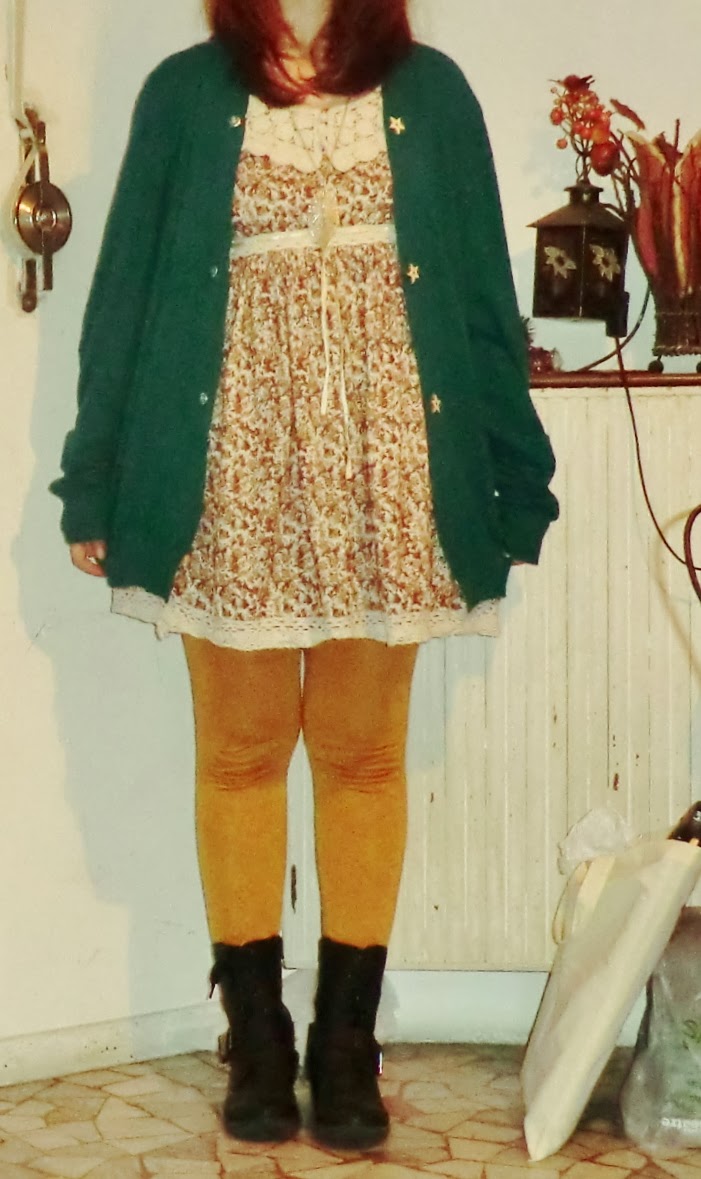
venerdì 25 ottobre 2013

Cheshire cat

File:DisneyCheshireCat.jpg

Orecchie/Ears: Lo zoccolaio, Milano
Collana/Necklace: regalo/present

Vestito/Dress: Smack, Milano (1,50€ on sale)
Leggings: swappati/swapped
Scarpe/Shoes: (6€on sale)

giovedì 24 ottobre 2013

Halloweek: Dodici (Zerocalcare) & strega punk

Con oggi comincia il mio progetto Halloweek, una settimana di post a tema Halloween! Potete aspettarvi outfit, ricette, recensioni di libri e film e ancora altro :D
Domani finirà anche la lunga saga sul mio viaggio in Spagna di quest'estate.

Iniziamo con una notiziona per gli amanti degli zombie e dei fumetti: è uscito il nuovo fumetto di Zerocalcare, Dodici è una storiona di zombie e secondo me (che peraltro non sono un'amante del genere) è il più riuscito dei volumi finora pubblicati da Zero perché riesce a metterci un po'di sostanza, ma mantenendo un livello di deficienza e comicità elevato. Non come per gli altri libri che uno pensa di trovarsi il cazzone del blog e invece si scivola nel filosofico. Belli, eh. Profondi. Ma questo fa ridere.
Io con puro spirito kamikaze sono andata alla presentazione a Milano alla fumetteria Alastor e mi sono aspettata le mie brave 5 ore e passa in fila per avere un disegnino di un t-rex innamorato di un plumkake (sembra più avere la colite, ma vabbè, Zero era un po'provato a quel punto. E io ero solo il 26, immaginate il numero 100).

With today begins my Halloweek project, a week of Halloween-themed post! You can expect outfit, recipes, reviews of books and films and even more :D
Tomorrow there will also end the long saga about my trip to Spain of this summer.
We start with a big news for fans of zombies and italian comics: Dodici (twelve), the new comic by Zerocalcare, a famous italian author was published. It is a zombies story and in my opinion (even if I'm not a lover of the genre) is the best of his volumes published so far because it manages to put in the story a bit of substance, maintaining a high level of deficiency and comedy. Not like his other books that slip too much in philosophy. Beautiful, huh. Deep. But the last one made me laugh.
With pure kamikaze spirit I went to the presentation in Milan and I expected more than 5 hours to have a little drawing of a t-rex in love with a plumkake (it seems more to have colitis, but oh well, he was tired at that point. And I was only 26, imagine number 100).

Giacca: mercato di via Benedetto Marcello, Milano/Benedetto marcello street market, Milan (5000 lire XD)
Maglietta/Tee: Tally Weijl (7€)
Gonna/Skirtfatta io/selfmade
Leggings: Emporio Lima, alterati da me/Emporio Lima, altered by me
Anfibi/Combat boots: Pimkie (7€ on sale)

Disegninviaggio (travel drawings): Seville

La mappa di Siviglia, con segnati i punti più interessanti

A map of Seville on which I marked the most interesting points


mercoledì 23 ottobre 2013

Day 10: Seville

La mattina del decimo giorno decidiamo finalmente di provare i churros, delle specie di bastoni di pastella fritti che, insieme alla cioccolata calda, costituiscono la colazione tipica locale.
Grazie ad http://www.exploreseville.com/ scopriamo che uno dei posti migliori dove mangiarli, Dona Carmen, è proprio dietro al nostro hotel.
Con le nostre due cioccolate chiediamo due porzioni di churros e ce ne arrivano una montagna, che mi terranno compagnia tutto il giorno.
Sono un po' preoccupata perché non amo molto i dolci, ma poi mordo il primo e...che buonooo!!!
La pasta ricorda tanto quella delle nostre frittelle (quelle molto unte) e in questo locale non l'hanno spolverata di zucchero come fanno altri, per cui il sapore è neutro. La Pelosa Metà è ancora più in estasi di me, ha trovato il suo cibo spagnolo preferito.

On the morning of the tenth day we finally decide to try churros, a kind of fried batter sticks which, with hot chocolate, are the typical local breakfast.
Thanks to http://www.exploreseville.com/ we discover that one of the best places to eat them, Dona Carmen, is right behind our hotel.
With our two chocolates we ask for two servings of churros and they give us a mountain of them, that will keep me company all day.
I am a bit worried because I don't love sweets, but then I bite the first...so goood!!!
The batter reminds me very much of our frittelle (the very oily ones) and in this place does not have the sprinkling of sugar as others do, so the flavor is neutral. The Hairy half is even more ecstatic than me, he found his favorite Spanish food.

Dopo la pesantissima colazione, andiamo alla cattedrale, che è ancora chiusa. Facciamo quindi una deviazione e visitiamo l'archivio delle indie (ingresso gratuito per i cittadini UE), che conserva la documentazione dei rapporti fra la Spagna e il nuovo mondo. Ci sono pochi pezzi in mostra, anche perché pare siano in corso dei lavori e in molte sale non si possono fare fotografie. Quello che mi affascina di più è una cassaforte d'epoca con il complicatissimo meccanismo di chiusura in mostra dentro il coperchio.

After the heavy breakfast, we go to the Cathedral, which is still closed. Then we do a detour and visit the archive of india (free entrance for EU citizens), which keeps records of the relations between Spain and the New World. There are few pieces in the exibition, because it seems to be in the course of works, and in many rooms you can not take pictures. What fascinates me the most is a safe chest with the complicated locking mechanism on display inside the cover.

Finalmente la cattedrale è aperta alle visite. La coda è lunghissima, ma scorre veloce.
Nonostante la bellezza e la ricchezza dell'edificio non rimango particolarmente colpita, forse ho visto un po' troppe cattedrali negli ultimi giorni. Però trovo particolare la presenza di un orologio appena sopra la tomba di Colombo, non ne avevo mai visto uno dentro una chiesa.
La tomba di Colombo sorretta da quattro sovrani di Spagna poi è davvero maestosa e ha particolari stupendi, come il melograno infilzato, simbolo della presa di Granada, e il ricamo a pipistrelli sulla veste di uno dei re.

Finally, the cathedral is open to visitors. The queque is long, but it goes fast.
Despite the beauty and richness of the building I don't remain particularly astounded, maybe I visited too many cathedrals in the last days. But I find particular the presence of a clock just above the tomb of Columbus, I had never seen one in a church.
The tomb of Columbus supported by four sovereigns of Spain is truly majestic and has beautiful details, such as a skewered pomegranate, symbol of the taking of Granada, and the bats embroidery on the dress of one of the kings.

Il tesoro della cattedrale è di una ricchezza da rimanere a bocca aperta. Oltre a reliquiari, calici, ostensori, ecc...ci sono anche dipinti di autori come Goya.

The treasure of the cathedral is of a richness to stand open-mouthed. In addition to reliquaries, jeweled chalices, monstrance, etc. ... there are also paintings by artists such as Goya.

Nonostante tutto però, quello che mi piace di più della cattedrale è la Giralda, antico minareto arabo riadattato a campanile. Per salire all'interno non ci sono scale, ma comode rampe, lungo cui si trovano vetrine con manufatti e spiegazioni relativi alla storia della torre. Arrivati in cima poi si gode di un panorama mozzafiato. Il problema è che la torre è invasa da una fiumana di turisti sgomitanti che trascina via gli incauti e rende difficilissimo accedere alle vetrine e salire sui gradini panoramici -.-

Despite everything, however, what I like most of the cathedral is the Giralda, an old Arab minaret converted into a bell tower. There are no stairs to climb inside, but comfortable ramps, along which there are displays with artifacts and explanations relating to the history of the tower. At the top you can enjoy a breathtaking view. The problem is that the tower is invaded by a flood of jostling tourists that takes you away and makes it difficult to access the displays and see the panorama -.-

Scorci interessanti di Siviglia
Torniamo in albergo a pranzare, poi decidiamo di fare l'ultima spesa, quella dove toglierci tutti gli sfizi. Dopo aver consultato di nuovo http://www.exploreseville.com/ decidiamo per il supermercato El Corte Inglés, che è vicino e pare essere molto ricco e con prezzi non terribili.
Arriviamo nella piazza dov'era segnalato...e ne troviamo quattro! Entriamo nel primo ed è un negozio di vestiti (nemmeno economico). Il secondo pure. Il terzo è una libreria-cartoleria che vende anche fumetti (foto in alto a destra), in cui sono tentata di fare un giro, non fosse che rischiamo di non visitare gli altri monumenti in programma. Il quarto è un centro commerciale di lusso. E il supermercato?
Per fortuna scopriamo che è nei sotterranei del centro commerciale e via, parte la razzia.

We go back to the hotel for lunch, then we decide to do the last grocery shopping, the last one where to buy all our fancies. After consulting again http://www.exploreseville.com/ we decide for El Corte Inglés, a supermarket which is close and seems to be very rich, with not terrible prices.
We arrive in the square where it was reported...and there are four of them! We enter the first and is an (expensice) clothing store. The second as well. The third is a library which also sells stationery and comics (pictured above right), in which I'm tempted to do some shopping, if it wasn't for the risk not to visit other monuments. The fourth is a luxury shopping mall. And the supermarket?
Luckily we discover that it is in the basement of the shopping mall so the raid starts.

Posata la spesa in albergo, andiamo alla Casa de Los Pilates, una bella villa in stile mudejar (cristiano con forti influenze arabe) appartenuta alla nobiltà locale dal medioevo. Scopriamo che appartiene ancora alla discendente della famiglia originale, che però l'ha donata ad un'associazione per salvaguardarla...fondata da lei, e che quando vuole utilizza ancora le stanze del palazzo. Tutto puzza di sgamuffo fiscale.
Con il biglietto d'ingresso viene fornita anche un'audioguida. Iniziamo ad aggirarci per le stanze, poi viene l'ora di visitare i piani alti del palazzo (la cui visita si prenota separatamente ed è concessa solo accompagnati da una guida) e infine finiamo il giro del palazzo fino quasi all'ora di chiusura.
La Casa de Los Pilates è molto bella e interessante: i piani inferiori conservano belle mattonelle, sculture romane (uno degli antichi proprietari trafugò il busto dov'erano conservati i resti di Adriano -se ben ricordo- e in seguito a un tentativo di furto ne perse le ceneri -.-') e meravigliosi intarsi in stile arabo. Ai piani superiori (che non si possono fotografare perché sono occasionalmente ancora abitati dai nobili ex proprietari -.-') ci sono anche mobili d'epoca e quadri di autori famosissimi.
Però usciamo dalla visita molto provati: l'audioguida è la più logorroica e ripetitiva che abbiamo mai sperimentato in vita nostra!

Left our shopping at the hotel, we go to Casa de Los Pilates, a beautiful villa in Mudéjar style (Christian with strong Arabic influences) that belonged to the local nobility from the Middle Ages. We find that it still belongs to the descendant of the original family, who gave it to an association to protect it...founded by her, and that when she wants she still uses the rooms of the palace. Everything smells like wanting to pay less taxes.
With the admission ticket is also provided an audio guide. We begin to wander in the rooms, then it's time to visit the upper floors of the building (which visit is booked separately and is granted only with a guide), and finally we finish the tour of the palace until almost closing time.
Casa de Los Pilates is very beautiful and interesting : the lower floors maintain beautiful tiles, Roman sculptures (one of the former owners stole the bust where were the remains of Hadrian - if I remember correctly - and because of a theft attempt he lost his ashes -.-' ) and wonderful carvings in Arabic style. On the upper floors (which can not be photographed because they are occasionally still inhabited by the nobles former owners -.-') there are also antique furniture and paintings by famous authors.
But in the end of the visit we're exausted: the audio guide is the most verbose and repetitive that we have ever experienced in our lives!

Visto che non è ancora ora di cena, decidiamo di fare un giro nell'antico quartiere ebraico, descritto come uno dei più caratteristici della città, ma non ci troviamo niente di speciale. Probabilmente è perché siamo nel periodo sbagliato: qui a Maggio si tiene il Festival de Los Patios, un evento in cui tutti i cortili interni vengono decorati splendidamente con piante e fiori.

Since it is not yet time for dinner, we decide to walk to the old Jewish district, described as one of the most characteristic of the city, but we don't see anything special. It's probably because we are in the wrong period: here in May is held the Festival de Los Patios, an event in which all the inner courtyards are beautifully decorated with plants and flowers.

Andando in cerca di un ristorante in quella che ci hanno indicato come la zona gastronimica, incontriamo una bella croce di ferro battuto con lanterne che un po'mi consola di quella che non ho visto a Cordoba.

Going in search of a restaurant in the zone we were shown as the gastronomic one, we meet a beautiful wrought iron cross with lanterns whicth consoles me a bit about that I have not seen in Cordoba.

Ceniamo con sangria, tapas e paella in un baretto. Come tapas prendiamo delizioso salmorejo (dovevamo assaggiare ancora la versione andalusa del gazpacho prima di partire), gamberetti all'aglio e flamenquin, un bastone di carne avvolto in una sfoglia. Sangria e tapas sono ottime, la paella invece sembra un piatto pronto, ma stranamente piace alla Pelosa Metà più di quella che abbiamo mangiato a Granada.

We have dinner with sangria, tapas and paella in a bar. As tapas we had delicious  salmorejo (we had to try again the Andalusian version of the gazpacho before leaving), garlic shrimps and flamenquín, a stick of meat wrapped in puff pastry. Sangria and tapas are great, the paella instead looks like a ready-made dish, but strangely the Hairy Half likes it more than the one we ate in Granada.


Siamo stanchi, ma convinco la Pelosa Metà ad andare a vedere la Torre de Oro, una torre costruita in epoca islamica, che originariamente era ricoperta di piastrelle di ceramica dorata (come mai saranno sparite?). Incontriamo anche varie carrozze; come quelle che abbiamo visto a Cordoba queste non sporcano, infatti sotto la coda del cavallo c'è un sacchetto per raccogliere la cacca.
La torre è in riva al Guadalquivir, quindi decidiamo di seguire il lungofiume per tornare all'hotel e così riusciamo anche a vedere l'arena in cui si disputano le corride.

We are tired, but I get the Hairy Half to go to see the Torre de Oro, a tower built in the Islamic era, which was originally covered with golden ceramic tiles. We also meet various carriages like the ones we saw in Cordoba; these are not dirty, in fact, under the horse's tail there is a bag to pick up the poop.
The tower is on the banks of the Guadalquivir, so we decide to follow the riverside back to the hotel so we can also see the arena where bullfights are held.

Colori d'autunno/Autumn colours

Quest'autunno qui a Milano è proprio grigio. Ci sono giorni in cui lo apprezzo comunque un sacco e giorni in cui è semplicemente deprimente. Io speravo che avendo avuto una primavera fredda e piovosa, l'autunno sarebbe stato bello, uno di quelli dorati da film in cui passeggiare sotto una pioggia di foglie colorate e sedersi al parco su di una panchina a leggere libri fantasy.

This autumn here in Milan is just gray. There are days in which I still appreciate it a lot and days in which it's just depressing. I was hoping that having had a cold and rainy spring, autumn would be nice, one of those golden ones you see in films in which to walk under the falling leaves and sit on a bench in a park to read fantasy books.

Per rendere l'ambiente un po' più allegro ho messo in giro per casa qualche decorazione a tema autunnale (pensando anche ad Halloween). Nella confusione generale però me ne accorgo solo io XD

To make my home a little 'more cheerful I put some autumnal themed decorations  around the house (also considering Halloween). In the general confusion, however, no one notice them XD

Vestito/Dressmercato di via Eustachi, Milano/Eustachi street open air market, Milan (5€)
Leggings: bancarella davanti alla stazione di Greco, Milano/stand in front of Greco station in Milan (5€) 
Stivali/Boots:Pimkie (7€ on sale)

Fermacapelli/Harpin: fatto io/selfmade
Paraorecchie/Earmuffs: H&M (7€)
Cardigan: H&M Man (10€ on sale)
Sciarpa/Scarf: negozio a Bellaria/Bellaria's shop (1€)
Maglietta/Tee: usata/used (1€)
Vestito/Dress: Tally Weijl (7,50€ on sale)
Leggings: mercato di via Papiniano, Milano/Papiniano street open air market, Milan (2€)
Scaldamuscoli/Legwarmers: Alan Socks (3x10€)
Stivali/Boots: Pimkie (7€ on sale)

martedì 22 ottobre 2013

Oche e tombe a Barcellona/Goose and tombstones in Barcellona

Finalmente sono riuscita a riempire qualche pagina bianca del mio diario disegnato del viaggio nel sud della Spagna.
Questo disegno è dedicato a quello che mi è piaciuto di più di Sant'Eulalia, la cattedrale di Barcellona: le incisioni sulle lapidi e le oche.

I finally managed to fill some blank pages of my drawn diary of the trip to the south of Spain.
This drawing is dedicated to what I liked most of St. Eulalia, Barcelona's cathedral: the engravings on the tombstones and the geese.

Borsa biscotto (tutorial)/Biscuit bag (tutorial)

Avevo detto da un po'di tempo di voler realizzare una di quelle borse a forma di biscotto, che si vedono ogni tanto sulle riviste giapponesi e finalmente l'ho fatta. Non sono riuscita a fare le foto fase per fase, quindi ho fatto un disegno del processo. Se avete domande, chiedete nei commenti.

Difficoltà: media. Richieste capacità basiche di cucito o utilizzo della macchina da cucire, capacità di applicare una cerniera.
Necessario: stoffa spessa, stoffa per fodera, cerniera, nastro spesso o cintura per il manico, necessario per cucire, ornamenti a scelta

From some time I wished to make one of those biscuit shaped bags that can be seen occasionally on Japanese magazines and finally I made it. I could not take step-by-step pictures, so I made ​​a drawing of the process. If you have any questions, ask in the comments.

Difficulty: medium. It requests basic sewing or using of the sewing machine ability, the ability to apply a zipper.
Materials: thick fabric, lining fabric, zipper, thick ribbon or belt for the handle, sewing material, decorations as you like

1) tagliate due pezzi rettangolari di stoffa spessa, calcolando che la capienza della borsa sarà inferiore di circa 3cm su tutti i lati. Tagliate i quattro lati dei due rettangoli a semicerchi per imitare i bordi di un biscotto. Unite i due rettangoli cucendoli su tre lati, due corti e uno lungo, lasciando il lato brutto della stoffa all'esterno. Rivoltate.
2) tagliate nella stoffa da fodera due rettangoli (o uno solo) corrispondenti grandi quanto i rettangoli di stoffa spessa senza i semicerchi. Se volete che la vostra borsa abbia una taschina interna, cucitela sul lato bello della stoffa. Lasciando il lato bello all'interno inserite i due rettangoli nel lato aperto del biscotto.
3) unite il rettangolo interno al biscotto esterno facendo una cucitura robusta di forma rettangolare su tre lati, corrispondente ai tre lati già cuciti del biscotto. Cucite ai due estremi del bordo aperto i due estremi del manico con punti molto robusti.
4) inserite una cerniera sul bordo aperto seguendo un'ideale quarto lato della cucitura interna del rettangolo.
5) aggiungete ornamenti a piacere

1) cut two rectangular pieces of thick fabric, calculating that the capacity of the bag will be lower by about 3cm on all sides. Cut the four sides of the two rectangles in semicircles to mimic the edges of a cookie. Unite the two rectangles sewing them on three sides, two short and one long, leaving the ugly side of the fabric on the outside. Turn inside out.
2) cut the lining fabric in two rectangles (or only one of double size) corresponding to the size of the rectangles of thick fabric without the semicircles. If you want your bag to have an internal pocket, stitch it on the beautiful side of the fabric. Leaving the beautiful side inside, insert the two rectangles into the open side of the cookie.
3) unite the rectangle inside to the outer biscuit making a sturdy rectangular seam on three sides, corresponding to the three already sewn sides of the cookie. Sew on the the two ends of the open edge the two ends of the handle with very strong stitches.
4) sew a zipper on the open edge following an ideal fourth side of the inner seam of the rectangle.
5) add ornaments as you like

Ecco com'è venuta la mia borsa. Mi piace tantissimo ^^
Per l'esterno ho usato del pile, per l'interno un vecchio lenzuolo rotto di cotone. Come ornamenti ho usato pizzo e un bottone di legno.

Here are the photos of my new bag. I like it a lot ^^
I used pile for the outside and a ripped cotton bedsheet for the inside. As ornaments I used lace and a wooden button.

Cena medievale (palio di Vigevano)/Middle Ages dinner (Vigevano's middle ages festival)

Sabato 12 ottobre io e la Pelosa Metà abbiamo partecipato per la prima volta alla cena medievale organizzata in occasione del palio di Vigevano.
Rispetto ad altri eventi di questo tipo, il costo era relativamente basso (25€ per una cena di 5 portate con intrattenimento e spettacoli vari) e abbiamo trovato il tutto piuttosto ben fatto.
La cena si teneva in una grande sala vicino al castello sforzesco. Ho apprezzato molto com'erano apparecchiate le tavolate: con piatti e bicchieri di plastica che imitava la terracotta e come unica posata un cucchiaio di legno (le forchette iniziarono a diffondersi veramente solo dopo il 1700 circa, prima erano considerate raffinate stravaganze e osteggiate dalla chiesa). In più c'erano sia un tovagliolo normale sia una sorta di camiciotto da mettere sopra i vestiti per non sporcarsi.

Saturday, October 12the Hairy Half and I participated for the first time to the medieval dinner organized on the occasion of Vigevano's Middle Age fair.
Compared to other events of this type, the cost was relatively low (25€ for a 5-course dinner with entertainment and various performances) and we found it quite well done.
The dinner was held in a large room next to the Sforzesco castle. I really enjoyed the table set: there were plates and plastic cups that imitated clay and the only cutlery was a wooden spoon (the use of forks only really began to spread after about 1700, as they were previously considered a refined extravagance opposed by the church ). In addition to a regular towel there was a sort of smock to wear over regular clothes to avoid staining.

La cena era composta da cinque portate, tutte deliziose. L'antipasto era costituito da zucca fritta, gnocco fritto con mortadella, frittata con spinaci e formaggio, una prugna avvolta nel lardo e formaggio molle con marmellata. Sono stati serviti due primi, una zuppa densa con orzo e fagioli e una fantastica pasta al ragù (la carne era meravigliosa, probabilmente cotta nel vino). Come secondo c'erano fettine di maiale immerse in un sugo fatto con uvette, prugne e altro e come dolce una sorta di castagnaccio con pinoli condito con una salsa bianca e semi di melograno.
Incluse nel prezzo c'erano acqua, vino e birra a volontà.

The dinner consisted of five courses, all delicious. The appetizer consisted of fried pumpkin, fried dumpling with bologna, omelette with spinach and cheese, plum wrapped in lard and soft cheese with jam. There were two main courses, a thick soup with barley and beans and a fantastic pasta with meat sauce (the meat was wonderful, probably it was cooked in wine). There also were pork slices dipped in a sauce made with raisins, plums and other and as sweet there was as a kind of chestnut cake with pine nuts topped with a white sauce and pomegranate seeds.
Included there were water, wine and beer at will.

Per quanto riguarda l'intrattenimento c'erano un "frate" che parlava in rima (e che ha fatto tutto il tempo battute volgari passando da divertente a insopportabile) e una tavolata di attori in costume che hanno inscenato una scena da taverna medievale con uno scontro di classe tra nobili e mercenari e un giullare.
Il momento più bello è stato quando il giullare ha suonato la ghironda, strumento a corde utilizzato dai menestrelli dal VIII secolo per accompagnare le chanson de geste.
Sono state rappresentate anche danze medievali. Ho adorato il costume della ragazza con la maschera da volpe.
Purtroppo però non tutti gli attori avevano un microfono e, nonostante i loro sforzi, anche essendo in posizione molto favorevole, abbiamo sentito ben poco di quanto detto da chi non ce l'aveva.

As for entertainment there were a "friar" who spoke in rhymes (and who made vulgar jokes all the time passing from funny to unbearable) and a table of actors in middle ages costumes who staged a medieval tavern scene with a class struggle between nobles and mercenaries and a jester.
The best moment was when the jester played the hurdy-gurdy, a stringed instrument used by minstrels from the eighth century to accompany chanson de geste.
There were also represented medieval dances. I loved the costume of the girl with the fox mask.
Unfortunately, not all of the actors had a microphone and, despite their best efforts, even being in a very favorable position, we heard very little of what was said by those who didn't have one.

Girocollo/Chocker: fatto io/selfmade
Collana/Necklacefatta io/made by me
Felpa/Hoodie: Chapati Design, regalo/Chapati Design, present
Corsetto/Corsetusato, fiera di Sinigallia, Milano/used, Sinigallia open air market, Milan (1€)
Maglietta/Tee: swappata/swapped
Leggings: Primark (4€ on sale)
Stivali/Boots: Pimkie (7€ on sale)

lunedì 21 ottobre 2013

Day 9: Medina Azahara & Seville

Visto che a Cordova il pomeriggio è tutto chiuso (-.-'), siamo dovuti andare a visitare Medina Azahara, un importante sito archeologico appena fuori città la mattina del giorno dopo.
Per vedere il sito archeologico si può prendere un autobus da Cordoba o andare in macchina parcheggiando vicino al museo del sito. 
Il museo è fatto molto bene, mi ha fatto rendere conto per la prima volta della vera estensione del potere arabo: al massimo del loro dominio occupavano metà Europa, anche se poi fra pressioni esterne e interne hanno perso le loro conquiste abbastanza in fretta.
Il museo conserva abbastanza pochi reperti, ma alcuni di incredibile bellezza. In particolare ci impressionano i bicchieri di vetro, un cofanetto intarsiato (anche se al museo è esposta solo una copia) e la statua di un cerbiatto che faceva parte di una fontana e sputava acqua.  Il cerbiatto mi è piaciuto così tanto che ho comprato la maglietta che lo raffigurava nel negozio del museo (bè, anche perché la taglia bambini era in offerta :P).

Since in Cordoba in the afternoon everything is closed (-.-') , we had to go to visit Medina Azahara, an important archaeological site just outside of town, the next morning.
To go to the the archaeological site you can take a bus from Cordoba or if you go by car there's a parking near the museum of the site.
The museum is very well done, it made me realize for the first time the true extent of Arab power: at the acme of their domain they occupied half of Europe, even though they lost their conquests fast enough because of external and internal pressures.
The museum exhibits few archeological finds, but some of incredible beauty. In particular, we are impressed by the the glasses, an inlaid casket (although the museum is exhibited only a copy) and the statue of a fawn that was the spitting water part of a fountain. I liked the fawn so much I bought the T-shirt that depicted it in the museum shop (well, partly because the children size was on sale :P).

Il parcheggio e il museo sono gratuiti (il museo solo per i cittadini UE), ma per andare al sito vero e proprio bisogna prendere un pullmino a pagamento (furbastri XD).
Medina Azahara è stata costruita nel 940 come nuova capitale di Al-Andalus, il dominio musulmano in Europa, dal califfo Ummayade Abd-al-Rhaman III. Le leggende narrano che fosse stata costruita in onore di una sua favorita di nome Azahara...o con i soldi della stessa. La città durò molto poco: nel 1010 venne saccheggiata e distrutta nella guerra civile che portò all'ascesa della dinastia Abbaside.
Della città è rimasto poco: i lavori archeologici sono ancora in corso e si può intravedere poco più di qualche resto di strada e delle fondamenta degli edifici. Tuttavia sono estremamente impressionata nel visitare il luogo da favola dove i re cristiani venivano a inchinarsi davanti al califfo di Al-Andalus.

The parking and the museum are free (the museum only for EU citizens), but to go to the actual site you have to take a minibus for a fee (sly XD).
Medina Azahara was built in 940 as the new capital of Al-Andalus, the Muslim rule in Europe, by the Ummayyad Caliph Abd-al-Rahman III. The legend tells that it was built in honor of his favorite, named Azahara...or with her money. The city was short-lived: in 1010 it was sacked and destroyed in the civil war that led to the rise of the Abbasid dynasty.
Of the city little remained: the archaeological works are still in progress and you can see little more than remains of the road and some of the foundations of buildings. However we are extremely impressed visiting the fabulous place where the Christian kings come to bow before the caliph Al-Andalus.

Nel pomeriggio siamo arrivati a Siviglia. E' la quarta città della Spagna per numero di abitanti, la città più grande che visitiamo da quando abbiamo lasciato Barcellona.
Una particolarità che notiamo subito sono i teloni tesi fra i palazzi per tenere le vie all'ombra, un'altra sono i cartelloni pubblicitari fatti di piastrelle. Vediamo anche degli strani bidoni della spazzatura con una manovella (?).

In the afternoon we arrived in Seville. It's the fourth largest city in Spain by number of inhabitants, the largest city we visit since we left Barcelona.
A special feature that we immediately notice are the sheets stretched between the buildings to keep the streets in the shadow, another the advertising are made ​​of tiles. We also see some strange garbage cans with a crank (?).

Lasciamo i bagagli in albergo e andiamo a visitare l'Alcazar, inizialmente un palazzo moresco costruito dagli almohadi, abbattuto e riscostruito in stile mudejar (ibridazione fra gli stili cristiano e islamico) da Pietro il crudele, re di Castiglia. Subì varie aggiunte da parte dei re successivi, in particolare in stile gotico da parte di Carlo V.
E' un posto magnifico, uno di quelli che ci piacciono di più di tutto il viaggio. Il complesso non è solo magnifico in sé, ma contiene anche musei molto interessanti. Il primo in cui ci imbattiamo è un museo di ventagli antichi: alcuni sono addirittura giapponesi, ma i miei preferiti sono quelli francesi in pizzo.

We leave our luggage at the hotel and go to visit the Alcazar, initially a Moorish palace built by the Almohads, demolished and rebuilt in Mudejar style (hybridization between Christian and Islamic style) by Peter the Cruel, king of Castile. It underwent various additions by later kings, especially in Gothic style by Charles V.
It's an awesome place, one of those that we liked the most of the entire trip. The complex is not only beautiful in itself, but also contains very interesting museums. The first we encounter is a museum of antique fans: some are even Japanese, but my favorites are the French ones made of lace.

La parte più antica è come un'altra Alhambra con meno turisti. Lo stile moresco è assolutamente splendido e ogni stanza è più bella dell'altra. Qui vediamo anche la stanza in cui venivano trattati i rapporti con il nuovo mondo.
Un'altra cosa che ci colpisce è che il palazzo è ancora usato come residenza sivigliana dei re di Spagna.

The oldest part is like another Alhambra with fewer tourists. The Moorish style is absolutely beautiful and each room is more beautiful than the other. Here we also see the room in which relations with the new world were treated.
Another thing that strikes us is that the building is still used as the Seville residence of kings of Spain.

 Mi impressiona moltissimo anche il museo degli azulejos, le piastrelle decorate, che copre un'epoca che va dal medioevo musulmano e cristiano a oltre il barocco. Ci sono piastrelle davvero splendide.

I'm also very impressed by the museum decorated tiles, covering a period from the Muslim and Christian Middle Ages until baroque. There are really beautiful pieces.

Passiamo poi in un'ala aggiunta più tardivamente, tutta decorata a piastrelle di colori sgargianti (mi piacciono tanto quelle con i coniglietti) e vediamo arazzi splendidi, di cui molti dedicati alla conquista del nuovo mondo.

We then pass in a part added in a later age, all decorated with tiles of bright colors (I like those with bunnies) and we see beautiful tapestries, many of which are dedicated to the conquest of the new world.

Finiamo di visitare i palazzi, ma la visita non è affatto finita: ci sono chilometri e chilometri di giardini tutti diversi. C'è il giardino con il padiglione in stile mudejar eretto da Carlo V, il giardino inglese, il giardino con fontana e ninfeo...sono enormi e bellissimi. Non riusciamo a finire di visitarli tutti prima dell'orario di chiusura e anzi, riusciamo a farci buttare fuori dalle guardie. Un po'ci dispiace, a saperlo avremmo visitato l'alcazar con più calma la mattina dopo.
Siamo esausti e decidiamo di tornare a mangiare e dormire in hotel.

We finish visiting the palaces, but the visit is not over: there are miles and miles of gardens, all different. There is a garden with a pavilion in Mudejar style built by Charles V, the English garden, the garden with a fountain and a grotto...they are huge and beautiful. We can not visit them all before closing time and indeed, we are trowed out by guards. We are a bit sorry, to know it was this huge we would have visited the Alcazar with more time in the morning.
We are exhausted and decide to go back to eat and sleep at the hotel.

Durante la giornata colleziono foto di mattonelle con conigli. Eccone un po'.

During the day I collect photos of tiles painted with bunnies. Here are some of them.

Hostal Lis II
L'albergo è in un'ottima posizione vicino ai monumenti più interessanti. Non è complicato da raggiungere in macchina, ma trovare un parcheggio non a pagamento è comunque molto difficile.
La stanza in cui abbiamo alloggiato è stata la più grande e bella di tutto il viaggio, ma il bagno era minuscolo e si allagava ogni volta che si faceva la doccia. Un'altro punto estremamente negativo erano gli asciugamani forniti dall'hotel: erano bianchi con delle macchie visibili. Probabilmente non erano stati lavati abbastanza bene. Secondo me se non si sanno lavare gli asciugamani, almeno non bisogna sceglierli bianchi.
Per il resto ci sono aria condizionata, un barattolo di sapone liquido, il wi-fi gratuito, la reception 24 ore. Lavanderia e colazione tipica sono a pagamento. Alla reception forniscono anche una mappa gratuita della città, che però è pixelata e quindi inutile.

The hotel is in a great location close to the most interesting monuments. It is not complicated to get to it by car, but finding a parking fee is still very difficult.
The room in which we stayed was the largest and most beautiful of the whole trip, but the bathroom was tiny and it flooded every time we took a shower. Another extremely negative point were the towels provided by the hotel: they were white with spots visible. They probably were not washed well enough. In my opinion if you do not know how to wash the towels, at least don't choose them white.
For the rest there are air conditioning, a jar of liquid soap, wi-fi access, 24-hour reception. Laundry and typical breakfast are available for a fee. At the reception they also provide a free map of the city, but it is pixelated and therefore useless.
Related Posts Plugin for WordPress, Blogger...