Fra il 1995 e il 1998, in risposta al "boom delle liceali" sui media, emerse la moda kogyaru (contrazione di kōsei, allieva di scuola superiore, e gyaru, la pronuncia giapponese del termine inglese girl). La moda kogyaru faceva il verso all'immagine mediatica della liceale materialistica che si prostituiva per denaro. Le kogyaru si radunavano nelle piazze e nei centri commerciali di tre quartieri di Tokyo: Shinjuku, Ikebukuro e Shibuja. La loro si caratterizzava come una cultura di strada, inserendosi nella tendenza generale dei giovani giapponesi degli anni '90 a non fare più della scuola la propria ragione di vita e a conquistare spazi e tempi propri. Questa cultura era vissuta in luoghi senza orari (piazze, fast-food, sale giochi, alberghi ad ore...), dove le kogyaru improvvisavano una socializzazione e acculturazione alternativa al femminile, formando le proprie gang, stabilendo i propri canali di comunicazione (dal passaparola al teledrin), sperimentando la propria sessualità (con i membri dal coltello facile delle bande di yanki o con amori a pagamento con colletti bianchi dal portafoglio facile), improvvisando una propria "arte" visiva nell'abbigliamento e nella manipolazione di fotografie (purikura).
La moda kogyaru si componeva di due tenute intercambiabili: le uniformi scolastiche riadattate e un secondo stile che era sia oshare (vistoso), sia chō-kawaii (ultracarino), sia shitagikei (stile lingerie), insomma, una sorta di chic puttanesco.
Le uniformi alterate ricordavano quelle delle scolarette proposte dalla pornografia: gonne arrotolate in vita per trasformarle in minigonne e, al posto delle calze regolamentari, rūzu sokkusu (loose socks), lunghi calzettoni bianchi portati molli e cadenti sulle caviglie, un segno di lassitudine in contrasto con l'immagine ufficiale della studentessa impeccabile, ordinata e pura. In inverno portavano anche sciarpe Burberry -in genere color senape con quadri composti da strisce rosse, bianche e nere- rimboccate sopra alla giacca dell'uniforme.
La tenuta "puttanesco-chic", invece, era matura, semi classica e apparisecnte. Comprendeva cappotti lunghi e stretti con colli di pelliccia, minigonne, abitini, shorts minuscoli o pantaloni attillati. I tessuti in genere erano imitazioni economiche di materiali costosi, come per esempio camicie sintetiche stampate a catenelle e pendenti d'oro che imitavano le stampe delle sciarpe di seta di Hèrmes.
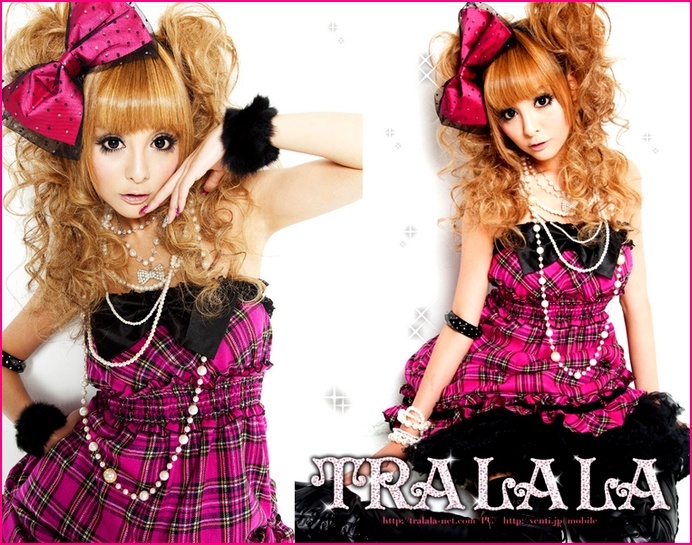
Il look pacchiano era completato da abbronzature da lampada, unghie elaborate e multicolori tatuaggi temporanei, trucco e capelli tinti di marrone o con meches bionde. Un'altra caratteristica dello stile erano gli accessori griffati e quelli di Hello Kitty.
Queste ragazze parlavano anche un loro slang, il kogyarugo.
Per promuovere questa moda nacquero delle nuove riviste, di cui le più famose sono "Egg", "Cawaii", "Happie" [che esistono ancora].
Il tema dell'autrnticità, che caratterizzava la figura della liceale nei media, venne incorporato nella cultura di strada delle ragazze: alcuni gruppi di kogyaru iniziarono a esibire un look deliberatamente sciatto, con uniformi macchiate e sporche, infradito consunte e l'esibizione sulle strade e nelle piazze di una posa particolarmente inadatta alle signore, l'unko-suwari, "accovacciamento da cesso" che ricordava i modi intenzionalmente rozzi dei motociclisti degli anni '70.
This post about kogyaru style is based on the essays "Feticci in uniforme: il fenomeno kogyaru" (Fetishes in uniform: the kogyaru phenomenon) by Sharon Kinsella and "Black is beautiful: il boom delle ganguro-gyaru" (Black is beautiful: the ganguro-gyaru boom) by Toshio Miyake, published in the 2001 collection of essays "La bambola e il robottone" (the doll and the giant robot), by Alessandro Gomarasca. My comments are in brackets.
If you want to know more you can buy the book or ask me questions, hoping to be able to answer.
Between 1995 and 1998, in response to the "boom of female high school students" in the media, emerged kogyaru fashion (contraction of kōsei, high school student, and gyaru, the Japanese pronunciation of the English girl). The kogyaru fashion was a parody of he media image of materialistic high school students who prostitute for money. The kogyaru gathered in public squares and shopping centers of three districts of Tokyo: Shinjuku, Ikebukuro and Shibuya. Their culture was characterized as a street culture, fitting into the general '90s trend of young Japanese who no longer made the school their reason for living and and wanted to conquer their spaces and times. This culture had lived in places with no closing times (squares, fast foods, arcades, love hotels...), where the kogyaru improvised in the feminine an alternative socialization and acculturation, forming their own gangs, establishing their own channels of communication (from face to face to pocketbells), experiencing their sexuality (with a range of people from the easy knife members of yanki bands to sex for money with white collars with an easy wallet), improvising their own "art" in clothing and in the manipulation of photos (purikura).
The kogyaru fashion consisted of two interchangeable looks: adapted school uniforms and a second style that was both oshare (loud), cho-kawaii (ultracarino) and shitagikei (underwear style), in short a sort of bitchy chic.
The altered uniforms seemed reminiscent of those of the schoolgirls from porn: skirts rolled at the waist to turn them into miniskirts and instead of regulamentary socks, rūzu sokkusu (loose socks), long white socks worn loose and falling on the ankles, a sign of carelessness in contrast with the official image of the perfect, neat and clean student. In winter they also wore Burberry scarves -usually mustard-colored with panels consisting of stripes of red, white and black- rolled on to the uniform jacket.
The "bitchy chic" look, however, was adult, semi classical and loud. It consisted of long, narrow coats with fur collars, skirts, dresses, tiny shorts, tight pants. The tissues were generally cheap imitations of expensive materials, such as synthetic shirts printed in gold chains and pendants imitating Hermes silk scarves prints.
The look was completed with a tan obtained with tanning lamps, elaborate and colorful nails temporary tattoos, makeup and brown dyed or with blonde streaked hair. Another characteristic of the style were designer and Hello Kitty accessories.
These girls also talked a particular slang, the kogyarugo.
To promote this new fashion were formed new magazines. The most famous are "Egg", "Cawaii", "Happie" [still existing].
The genuineness theme, characterizing the the high school girls in the media, was incorporated into the street culture when some groups of kogyaru began to show a deliberately sloppy look with stained and dirty uniforms, worn flip flops and started to display on the roads and squares a pose particularly unsuited for the ladies, the unko-suwari, "toilet crouch" reminiscent of ntentionally rough manners of the 70s motorcycle riders.
La moda kogyaru si componeva di due tenute intercambiabili: le uniformi scolastiche riadattate e un secondo stile che era sia oshare (vistoso), sia chō-kawaii (ultracarino), sia shitagikei (stile lingerie), insomma, una sorta di chic puttanesco.
Le uniformi alterate ricordavano quelle delle scolarette proposte dalla pornografia: gonne arrotolate in vita per trasformarle in minigonne e, al posto delle calze regolamentari, rūzu sokkusu (loose socks), lunghi calzettoni bianchi portati molli e cadenti sulle caviglie, un segno di lassitudine in contrasto con l'immagine ufficiale della studentessa impeccabile, ordinata e pura. In inverno portavano anche sciarpe Burberry -in genere color senape con quadri composti da strisce rosse, bianche e nere- rimboccate sopra alla giacca dell'uniforme.
La tenuta "puttanesco-chic", invece, era matura, semi classica e apparisecnte. Comprendeva cappotti lunghi e stretti con colli di pelliccia, minigonne, abitini, shorts minuscoli o pantaloni attillati. I tessuti in genere erano imitazioni economiche di materiali costosi, come per esempio camicie sintetiche stampate a catenelle e pendenti d'oro che imitavano le stampe delle sciarpe di seta di Hèrmes.
Il look pacchiano era completato da abbronzature da lampada, unghie elaborate e multicolori tatuaggi temporanei, trucco e capelli tinti di marrone o con meches bionde. Un'altra caratteristica dello stile erano gli accessori griffati e quelli di Hello Kitty.
Queste ragazze parlavano anche un loro slang, il kogyarugo.
Per promuovere questa moda nacquero delle nuove riviste, di cui le più famose sono "Egg", "Cawaii", "Happie" [che esistono ancora].
Il tema dell'autrnticità, che caratterizzava la figura della liceale nei media, venne incorporato nella cultura di strada delle ragazze: alcuni gruppi di kogyaru iniziarono a esibire un look deliberatamente sciatto, con uniformi macchiate e sporche, infradito consunte e l'esibizione sulle strade e nelle piazze di una posa particolarmente inadatta alle signore, l'unko-suwari, "accovacciamento da cesso" che ricordava i modi intenzionalmente rozzi dei motociclisti degli anni '70.
This post about kogyaru style is based on the essays "Feticci in uniforme: il fenomeno kogyaru" (Fetishes in uniform: the kogyaru phenomenon) by Sharon Kinsella and "Black is beautiful: il boom delle ganguro-gyaru" (Black is beautiful: the ganguro-gyaru boom) by Toshio Miyake, published in the 2001 collection of essays "La bambola e il robottone" (the doll and the giant robot), by Alessandro Gomarasca. My comments are in brackets.

If you want to know more you can buy the book or ask me questions, hoping to be able to answer.
Between 1995 and 1998, in response to the "boom of female high school students" in the media, emerged kogyaru fashion (contraction of kōsei, high school student, and gyaru, the Japanese pronunciation of the English girl). The kogyaru fashion was a parody of he media image of materialistic high school students who prostitute for money. The kogyaru gathered in public squares and shopping centers of three districts of Tokyo: Shinjuku, Ikebukuro and Shibuya. Their culture was characterized as a street culture, fitting into the general '90s trend of young Japanese who no longer made the school their reason for living and and wanted to conquer their spaces and times. This culture had lived in places with no closing times (squares, fast foods, arcades, love hotels...), where the kogyaru improvised in the feminine an alternative socialization and acculturation, forming their own gangs, establishing their own channels of communication (from face to face to pocketbells), experiencing their sexuality (with a range of people from the easy knife members of yanki bands to sex for money with white collars with an easy wallet), improvising their own "art" in clothing and in the manipulation of photos (purikura).
The kogyaru fashion consisted of two interchangeable looks: adapted school uniforms and a second style that was both oshare (loud), cho-kawaii (ultracarino) and shitagikei (underwear style), in short a sort of bitchy chic.
The altered uniforms seemed reminiscent of those of the schoolgirls from porn: skirts rolled at the waist to turn them into miniskirts and instead of regulamentary socks, rūzu sokkusu (loose socks), long white socks worn loose and falling on the ankles, a sign of carelessness in contrast with the official image of the perfect, neat and clean student. In winter they also wore Burberry scarves -usually mustard-colored with panels consisting of stripes of red, white and black- rolled on to the uniform jacket.
The "bitchy chic" look, however, was adult, semi classical and loud. It consisted of long, narrow coats with fur collars, skirts, dresses, tiny shorts, tight pants. The tissues were generally cheap imitations of expensive materials, such as synthetic shirts printed in gold chains and pendants imitating Hermes silk scarves prints.
The look was completed with a tan obtained with tanning lamps, elaborate and colorful nails temporary tattoos, makeup and brown dyed or with blonde streaked hair. Another characteristic of the style were designer and Hello Kitty accessories.
These girls also talked a particular slang, the kogyarugo.
To promote this new fashion were formed new magazines. The most famous are "Egg", "Cawaii", "Happie" [still existing].
The genuineness theme, characterizing the the high school girls in the media, was incorporated into the street culture when some groups of kogyaru began to show a deliberately sloppy look with stained and dirty uniforms, worn flip flops and started to display on the roads and squares a pose particularly unsuited for the ladies, the unko-suwari, "toilet crouch" reminiscent of ntentionally rough manners of the 70s motorcycle riders.