mercoledì 10 settembre 2014

Mangiare a Istanbul/To eat in Istanbul

Appena abbiamo iniziato a parlare seriamente di un viaggio a Istanbul, ovviamente la mia prima domanda è stata: "ma cosa si mangia in Turchia?". Risponderò a chi si pone la mia stessa domanda con quello che ho imparato nelle mie avventure gastronomiche istanbullesi. Ovviamente non pretendo di fare un resoconto esaustivo, ma per quello c'è sempre la buona vecchia Wikipedia.
In questo post parlerò delle varietà di piatti che ho provato, mentre troverete i riferimenti dei locali dove li ho mangiati nei post dedicati al viaggio vero e proprio.
L'ottima notizia è che a Istanbul si mangia benissimo e che per noi italiani mangiare lì costa pochissimo, il ristorante più di lusso in cui sono stata mi è costato l'equivalente di 12€ (ovviamente c'è da tener conto del tasso di cambio). I ristoranti di fascia alta sono quelli che costano più di 10€, fra i 10 e i 7€ la fascia è media, ma si può mangiare anche con meno, soprattutto grazie agli onnipresenti venditori ambulanti.
Quando si parla di tipico cibo turco, la prima (e magari unica) cosa che viene in mente è il kebab. In Turchia ne esistono tantissime varietà, tutte diverse. Ho trovato il doner kebab, quello infilzato sullo spiedo, incredibilmente delizioso, perché viene cotto con una speciale griglia che dà alla carne un aroma di fumo di legna. L'abbiamo provato sia in versione spiedini, da smontare e avvolgere in una piadina con salsa e cipolle serviti a parte, sia come carne servita su un piatto e accompagnata da altri ingrendienti (İskender kebabı, lo vedete nella seconda foto), o avvolto nel pane arabo (durum, sempre nella seconda foto). Assolutamente spettacolare, bisogna provarlo perché in Italia sapori simili non li ho mai sentiti.

As soon as we started talking seriously about a trip to Istanbul, of course my first question was: "But what do you eat in Turkey?". I will respond to those who have my own question with what I have learned in my Istanbul culinary adventures. Obviously I do not pretend to do a comprehensive account, but for that there is always the good old Wikipedia. 
In this post I will discuss the variety of dishes that I've tried, and you will find the references of the places where I've eaten them in the post dedicated to the journey itself. 
The good news is that in Istanbul you eat well and for us italian the food was really cheap. You can even spend less than average thanks to the ubiquitous street vendors. 
When it comes to typical turkish food, the first (and maybe only) thing that comes to mind is kebab. In Turkey there are many varieties, all different. I found the doner kebab, the skewered on a spit one, incredibly delicious, because it is cooked with a special grid which gives the meat a flavor of wood smoke. We tried it both skewered on spits, to remove and wrap in a flat bread with sauce and onions and as meat served on a plate and accompanied by other ingrendients (İskender kebabı, you see it in the second photo), or wrapped in Arabic bread (durum, in the second photo). Absolutely spectacular, you have to try it I've never tasted something similar in Italy. 

Ma cominciamo con ordine, e quindi dagli antipasti. Ce ne sono tantissimi, ma fra quelli freddi i più popolari sono salse che mischiano yogurt ed erbe. Vanno tanto anche le melanzane, il formaggio, salse piccanti al peperoncino e l'hummus, che a me piace molto, ma che in Turchia ho trovato poco saporito (a quanto pare preferisco la versione israeliana).
Fra quelli caldi ho particolarmente apprezzato i sigara böreği, sfoglie fritte ripiene di formaggio (non filante).
Con l'antipasto spesso viene servito un pane gigantesco, che in realtà è una sfoglia gonfiata.
In molti ristoranti ci hanno offerto un antipasto gratuito.

But let's start from the starters (ha ha). There are many of them, but the most popular of the cold ones are sauces that mix yogurt and herbs. Eggplant, cheese, spicy sauces and hummus, which I like a lot, but that in Turkey I found a little insipid (apparently prefer the Israeli version), are popular too. 
Among the hot ones I particularly enjoyed the sigara boregi, fried pastry stuffed with cheese (not melted). 
With the appetizer is often served a gigantic bread, which is actually an inflated sheet. 
In many restaurants they offered us a free appetizer. 

Per la serie "anche i turchi hanno la loro pizza", abbiamo scoperto il gözleme, una sfoglia morbida e sottile che può essere ripiena di formaggio, patate o ingredienti vari e il pide, una sfoglia più spessa e croccante che a sua volta può essere ripiena di formaggio, carne macinata o altri ingredienti. Fra i due io ho preferito il pide, che esiste in due versioni, una aperta e una chiusa.

For the series "also Turks have their pizza", we discovered the gözleme, a soft, thin sheet of bread that can be filled with cheese, potatoes or various ingredients and pide, a thicker and crispier breas which can also be stuffed with cheese, ground beef or other ingredients. Between the two I preferred the pide, which exists in two versions, an open and a closed one. 

Esistono poi locali specializzati in fasulye, cioè fagioli. Spesso il piatto principale viene servito con accompagnamento di riso pilaf.

There are also places specialized in fasulye, ie beans. Often the main dish is served with a side dish of pilaf rice. 
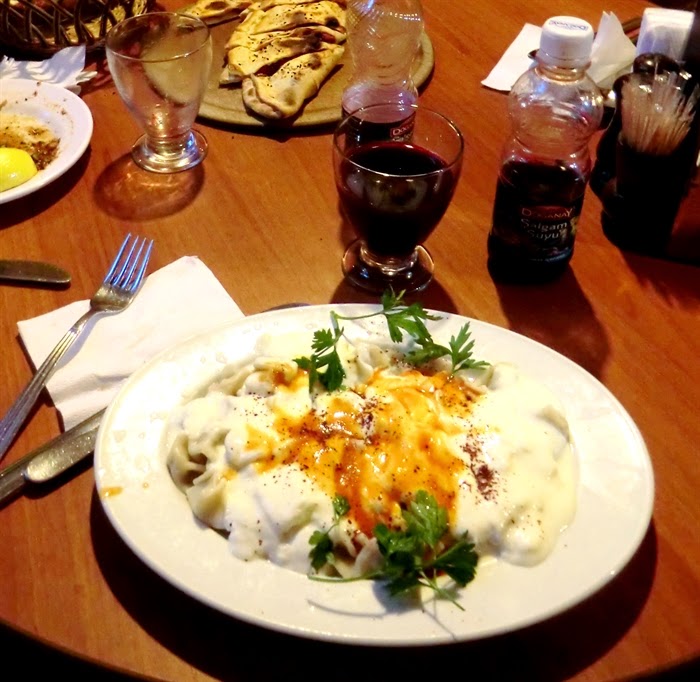
Una grande scoperta di questo viaggio sono stati i manti, piccoli ravioli ripieni di carne macinata di agnello e ceci schiacciati, cotti al vapore e serviti con una salsa composta da yogurt e aglio, a sua volta condita da una salsa più liquida di peperoncino in polvere e burro fuso, con un topping di sumac o menta secca. Buonissimi!

A great discovery of this trip were mnti, small dumplings stuffed with minced lamb and mashed chickpeas, steamed and served with a sauce made from yogurt and garlic, in turn topped by a more liquid sauce of chili powder and melted butter, with a topping of sumac or dried mint. Yummy! 

Abbiamo anche assaggiato due piatti tipici della città di Siirt, vicino al confine orientale della Turchia: il perde pilavi, che è riso speziato con mandorle, pinoli e uvetta, servito in una sfoglia sottile (quando arriva a tavola sembra un budino), e il  büryan, un piatto composto da boccocini insieme morbidi e croccanti di agnello serviti su pane croccante. Li abbiamo trovati assolutamente favolosi!

We also tried two typical dishes of the city of Siirt, near the eastern border of Turkey: the Perde Pilavi, which is spiced rice with almonds, pine nuts and raisins, served in a thin sheet (when it arrives at the table it seems like a pudding), and the Buryan, a dish consisting of both soft and crispy lamb pieces served on crusty bread. We found them absolutely fabulous!


Se si parla di Istanbul e di cibo, non bisogna dimenticare gli ambulanti, che sono ovunque e vendono di tutto. Le merci più diffuse sono succhi di frutta preparati al momento (che mio malgrado non ho assaggiato perché la frutta venduta per la strada in genere è sconsigliata per lo stomaco dei viaggiatori), frutta a pezzi, pannocchie alla griglia, e simit, ovvero ciambelle di pane ricoperte di sesamo che si mangiano soprattutto a colazione. Però vengono vendute anche cose per noi abbastanza strane, come le cozze, vendute a qualsiasi ora, da cui noi ci siamo tenuti alla larga.
Un must di Istanbul è il balık ekmek, un panino con pesce alla griglia e verdure come pomodori, cipolla, ecc, rigorosamente da mangiare al porto. A noi è piaciuto molto, però abbiamo dovuto togliere dal pesce varie lische e ci hanno puzzato le mani tutto il giorno -_- Ma va provato almeno una volta!
Poi ovviamente ci sono le cose da supermercato. Io adoro visitare i supermercati nei paesi stranieri per scoprire cosa mangiano i locali. Può sembrare buffo, ma ho particolarmente apprezzato il gusto "turca" delle patatine americane Doritos, con pomodori secchi e semi di papavero.

If you talk about Istanbul and food, do not forget street vendors, who are everywhere and sell everything. The most common goods are fruit juices, freshly prepared (which in spite of myself I have not tasted because the fruit sold on the street is generally not recommended for the stomach of travelers), fruit pieces, corn on the cob, and simit, or donut shaped bread covered with sesame that is mainly eaten at breakfast. But are also sold things quite strange to us, such as mussels, which are sold at any time of the day, and from which we stayed away. 
In Istanbul the balık ekmek is a must. It is a sandwich with grilled fish and vegetables such as tomatoes, onions, etc. strictly to eat at the harbor. We loved it, but we had to remove several bones from the fish and out hands stunk all day -_- But it should be tried at least once! 
Then of course there are things from the supermarket. I love visiting supermarkets in foreign countries to find out what the locals eat. It may sound funny, but I particularly enjoyed the "Turca" taste of the American Doritos chips, with sun-dried tomatoes and poppy seeds. 

Un tipo di cibo turco che in genere interessa molto agli stranieri sono i dolci. Sono senz'altro molto raffinati, ma tendono ad essere molto dolci e io preferisco il salato, quindi ne ho mangiati ben pochi. L'amica che era con noi però ne ha comprati di vari tipi e dice che erano deliziosi. Io mi sono limitata a provare una tulumba, fatta di pasta fritta e immersa nello sciroppo di zucchero (sì, una cosa grassissima), perché mi ricordava i churros spagnoli, che francamente preferisco. Mi hanno anche offerto una favolosa gelatina alle rose con pezzi di pistacchio al mercato delle spezie, ma stupidamente non ne ho comprate altre.

One type of turkish food in which generally foreigners are very interested are sweets. They are certainly very fine, but they tend to be also very sweet and I prefer savoury stuff, so I've not eaten much of them. But a friend who was with us bought various types and said they were delicious. I just tried a tulumba, fried dough dipped in sugar syrup (yes, one really fat thing), because it reminded me of the spanish churros, which frankly I prefer. I was also offered a delicious rose jelly with pistachio bits, but stupidly I didn't buy more.

E per quanto riguarda le bevande? La più tipica è il çay, il fortissimo tè nero turco fatto con una teiera con un doppio bollitore. I turchi lo bevono ovunque e a qualunque ora.
Poi c'è l'ayran, che è una dimostrazione che nella cucina turca c'è yogurt dappertutto. E' sostanzialmente yogurt da bere, leggermente salato.
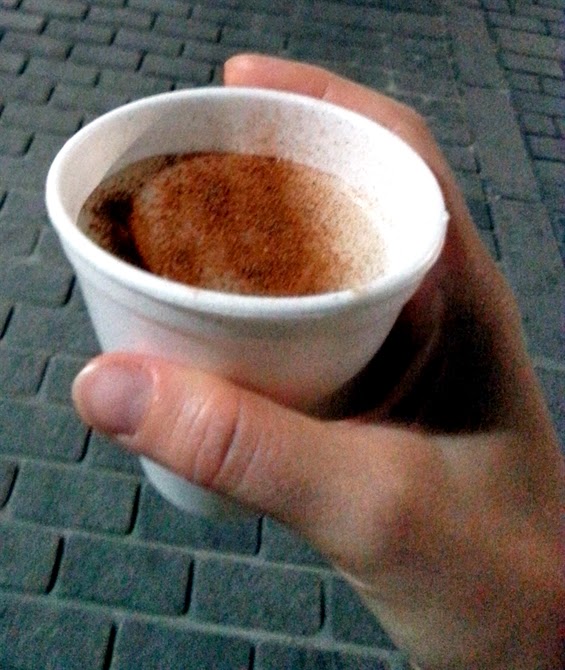
Mi è piaciuto da matti il sahlep, una bevanda invernale preparata con una farina di orchidee, servita calda e spolverizzata con cannella. L'ho trovato incredibilmente rilassante. Però secondo me non va bevuto durante i pasti perché è dolce e consistente, più simile alla cioccolata calda che a una bibita da pasto.
Fra le bibite ne abbiamo assaggiata anche una davvero tremenda, il şalgam suyu, succo salato di rapa e carota nera. Solo per i coraggiosi.

And what about the drinks? The most typical çay, the strong turkish black tea made with a double boiler teapot. Turks drink it everywhere and at any time. 
Then there's ayran, which is a demonstration that in Turkish food yogurt is everywhere. It's basically a more liquid, slightly salty yoghurt. 
I liked a lot the sahlep, a winter drink prepared with orchids powder, served hot and sprinkled with cinnamon. I found it incredibly relaxing. But in my opinion it should not be drunk during meals because it is sweet and firm, more like hot chocolate than a soft drink. 
Among drinks we also tasted a really tremendous one, şalgam suyu, salted turnip and black carrot juice. Only for the brave.

Baci sottozero

Finalmente sono riuscita ad andare in una gelateria siciliana che mi era stata consigliata tantissima. Mi sono vestita a tema, ma sono riuscita a scegliere la serata più fredda della settimana, quindi ho messo pantaloni lunghi e maglioncino.

Finally I managed to go in a Sicilian icecream shop that was recommended to me a lot. I dressed in theme, but I choose the coldest night of the week, so I wore long pants and a cardigan.

La gelateria è Baci Sottozero, in piazzale Siena 18, a Milano. Oltre ad essermi stata molto consigliata ha un rating di TripAdvisor altissimo, 4.5/5. La gelateria è famosa per il gusto setteveli, che esiste sia al cioccolato sia al pistacchio, io lo ho provato entrambi e sono entrambi molto buoni. La pelosa metà non è stato del tutto convinto dal gusto melone, ma secondo entrambi è senz'altro la gelateria più buona della zona e quella con il rapporto qualità prezzo migliore. Hanno anche i veri coni, quelli di cialda croccante e non di cartone, che al giorno d'oggi non è una cosa scontata.
Peraltro di recente hanno aperto anche una rosticceria siciliana di fianco.

martedì 9 settembre 2014

New Backpackers, Istanbul

A Istanbul abbiamo alloggiato in un ostello, il New Backpackers, che si trovava in Akbiyik caddesi 20/1, a Sultanahmet. Ci tenevamo molto a trovare un posto a Sultanahmet perché è il quartiere più ricco di monumenti storici importanti della città (Aya Sofia, palazzo Topkapi, moschea blu, basilica cisterna...) ed è piuttosto centrale, quindi una posizione del genere ci avrebbe permesso di risparmiare soldi e tempo sugli spostamenti (che a Istanbul non costano poco) e di raggiungere facilmente altri luoghi interessanti della città.
Per la posizione e considerando che eravamo in alta stagione l'ostello costava molto poco: 24€ a notte a testa per una camera doppia con bagno. Ci sono anche le camerate, che ovviamente costano meno.

In Istanbul we stayed in a hostel, the New Backpackers, which was in Akbiyik Caddesi 20/1, in Sultanahmet. We were very keen to find a place in Sultanahmet because it is the area richest of important historical monuments of the city (Aya Sofia, Topkapi Palace, Blue Mosque, Basilica cistern ...) and it's pretty central, so such a position would allow us save time and money on transfers (which in Istanbul aren't cheap) and easily reach other interesting places in the city. 
For the location and considering it was high season the hostel was very cheap: 24€ per night per person for a double room with bathroom. There are also dormitories, which obviously cost less.

La nostra camera era grande, con un bagno piuttosto piccolo, ma assolutamente perfetta per le nostre necessità. Ci hanno fornito asciugacapelli, asciugamani, saponette e bagnoschiuma. L'unico problema è stata la pulizia: il pavimento non era pulitissimo, ma la cosa non ci ha particolarmente turbato, però sulle lenzuola c'erano macchie che chiaramente erano di sangue. Si sentiva che erano state lavate, ma evidentemente quelle macchie non erano venute via. Ci siamo fatti dare un ricambio, ma anche il nuovo lenzuolo era macchiato, così ce lo siamo fatti sostituire di nuovo. Alla fine abbiamo dormito con il lenzuolo meno macchiato, ma a saperlo prima ci saremmo portati le lenzuola da casa (come consiglio di fare a eventuali futuri clienti).
Degli amici che erano con noi non hanno potuto stare in stanza per le prime ore perché era in corso una disinfestazione contro le mosche.
C'era l'aria condizionata, che è stata una benedizione, e il free wi-fi, che però in alcune camere, inclusa la nostra, non prendeva. L'ultimo giorno ci hanno tenuto i bagagli permettendoci di girare tranquillamente per la città. Non sono stati custoditi in un'apposita stanza, ma tenuti in un angolo della stanza interna del ristorante, il che se vogliamo è anche più sicuro perché sono costantemente osservati.

Our room was large, with a rather small bathroom, but absolutely perfect for our needs. We were provided with a hairdryer, towels, soaps and bubble bath. The only problem was the cleanliness: the floor was not so clean, a thing that did not particularly upset us, but there were stains on the sheets that were clearly of blood. It felt like thay that had been washed, but apparently those stains had not come off. We told the staff and were given a replacement, but the new sheet was stained too, so there we asked ​​to replace it again. At the end we slept with the less stained sheet, but to know that before we'd taken the sheets from home (such as a I advice to do to any future clients). 
The friends who were with us were not able to stay in their room for the first few hours because it was an ongoing pest control for flies.
There was air conditioned, that was a bless, and free wi-fi, but in some rooms, including our own, it did not arrive. The last day they kept our luggage allowing us to run safely through the city. It wasn't been kept in a separate room, but in a corner of the inner room of the restaurant, which I think was even safer because it was constantly observed. 

La colazione inclusa/The included breackfast
Il menù. Per leggerlo, aprite la foto in un'altra pagina/The menu. To read it open the photo in a new tab
Antipasti misti freddi/Mixed cold appetizers
Mussakka e sultan's favourite/Mussakka and sultan's favourite
 Sono stata molto contenta della colazione inclusa. Il New Backpackers infatti ha il suo bar ristorante, il Şiva Cafè, che ha un'atmosfera molto carina e serve piatti che per Istanbul sono piuttosto costosi, ma che i turisti europei possono permettersi senza troppi problemi. Gli antipasti non erano incredibili, ma i primi piatti che abbiamo provato erano molto buoni, in particolare il Sultan's favourite. C'era anche un cameriere che ogni sera si esibiva in un numero in cui ballava il gam gam style con quattro calici di birra in bilico sulla testa. L'ostello è situato in una via piena di altri alberghi e ostelli con ristorante annesso e che per questo è molto turistica e vivace. Il lato negativo però era che c'era musica ad alto volume fino a tardi (non fino al mattino, ma almeno fino a mezzanotte).
Da fuori l'ostello non è semplicissimo da riconoscere per via del ristorante, ma sia noi sia i nostri amici siamo stati individuati immediatamente dallo staff.
Il personale è stato molto gentile e disponibile e ci ha aiutato varie volte.
In definitiva consiglio assolutamente questo ostello per l'ottima posizione, la cortesia del personale, la buona cucina e l'atmosfera vivace, ma suggerisco di portarsi le lenzuola (e magari anche gli asciugamani) da casa.

I was very happy with the included breakfast. The New Backpackers in fact has its own restaurant and bar, the Şiva Cafe, which has a nice atmosphere and serves dishers which for Istanbul are quite expensive, but that European tourists can afford without too much trouble. The appetizers were not amazing, but the first dishes we tried were very good, especially the Sultan's favorite. There was also a waiter who every night performed a number in which he danced the gam gam style with four glasses of beer balanced on his head. The hostel is located in a street full of other hotels and hostels with attached restaurant and that is why it is very touristy and lively. The downside, however, was that there was loud music until late (not until the morning, but at least until midnight). 
From the outside the hostel is not easy to recognize because of the restaurant, but both we and our friends were immediately identified by the staff. 
The staff was very friendly and helpful and helped us several times. 
Ultimately I absolutely recommend this hostel for its excellent location, friendly staff, good food and lively atmosphere, but I suggest to bring the bedsheets (and maybe even the towels) from home.

Colori d'autunno/Autumn colours

Stavolta ho optato per un look più autunnale, con lo zaino con i gufi, le scarpe e il vestito comprati al mercato di Cogoleto, il ciondolo ad ape comprato all'Hobby Show, gli orecchini di pietra del sole dell'Artigiano in Fiera di Milano, una cintura swappata e due anelli presi in Turchia.

This time I opted for a more autumnal look, with the owls backpack, the shoes and the dress bought at Cogoleto's market, the bee pendant bought at the Hobby Show, the sunstone earrings bought at Milan's artisan fair, a swapped belt and two rings bought in Turkey. 

A proposito di Turchia, ho sperimentato l'henné che ho preso lì al bazaar delle spezie. Ne ho comprato mezzo chilo per 7,50TL che equivalgono a circa 3€, pochissimo. Non ne ho preso di più perché non avevo idea di come fosse poi il risultato.
Quando l'ho sperimentato ho avuto paura di aver preso per sbaglio un henné neutro, perché mentre me lo stavo applicando non ha macchiato pelle e lavandino. In più è decisamente più verde degli altri che ho provato.
Per fortuna invece poi ha funzionato benissimo e anzi, il colore non lascia nemmeno giù quando mi lavo i capelli.

Speaking of Turkey, I tried the henna that I bought there at the Spice Bazaar. I bought half a kilo for 7,50TL, the equivalent of about 3€, really cheap. I have not bought more because I had no idea what would have been the result. 
When I tried it I was afraid to have had accidentally bought a neutral henna, because while I was applying it, it didn't stain my skin and wash basin. In addition it is much more green than the others I've tried. 
Luckily instead it worked and indeed it worked really well, and the color does not even bleed when I wash my hair.

lunedì 8 settembre 2014

Window shopping

Prima di partire per Istanbul avevo fatto un giretto a caccia degli ultimi saldi e vi avevo fatto vedere i miei acquisti. Durante quel giro però mi sono innamorata fatalmente di alcuni capi delle nuove collezioni! Ovvio -.-
Da Tally Weijl ho adorato il crop top con la scritta "amour", principalmente perché mi ricorda l'omonima canzone dei Rammstein che adoro. Però non sono pronta a spenderci sopra 10€.
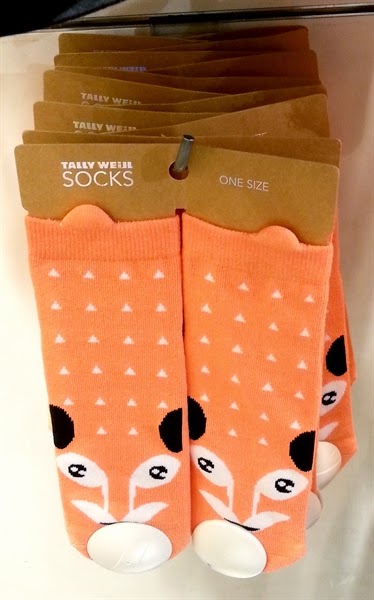
Ho trovato carinissime anche le calze con i cerbiatti e quelle con il mostro.

Before leaving for Istanbul I went hunting for the last sales and showed my purchases. During that tour, however, I inevitably fell in love with some pieces of the new collections! Obvious -.- 
At Tally Weijl I loved the crop top with the word "amour", mainly because it reminds me of the song by the same name by Rammstein that I love madly. But I'm not ready to spend 10€ to buy it. 
I also found cute the socks with fawns and those with the monster. 

Il maledetto H&M, oltre a prodursi in imitazioni niente male delle Dr.Martens (che però non hanno la suola cucita, per cui ho evitato di investirci), nella nuova collezione ha anche almeno due tipi di scarpe di velluto! Io adoro questo genere di cose e le cerco bordeaux da anni, ma ho troppe scarpe e troppi pochi soldi per prenderle così per sfizio.
Peraltro quest'estate ho fatto davvero troppo shopping per cui voglio resistere senza comprare nulla il più possibile, più che per i soldi (non che risparmiare guasti) per salvaguardare lo spazio fisico nel mio armadio e perché non ho ancora messo varie cose che ho comprato.

The Damned H&M, in addition to good Dr.Martens imitations (but they don't have a stitched sole, so I avoided to invest my money on them), the new collection also has at least two types of velvet shoes! I love this kind of stuff and I searched for burgundy ones for years, but I have too many shoes and too little money to buy them on a whim. 
Moreover, this summer I did too much shopping so I want to resist without buying anything as much as possible, rather than for the money (not that saving is a bad idea) to save the physical space in my closet and because I have not yet worn various things I bought.

Organizzare un viaggio ad Istanbul/Organizing a trip to Istanbul

Questo post si potrebbe intitolare anche "tutto quello che avrei voluto sapere su Istanbul prima di partire". Infatti ho deciso di iniziare i miei racconti di viaggio con qualche consiglio di viaggio. Ovviamente bisogna tener conto che a Istanbul sono stata solo una volta e solo una settimana, ma penso che qualcosa di quello che ho imparato possa essere utile a chi fosse interessato a fare un viaggio simile.
Noi abbiamo fatto molto affidamento sui consigli della Lonley Planet, che abbiamo trovato molto buoni (anche quelli sui ristoranti!). Ovviamente non tutti i prezzi e le chiusure erano aggiornatissimi, quindi conviene controllare su internet e calcolare per eccesso. Per esempio il museo Pera ci è costato 15 lire invece delle 10 indicate e il costo della basilica cisterna è addirittura raddoppiato rispetto a quanto indicato, per non parlare dello spettacolo dei dervisci alla stazione cittadina.
I costi maggiori di un viaggio a Istanbul sono l'aereo e l'albergo. Per abbassarli la soluzione migliore è andare in bassa stagione. Pare che oltretutto in primavera e autunno il clima sia molto gradevole, mentre d'estate fa caldo e d'inverno freddo.

This post could be also entitled "all I wanted to know about Istanbul before leaving". In fact, I decided to start my travel tales with some advice. Of course you should consider that I went to Istanbul only once and only for a week, but I think some of what I learned may be useful to the people interested in a similar trip. 
We relied a lot on Lonely Planet's advices, which we found very good (even those about the restaurants). Of course, not all prices and the closures were up to date, so you should check on the internet and to calculate your budget in excess. For example, the Pera museum costed us 15TL instead of the 10 listed and the cost of the basilica cistern doubled compared to what was written on the guide, not to mention the spectacle of the dervishes at the town station. 
The main costs of a trip to Istanbul are the plane and the hotel. To lower them the better solution is to go out of season. It seems that moreover, in spring and autumn the weather is very pleasant, while summer is hot and winter cold. 

Gli altri costi che incidono di più sul budget sono i musei e i trasporti, che però si possono ridurre sensibilmente facendo la carta dei musei (Museum pass) e la carta dei trasporti (Istanbulkart).
Il museum pass esiste in due versioni, quella da 3 giorni, in vendita a 85 lire turche e quella da 5, a 115 lire. Il periodo di validità comincia dalla prima visita ad un museo incluso nell'offerta.
Questa carta permette di entrare gratuitamente (ma una sola volta) all'Hagia Sophia, al palazzo Topkapı, harem incluso, al museo archeologico, al museo dei mosaici, al museo delle arti turche e islamiche, a quello della scienza e della tecnica nell'islam, alla chiesa Chora, al museo Mevlevi dedicato ai dervisci, al palazzo Yıldız, al museo Rumeli Hisar e al museo Fethiye. Non tutti questi musei sono particolarmente interessanti, ma la lista include quelli che in genere sono più visitati e interessanti.
La carta in teoria permette di saltare le code, ma in pratica a noi è stata davvero utile in questo senso solo una volta.
Qui trovate il sito ufficiale per maggiori informazioni: http://www.muze.gov.tr/museum_pass. Dal sito e dal cartellone nella foto non è chiaro, ma da altri vari siti ho scoperto che la carta da tre giorni non include la chiesa Chora, il museo Mevlevi, ail palazzo Yıldız, il museo Rumeli Hisar e il museo Fethiye. Vale la pena di informarsi in proposito tenendo conto dei propri interessi.
La carta si può comprare anche via internet, ma va comunque ritirata sul posto, quindi io consiglio di farla direttamente ai punti vendita all'Hagia Sophia, al palazzo Topkapı, al museo archeologico o alla chiesa Chora.

Other costs that impact the most on the budget are the museums and transport, but they can be reduced significantly buying the museum card (Museum pass) and the transport card (Istanbulkart). 
The museum pass is available in two versions, one valid for three days sold for 85TL and one valid 5days for 115TL. The validity period begins with the first visit to a museum included in the offer. 
This card allows you to get free (but only once) entry to the Hagia Sophia, the Topkapi Palace, harem included, the archaeological museum, the mosaic museum, the Museum of Turkish and Islamic Arts, that of science and technology in Islam, the Chora church, the Mevlevi museum dedicated to the dervishes, the Yıldız palace, Rumeli Hisar museum and the museum Fethiye. Not all of these museums are particularly interesting, but the list includes those who are usually the most visited and interesting. 
The paper, in theory, allow you to skip the queues, but in practice it has been really helpful to us in this way only once. 
 For more information here you will find the official website: http://www.muze.gov.tr/museum_pass. From the website and from the billboard in the picture is not clear, but from various other sites I found out that the three days card does not include the Chora church, the museum Mevlevi, the Yıldız Palace, the Fethiye museum and theRumeli Hisar  museum. It is worthwhile to inquire about it, if you're interested in visiting them too. 
The card can also be bought via internet, but it must be withdrawn on the spot, so I recommend to buy it directly to the stalls in Hagia Sophia, Topkapı Palace, archaeological museum or Chora church. 

Oltre ai vantaggi già menzionati, il Museum Pass dà diritto a vari sconti anche oltre al periodo di validità. Quello che ho trovato più interessante è stato lo sconto del 25% sul tour in battello sul Bosforo.

In addition to the already mentioned advantages, the Museum Pass entitles you to various discounts even beyond the period of validity. What I found most interesting was the 25% discount on the Bosphorus boat tour. 

L'Istanbulkart, invece, riduce il costo dei biglietti dei trasporti pubblici quasi della metà, da 4 lire a 2,15 e si può utilizzare in metropolitana, sugli autobus e sui battelli pubblici. E' un risparmio notevole, anche considerando che ogni volta che si cambia mezzo bisogna pagare un nuovo biglietto.
Quando siamo partiti pensavamo di usare moltissimo i mezzi, ma una volta lì abbiamo scoperto che Istanbul è una città che, a patto di aver voglia di camminare un po', si gira tranquillamente a piedi. Ovviamente ci sono posti interessanti che sono anche abbastanza lontani, ma prima di caricare i miliardi sulla tessera provate a testare la vostra resistenza.
Queste tessere si fanno in apposite macchinette con scritto Istanbulkart e costano 10 lire turche, che in teoria sono rifondibili e in pratica no. Però vanno caricate con il credito desiderato ad altre macchinette con la scritta Biletmatik, che non accettano monete, ma solo banconote da 5, 10 o 20 lire. Una singola carta si può usare anche per più persone, il che riduce ulteriormente il costo iniziale.

The Istanbulkart reduces the cost of public transport tickets by almost a half, from 4 to 2.15TL and it can be used on the subway, on buses and public boats. It a substantial saving, the more considering that every time you change a transport you have to pay a new ticket. 
When we left we thought of using a great deal of public transport, but once there we discovered that Istanbul is a city that, as long as you don't mind walking a bit, can be visited by foot. Obviously there are places that are also quite far away, but before loading billions on the card, try to test your endurance. 
These cards can be bought at the machines with written Istanbulkart and cost 10 Turkish Lira, which in theory can be refunded, but in practice not. They can be loaded with the desired credit at other machines with the writing Biletmatik, that don't accept coins, but only 5, 10 or 20TL notes. A single card can be used by more people, a thing that reduces the initial cost.

Parlando di trasporti, è importante dire che Istanbul ha un codice della strada tutto suo: bus che vanno sui marciapiedi, attraversamenti sportivi, autisti di taxi che chattano su facebook mentre guidano e così via. Sconsiglio quindi assolutamente di muoversi in macchina a chiunque non sia turco, anche perché i trasporti pubblici funzionano bene e invece ho visto molto traffico e credo sia difficile trovare parcheggio.
Se prendete un taxi, attenzione a concordare bene prima il prezzo, ci sono molte storie di turisti truffati.
La maggior parte degli alberghi, ma anche degli ostelli, offre la possibilità di un trasporto via pullmino da lì all'aereoporto e viceversa, con costi decisamente più convenienti di quelli dei taxi.
Fate attenzione anche girando a piedi e non date nessuna regola per scontata.

Speaking of transportation, it is important to say that Istanbul has its rules of the road: buses going on the sidewalks, deathly crossings, taxi drivers who chat on facebook while driving and so on. Therefore my advice to anyone who is not turkish is to absolutely avoid moving by car, because public transport instead work well, I've seen a lot of traffic and I think it is difficult to find parking. 
If you take a taxi, be careful to agree upon the price before, there are many stories of scammed tourists. 
Most of the hotels, but als hostels, offers the possibility of a transport van from there to the airport, and vice versa, with is considerably more convenient than the taxi. 
Pay attention to cars and so on while walking and do not give any rule for granted. 

Secondo la guida, molti turisti non escono mai dal quartiere di Sultanahmet, che in effetti è quello con il maggior numero di monumenti interessanti (Aya Sofia, palazzo Topkapi, moschea blu, basilica cisterna...). Per questo e per la sua posizione centrale consiglio di cercare un alloggio qui. Nonostante sia il centro del turismo locale, si trovano sistemazioni anche a prezzi convenienti.

According to the guide, many tourists do not even come out from the Sultanahmet district, which in effect is the one with the greatest number of interesting sights (Aya Sofia, Topkapi Palace, Blue Mosque, Basilica cistern...). For this reason and because of its central location I would suggest finding an accommodation there. Despite being the center of local tourism, there are also accommodations at affordable prices.

L'ultima avvertenza riguarda il vestiario: se pensate di visitare molte moschee (e ve lo consiglio), bisogna rispettare le regole di abbigliamento, ovvero braccia e gambe coperte e per le donne anche i capelli. Quindi, specie se state poco tempo, vi consiglio di portare gonne e pantaloni lunghi e avere un bello scialle grande nello zaino con cui coprire sia capelli sia braccia, in modo da poter entrare in moschea in qualunque momento. In ogni caso nelle moschee principali vengono forniti scialli di cortesia, ma è evidente che averne uno personale è più igienico.

The last caveat is the clothing: if you plan to visit many mosques (and I recommend it), you have to respect the rules of clothing, that are covered arms and legs, and for women hair too. Hence, especially if you go to Istanbul for a short time, I recommend to bring long pants and skirts and have a nice big shawl in the bag which can cover both hair and arms, so you can enter a mosque at any time. Anyway, the main mosques provide shawls to tourists, but it is clear that having a personal one is more hygienic.

Gabbiani allegri VS gabbiani seri/Happy seagulls VS serious seagulls

Nonostante le vacanze siano finite è ancora estate. O almeno dovrebbe esserlo, ma anche se fa ancora caldo c'è spessissimo un cielo plumbeo, di quelli che mettono depressione solo a guardarli, giusto per smorzare lo stress da rientro. Ebbene sì, sono di nuovo qui a lamentarmi del tempo come una vecchietta.
Visto che però per ora le temperature reggono, finché riesco sto cercando di mettermi quei vestiti che poi rimarranno nell'armadio per metà dell'anno, in particolare quelli che ho fatto o comprato da poco. Stavolta ho scelto la maglietta con l'anguria e i bellissimi pantaloni estivi blu con una stampa a gabbiani che ho comprato a Istanbul (poi ve li mostrerò meglio in un post sul mio shopping turco).

Despite the holidays are over, it is still summer. Or at least it should be, but even if it's still hot there is often a leaden sky, the kind that makes you depressed just looking at it, just to dampen the stress of the return. Yes, I am again complaining about the weather like an old woman. 
Since, however, for now the temperatures are still good, until I can I'm trying to wear those clothes that will remain in the closet for half of the year, especially those I have made or bought recently. This time I choose the watermelon T-shirt and the beautiful blue summer trousers with a seagull pattern that I bought in Istanbul (I'll show them better in a post about my turkish shopping). 

Ho abbinato gli stessi pantaloni in maniera molto più sobria per un colloquio per un lavoretto e mi hanno presa. Dai che anche quest'anno si mangia XD

I paired the same pants in a much more sober way for an interview for a casual job and I got it. I'll got to eat this year too XD

venerdì 5 settembre 2014

Consigli, per favore!/Some piece of advice, please!

Ho rimosso le spalline imbottite dal vestito con la stampa a margherite che avevo preso al mercato, eccolo indossato. Non so se mi convince al 100% e quindi sono indecisa se tenerlo così o spezzarlo in gonna midi e camicia o abitino e minigonna. Credo che in ogni caso proverò a metterlo prima di modificarlo per vedere come me lo sento e cosa ne dice la gente. Voi che ne pensate?

I removed the padded shoulders from the dress with a daisy print I bought at the market, and here it is worn. I do not know if it convinces me 100% so I don't know if keeping it like this or cutting it into a midi skirt and blouse or into a dress and miniskirt. I think that in any case I'll try to wear it before alterating it to see how I feel and what people say. What do you think? 

Vi chiedo consiglio anche su di un altro recente acquisto del mio guardaroba, un'assurda tuta bianca a disegni azzurri che era di mia nonna e lei mi ha regalato. Avevo pensato di tagliarla dividendola in camicetta e pantaloni, ma dopo averla provata la trovo così carina nella sua pacchianeria, che, anche se è scomodissima per andare in bagno, sto pensando di tenerla così. Opinioni?

I also ask for advice on another recent purchase, an absurd white suit with blue pattern that was my grandmother's and that she gave me. I thought of cutting it into blouse and pants, but after trying it I find it so cute in his thackyness, that, even if it is uncomfortable to go to the bathroom, I'm thinking of keeping it that way. Any opinion?

Émile Bravo e i sette orsi nani/Émile Bravo and the Seven Squat Bears

Avevo già parlato di "Riccioli d'oro e i sette orsi nani" del famoso fumettista francese Émile Bravo (trovate la mia recensione qui). É il primo di una serie di libretti a fumetti che mischiano con ironia le favole più classiche creando situazioni paradossali. In Italia è pubblicata dalla Bao e costa 10€ a volume.
Io ho trovato questa serie molto divertente e adatta ad ogni età, però non so se il mio parere sia completamente oggettivo visto che sono innamorata dei protagonisti, sette adorabili orsi nani scorbutici e un po'ingenui, che vorrebbero solo essere lasciati in pace, ma si trovano sempre coinvolti in qualche avventura da principi scocciatori, principesse invadenti e così via.
Ogni volume è autoconclusivo tranne forse il terzo, ma, dato il tema, volendo Bravo potrebbe andare avanti all'infinito. Ogni libro però è anche una continuazione del precedente, quindi non si può cominciare a leggere da un volume a caso.
Per ora sono stati pubblicati quattro volumi (e in Francia anche una raccolta) che recensirò in questo post.
"Riccioli d'oro e i sette orsi nani" mischia principalmente "Riccioli d'oro e i tre orsi" e "La bella addormentata". É molto divertente ed è un'ottima introduzione alla serie, anche se c'è anche un riferimento importante ad una fiaba poco nota, "Il prode piccolo sarto", nota anche come "Sette in un colpo".

I had already spoken of "Goldilocks and the Seven squat bears" of the famous French cartoonist Émile Bravo (you can find my review here). It is the first of a series of comic books that mix humor with classic fairy tales by creating paradoxical situations.
I found this series very nice and suitable for all ages, but I do not know if my opinion is completely objective since I'm in love with the characters, seven adorable squat bears, grumpy and naive, who only want to be left in peace, but are always involved in some adventure by pest princes, intrusive princesses and so on. 
Each volume is self-contained except maybe for the third, but given the topic, I wish Bravo could go on forever. Each book, however, is also a continuation of the previous one, so you can't start reading from a random volume. 
For now, four volumes have been published (in France also a collection) that I'll review in this post. 
"Goldilocks and the Seven squat bears" primarily mixes "Goldilocks and the Three Bears" and "The Sleeping Beauty". It is very funny and is a great introduction to the series, although there is also an important reference to a little-known fairy tale, "The Valiant Little Tailor", also known as "Seven at one blow." 

"La fame dei sette orsi nani" è probabilmente il mio preferito, ma è anche il più crudo. I sette orsi nani si trovano ad affrontare il rigore dell'inverno senza provviste e devono prendere decisioni crudeli per sopravvivere. Le fiabe principali citate sono "Jack e il fagiolo magico", "Cappuccetto Rosso", "Hansel e Gretel", "Il gatto con gli stivali".

"The hunger of the seven squat bears" is probably my favorite, but it is also the crudest. The seven squat bears face the rigors of winter without provisions and need to take cruel decisions in order to to survive. The main cited  fairy tales are "Jack and the Beanstalk", "Little Red Riding Hood", "Hansel and Gretel", "Puss in Boots". 

"La bella e gli orsi nani" è forse il volume che mi è piaciuto meno, anche se contiene elementi di satira sociale decisamente ben riusciti. Le favole principali citate sono "Biancaneve", "La bella e la bestia" e un po'tutte quelle con principi e principesse.
Mi è piaciuta meno perché trovo abbia meno ritmo delle altre e perché non mi ha soddisfatto il finale.

"Beauty and the squat bears" is perhaps the volume that I liked the least, although it contains definitely good elements of social satire. The main fairy tales mentioned are "Snow White", "Beauty and the Beast" and all of these with princes and princesses. 
I liked it less than the others because it has less rhythm and because I was not happy with the ending. 

"Chi vuole la pelle degli orsi nani?" è molto molto carino. Mischia "Pelle d'asino", "Biancaneve", "I musicanti di Brema" e la poco nota "Pelle d'orso".

"Who wants to skin the bear dwarf?" is very very cute. It mixes "Donkeyskin", "Snow White", "Town Musicians of Bremen" and the little-known "Bearskin".
Related Posts Plugin for WordPress, Blogger...