martedì 22 settembre 2015
Japan travel journal, 31/10/15: Hama-rikyu &Odaiba
Etichette:
ambiente,
calze,
cancelleria,
cartoni,
cibo,
disegni in viaggio,
giappone,
giappone 2015,
giochi,
materiale craftoso,
miei disegni,
musei,
nerd,
shopping,
storia,
tecnologia,
Tokyo,
viaggio
lunedì 21 settembre 2015
Japan, 30/10/15: Asakusa
La mattina del 30 agosto arriviamo all'aereoporto di Narita. Con una caparra di 500¥ ci procuriamo la Pasmo (ma esiste anche la Suica che è equivalente), la carta ricaricabile per i mezzi, che non dà sconti, ma permette di accedere comodamente a tutti gli innumerevoli mezzi pubblici e privati di Tokyo semplicemente passandola sul sensore invece di comprare ogni volta un biglietto diverso. Per fortuna è molto più facile di quanto pensassimo perché le macchinette dove acquistarle sono vicine al collegamento ferroviario con Tokyo.
Poi raggiungiamo la città con il mezzo più economico a disposizione, il Keisei Limited Express (1030¥), un normalissimo treno di linea che ci permette di arrivare a Ueno, da cui prendiamo la metropolitana per due fermate per arrivare ad Asakusa, dove si trovava il nostro ostello, il Toukaisou. Visto che non è ancora l'ora del check in, lasciamo le valigie in custodia e ci lanciamo ad esplorare il quartiere. Non prima di una sosta per mangiare un paio di onigiri al combini (mini market 24 ore su 24) più vicino, però!
Il primo posto in cui andiamo è il Chingodo, un tempio dedicato ai tanuki, che sono creature mitologiche giapponesi, una sorta di dispettosi cani procione con le palle grosse che attirano la prosperità. Il tempio in sé è piccolino e piuttosto modesto, niente di speciale, ma si trova già nella via piena di bancarelle (carine, ma che vendono principalmente robaccia per turisti) che porta all'attrazione principale del quartiere, il Sensoji.
August 30th morning we arrive at Narita airport. With a deposit of ¥ 500 we get a Pasmo (but there is also Suica which is equivalent to it), the rechargeable card for the transports, which does not give discounts, but allows easy access to all of the many public and private transports in Tokyo simply passing it on the sensor instead of buying a different ticket every time. Luckily it's much easier than we thought because the machines where to buy it were close to the train connection with Tokyo.
Then we reach the city with the most economic means available, the Keisei Limited Express (¥ 1,030), that is a regular train line that allows us to get to Ueno, from which we take the subway for two stops to get to Asakusa, where is Toukaisou, our hostel. Since it's not yet time to check in, we leave the suitcases in custody of the staff and go to explore the neighborhood. Not before a stop to eat a couple of onigiri at a close combini (24 hours mini market), though!
The first place we go to visit is Chingodo, a temple dedicated to the Japanese tanuki which are mythological creatures, a kind of mischievous raccoon dogs with big balls that attract prosperity. The temple itself is little and rather modest, nothing special, but it's already in the street full of stalls (nice, but that mainly sold tourist stuff) that leads to the main attraction of the district, Sensoji.
Il Sensoji è un tempio fondato nel 620, distrutto dai bombardamenti durante la seconda guerra mondiale e ricostruito nel 1958. L'aspetto per cui è più famoso però è il Kaminarimon, un portale caratterizzato da un'enorme lanterna di carta. Sono molto interessanti anche la pagoda e il vicinissimo Asakusa Jinja, un tempio che invece risale al 1649.
Sensoji is a temple founded in 620, destroyed by bombings during the Second World War and rebuilt in 1958. It's most famous feature, however, is Kaminarimon, a portal with an enormous paper lantern. Other interesting visits are the pagoda and the nearby Asakusa Jinja, a temple that instead dates back to 1649.
Dopo la visita ai templi, andiamo all'Amuse Museum, che dista solo pochi metri. E' un museo sull’estetica tradizionale giapponese di manufatti, tessuti e disegni. Troviamo un'interessantissima esibizione speciale dedicata al boro, una tecnica di rattoppo simile al patchwrok usata dalle classi meno abbienti nel nord del Giappone fino a non molto tempo addietro.
C'è anche un'esibizione sugli ukiyo-e con delle stampe non originali e un filmato, ma il boro è la parte più interessante, anche perché il museo permette di toccare molti dei pezzi esibiti e perfino di provarne alcuni!
Dal tetto poi c'è una vista splendida sulla città (anche se intanto inizia a piovere).
After visiting the temples, we go to Amuse Museum, which is only a few meters far. It's a traditional Japanese aesthetics museum focusing artifacts, fabrics and drawings. We find an interesting special exhibition dedicated to boro, a technique similar to patchwrok used by the lower classes in northern Japan until not long ago.
There is also an exhibition with ukiyo-e prints (not original) and a movie, but boro is the most interesting part, because the museum allowes to touch many of the pieces exhibited and even to try some on!
And from the roof there is a beautiful view over the city (although it starts to rain the moment we get there).
Vado matta per i senbei (crackers di riso), così, usciti dal museo non resisto e ho faccio compere ad una bancarella che ne fa di artigianali.
I love senbei (rice crackers), thus, once we leave the museum I could not resist and buy some at a stand which sells homemade ones.
Visto che già al museo stavamo crollando dal sonno per il viaggio e il fuso orario, compriamo qualche onigiri e torniamo all'albergo, dove ci facciamo una doccia, mettiamo lo yukata, mangiamo e crolliamo.
Since at the museum we were already falling asleep for the trip and the jet lag, we buy some onigiri and return to the hotel, where we have a shower, wear the yukata, eat and collapse.
Etichette:
abiti tradizionali,
Asakusa,
cibo,
giappone,
giappone 2015,
musei,
religione,
scarpe,
storia,
Tokyo,
viaggio
Japan travel journal, 30/10/15: Asakusa
Eccomi con il resoconto del mio viaggio in Giappone!
Non vi prometto che sarà quotidiano e puntuale perché il rientro è più pesante di quanto pensassi.
Al racconto di ogni singola giornata con tutte le informazioni e e le foto ho deciso di premettere il mio diario di viaggio disegnato. Non è niente di eccezionale e la mia scrittura fa schifo, ma mi sono divertita un sacco a farlo, così ho deciso di condividerlo con voi.
Here I am with the report of my trip to Japan!
I do not promise that it will be daily and on time because the return to work is being heavier than I thought.
Before the story of every single day with all the information and and photos I decided to publish my drawn travelogue. It's nothing fancy, and my writing sucks, but I enjoyed it a lot to make, so I decided to share it with you. Sorry to my non italian readers if I wrote in my mother language, but I feel more confortable with italian when writing journals.
Etichette:
abiti tradizionali,
Asakusa,
cibo,
disegni in viaggio,
giappone,
giappone 2015,
miei disegni,
musei,
religione,
storia,
Tokyo,
viaggio
venerdì 18 settembre 2015
Asakusa Ryokan & Hostel Toukaisou
In Giappone abbiamo alloggiato all'Asakusa Ryokan & Hostel Toukaisou, per gli amici Toukaisou. E' in 2-16-12, Nishiasakusa, Taito-ku, Tokyo, JAPAN 111-0035.
Ci è piaciuto molto. E' vicino alle fermate della metropolitana di Tawaramachi e Asakusa e quindi anche a vari luoghi interessanti da visitare. Il personale è gentile, disponibile e parla un ottimo inglese! C'era il wi-fi, un microonde e un frigorifero comuni e sul tetto ci sono una lavatrice e un'asciugatrice. La reception è dalle 8 alle 23 senza coprifuoco.
Non accettano bambini di meno di 3 anni.
Ci sono camere singole, doppie e matrimoniali con bagno, una doppia con letti a castello e bagno in comune, un dormitorio privato e uno misto. Al terzo piano c'è una piccola cucina riservata agli ospiti dei dormitori. I prezzi sono piuttosto economici, fra i 19 e i 25€.
In tutte le stanza c'è il tatami.
Questo è il sito web: http://www.toukaisou.com/
In Japan we stayed at Asakusa Ryokan & Hostel Toukaisou, for friends Toukaisou. It's in 2-16-12, Nishiasakusa, Taito-ku, Tokyo, JAPAN 111-0035.
We loved it. It's close to the subway stops of Tawaramachi and Asakusa and then it's also near to various places worth visiting. The staff is friendly, helpful and speaks excellent English! There was wi-fi, a microwave and a refrigerator and on the roof there are a common washer and dryer. The reception is from 8 to 23 without curfew.
They do not accept children younger than 3 years.
There are single, double and twin rooms with bath, a room with bunk beds and shared bathroom, a private and a mixed dorm. On the third floor there is a small kitchen for the guests of the dormitories. The prices are quite cheap.
In every room there is tatami.
This is the website: http://www.toukaisou.com/
Tutte le camere al 1 ° e 2 ° piano sono camere in stile giapponese con pavimenti in tatami. Noi abbiamo provato sia la doppia sia la matrimoniale e le abbiamo trovate piccole ma carinissime, in particolare la doppia.
Ogni camera è dotata di aria condizionata e riscaldamento, asciugacapelli, asciugamani, shampoo, bagnoschiuma e spazzolini da denti.
All rooms on the 1st and 2nd floor are Japanese style with tatami floors. We have tried both the double snd the twin and we found them small but nice, especially the twin.
Each room is equipped with air conditioning and heating, hairdryer, towels, shampoo, body soap and toothbrushes.
In ogni camera c'è anche un set da tè e un thermos per l'acqua calda da farsi riempire in reception.
Veniva anche fornito uno yukata e abbiamo adorato provare questa esperienza!
In every room there is a tea set and a thermos for hot water that has to be filled at the reception.
We were also provided yukata and loved to try this experience!
Il gabinetto (per fortuna) era in stile occidentale, ma con le giapponesissime pantofole da usare solo in bagno. La stanza da doccia era tutta una doccia e c'era anche una vasca da bagno, probabilmente pensata per essere usata come un ofuro giapponese, il che ci ha permesso di provare anche questa esperienza.
The toilet (thankfully) was western style, but with very japanese slippers to use only in the bathroom. The shower room was all a shower and there was also a bath tub, probably meant to be used as a Japanese ofuro, which allowed us to also try this experience.
Etichette:
alberghi,
giappone,
recensione,
viaggio
Resurrection - season 2

Resurrection è una serie tv statunitense del 2014 composta da 2 stagioni rispettivamente di 8 e 13 episodi e attualmente cancellata dalla programmazione. La storia si basa sul romanzo "The Returned" di Jason Mott.
Il nucleo centrale di questo telefilm è che ad Arcadia in Missouri iniziano ad apparire persone morte tempo prima. I cosiddetti "ritornati" all'apparenza sembrano persone normalissime, ma hanno la stessa età di quando sono morti e non sanno spiegare come e perché sono riapparsi.
Vi avevo già parlato della prima serie in questo post.
I personaggi principali rimangono coerenti con la serie precedente, compreso il quasi protagonista agente del governo Marty Bellamy che continua ad avere pretese assurde rispetto al suo lavoro e ai suoi superiori. L'unico che subisce una vera e propria evoluzione è Fred, che in questa stagione è fighissimo. Vengono introdotti anche nuovi personaggi, di cui alcuni assolutamente magistrali, soprattutto quelli più moralmente ambigui.
In questa seconda serie vengono sollevati nuovi misteri e nuovi interrogativi e si resta con il fiato sospeso fino alla fine, ma per fortuna la maggior parte delle domande trova una risposta. La maggior parte perché il finale, sebbene abbastanza soddisfacente, niente a che vedere con quello della stagione passata, lascia un grosso interrogativo aperto e rimangono anche altri aspetti poco chiari. Ci sarebbe stato spazio per una terza serie. Per cercare di avere più risposte credo che leggerò il libro.
Avendo visto questo telefilm nella sua interezza mi sento di consigliarlo. Non è horror, ma è comunque inquietante perché gioca sulla paura della morte. Inoltre tiene il fiato sospeso dall'inizio alla fine e ha personaggi, se non sempre credibili, estremamente umani.
Resurrection is a 2014 US TV series consisting of two seasons respectively of 8 and13 episodes currently suspended. The story is based on the novel "The Returned" by Jason Mott.
The core of this tv show is that in Arcadia in Missouri begin to appear person who died a long time before. The so-called "returned" apparently seem normal people, but they have the same age of when they died and they can not explain how and why they reappeared.I had already wrote about the first set in this post.
The main characters remain consistent with the previous series, including the almost protagonist, the government agent Marty Bellamy, who continues to have absurd claims respect his work and his superiors. The only one who undergoes a real evolution is Fred, who in this season is really cool. There also appear new characters, some of which are masterful, especially the more morally ambiguous.
In this second series new mysteries and new questions are raised and there is cliff-hanger until the end, but fortunately most of the questions find an answer. Mostly because the ending, although quite satisfactory, nothing to do with that last season's one, leaves a big question open and other aspects remain unclear. There would have been the premises for a third series. To try to have more answers I think I will read the book.
Having seen all this tv show, I recommend it. It is not horror, but it is disturbing because it plays on the fear of death. Also there is a cliff-hanger from beginning to end and characters, if not always credible, are very human.
giovedì 17 settembre 2015
Valigia per il Giappone (inizio settembre)
Ho pensato di pubblicare la lista commentata della mia valigia del Giappone, corretta grazie ai miei errori e alla mia esperienza, perché potrebbe essere utile a chi voglia intraprendere il mio stesso viaggio. E' valida per l'Honshū (l'isola principale) in un periodo da metà luglio a metà settembre, tenendo conto che è la stagione delle piogge, ma a inizio periodo fa un caldo terrificante accresciuto dall'umidità e a fine periodo la temperatura è comunque calda ma più sopportabile, però piove di più.
Se avete cose da aggiungere o suggerimenti, scriveteli nei commenti!
INDISPENSABILI
biglietti di viaggio (stampate aereo ecc)
documenti identità + fotocopia documenti identità (da tenere in posti diversi in caso di smarrimento)
cellulare + caricatore (i cellulari moderni in Giappone prendono)
prese multistandard (in Giappone ci sono sia prese sia voltaggi diversi)
guida turistica
soldi (in Giappone spesso vogliono pagamenti in contanti, conviene cambiarli in Italia o in aereoporto)
chiavi di casa
macch fotogr + caricatore
medicine
OGGETTISTICA VARIA
kit da cucito (solo con bagaglio da imbarcare. E' utilissimo per riparazioni di emergenza)
fazzoletti
kindle o libro
occhiali da sole
kit da cucito (solo con bagaglio da imbarcare. E' utilissimo per riparazioni di emergenza)
fazzoletti
kindle o libro
occhiali da sole
ombrello (la k-way è più leggera, ma fa troppo caldo per metterla)
borsetta
mascherina da notte (in Giappone spesso non ci sono gli scuri)
mini asciugamano (nei bagni non c'è quasi mai da asciugarsi le mani)
BAGNO
beauty (quello che portate di solito)
crema solare
borsetta
mascherina da notte (in Giappone spesso non ci sono gli scuri)
mini asciugamano (nei bagni non c'è quasi mai da asciugarsi le mani)
BAGNO
beauty (quello che portate di solito)
crema solare
ciabatte da doccia (se andate in un albergo tradizionale potrebbero essere inutili perché in stanza sul tatami si cammina a piedi nudi, nella stanza del wc si entra con pantofole speciali e la stanza da doccia è tutta la doccia)
VESTITI
scarpe da trekking (se andate a fare gite o escursioni, in città possono bastare anche le scarpe normali. Eviterei i tacchi. Meglio sceglierle impermeabili)
VESTITI
scarpe da trekking (se andate a fare gite o escursioni, in città possono bastare anche le scarpe normali. Eviterei i tacchi. Meglio sceglierle impermeabili)
scarpe di ricambio (le consiglierei impermeabili o addirittura aperte, tenente conto che potrebbe piovere molto)
cappello (meglio di stoffa che si possa piegare e mettere in borsa e che non si rovini con l'acqua)
cardigan di cotone
sciarpa (entrambe le cose da tenere in borsa contro l'aria condizionata polare)
calze, mutande, reggiseni
magliette
pantaloni
pantaloncini
gonna
pigiama (se il vostro albergo non offre lo yukata, ma magari in ogni caso perché potrebbe risultarvi scomodo)
leggings (da mettere sotto a tutto nell'improbabile caso in cui facesse freddo)
costumi (se avete intenzione metterli in un onsen che lo consente, portatene di brutti perché rischiano di assorbire l'odore di uovo marcio dell'acqua)
***
I thought of posting the annotated list of my suitcase for Japan, that I corrected thanks to my mistakes and my experience, as it might be useful to those who want to embark on the same journey. It's valid for Honshu (the main island) for a period from mid-July to mid-September, taking into account that it is the rainy season, but at the beginning of this period it is terribly hot, even more because of the moisture, and at the end of the period the temperature is still hot but bearable, but it rains more.
If you have someting to add or opinions about some items, write me in the comments!
ESSENTIAL
travel tickets
ID + ID copy (useful in case of loss)
phone + charger (it's better to check if your phone can be used in Japan)
socket (check if there's a difference in both sockets and voltage between Japan and your country)
tourist guide
money (in Japan often they want cash payments, it's better to change it in your country or at the airport)
house keys
camera + charger
medicines
VARIOUS OBJECTS
sewing kit (only in checked baggage. It's very useful for emergency repairs)
tissues
kindle or book
sunglasses
umbrella (the k-way is lighter, but it's often too hot to wear it)
handbag
sleep mask (in Japan often there aren't blinds)
Mini towel (in the bathrooms there is almost never anything to dry hands)
BATHROOM
beauty case (the things you travel with usually)
sun lotion
plastic flip flops (if you go to a traditional hotel may be unnecessary because in the tatami rooms you walk barefoot, in the toilet room you enter with special slippers and the shower room is all the shower)
CLOTHING
hiking shoes (if you want to go on excursions, in the city normal shoes can be enough. I would avoid heels. It's better to choose them waterproof)
spare shoes (waterproof or even open, considering that it might rain a lot)
hat (best a fabric one that can be folded and put in the bag and that does not get ruined with water)
cotton cardigan
scarf (both the last things to keep in bag against the polar air-conditioning)
socks, underwear, bras
shirts
trousers
shorts
skirt
pajamas (if your hotel does not offer yukata, but maybe in any case because you can find it unconfortable)
leggings (to put under everything in the unlikely event that it was cold)
bathing suits (if you plan to go to an onsen that allows it, take an ugly one because they may absorb the rotten egg smell of the water)
Food Wars! Battaglie culinarie/Food Wars: Shokugeki no Soma

"Food Wars! Battaglie culinarie" (in originale "Shokugeki no Soma") è un manga shōnen a tema cucina tuttora in corso, pubblicato da 2012 sul Weekly Shōnen Jump. Per ora conta 14 volumetti.
E' sceneggiato da Yūto Tsukuda e disegnato da Shun Saeki. I due autori collaborano con una vera chef, Yuki Morisaki, che fornisce le ricette per la serie.
Da questo fumetto è stata tratta una serie di light novel e un adattamento anime del 2015 che per ora è costituito da 24 episodi da 25 minuti ciascuno.
Questa è la storia: Sōma Yukihira è un ragazzo di quindici anni che sogna di rilevare la tavola calda di famiglia, dove lavora insieme al padre Jōichirō. I due fanno interminabili battaglie culinarie in cui il figlio irrimediabilmente perde. Quando Sōma si diploma alle medie, però, suo padre chiude la tavola calda e sparisce all'estero, lasciandogli i moduli per iscriversi alla durissima scuola di cucina Tōtsuki, dove solo il 10% degli studenti riesce a conseguire il diploma ogni anno. Sōma prende l'invito come una sfida.
Di per sé la storia è un classico dello shōnen: abbiamo per protagonista un ragazzo adolescente che deve combattere mille battaglie sempre più dure per diventare il più forte in qualcosa.
Anche i personaggi sono piuttosto stereotipati: abbiamo il solito protagonista puro di cuore e determinato con grandi occhioni e una pettinatura ispida, la ragazza tsundere, quella timida con le treccine e così via. Eppure in qualche modo risultano tutti interessanti. Ci sono anche dei personaggi italiani e la loro pronuncia nell'anime è estremamente divertente.
Il disegno non è niente di particolare, ma le scene di cucina sono rese in maniera estremamente dinamica, come vere e proprie battaglie e i piatti disegnati sembrano davvero appetitosi.
La particolarità quest'opera è il tema culinario e come viene trattato. Sembra un po' uno di quei programmi di cucina in cui i concorrenti si sfidano e vengono giudicati da chef cattivissimi.
Ma il lato davvero originale è un altro. Infatti la bontà dei piatti causa orgasmi gustativi che vengono visualizzati con vestiti che si strappano e chiappe al vento, insomma, con un sacco di fanservice. Per fortuna, pur essendo uno shōnen, oltre alle tette giganti c'è spazio anche per begli uomini discinti, fra cui anche capelloni (sapete quanto li adoro!).
Inoltre le ricette vengono spiegate allo spettatore (ovviamente meglio nel manga, dove viene loro dedicata una sezione alla fine) che volendo può provarle!
Sarà il cibo, saranno i capelloni, ma l'anime mi ha preso così tanto che me lo sono guardato in due giorni e ora sto divorando il manga che per ora è praticamente identico.
"Food Wars: Shokugeki no Soma" (in the original "Shokugeki no Soma") is an ongoing cooking themed shonen manga, published in 2012 in Weekly Shonen Jump. By now it consist of 14 volumes.
It is written by Yuto Tsukuda and drawn by Shun Saeki. The two authors work with a real chef, Yuki Morisaki, who provides the recipes for the series.
This comic was adapted into a series of light novels and an ongoing anime started in 2015 which for now consists of 24 episodes of 25 minutes each.
This is the story: Soma Yukihira is a fifteen year old boy who dreams to take over his family's diner, where he works with her father Jōichirō. The two make endless culinary battles in which the son always looses. When Soma graduates from middle school, however, his father closes the cafeteria and disappears abroad, leaving only the forms to enroll into the tough cooking school Tōtsuki, where only 10% of students obtain a diploma every year. Soma takes it as a challenge.
By itself, the story is a classic of shōnen: it stars a teenage boy who has to fight a thousand increasingly hard battles to become the strongest in something.
Even the characters are rather stereotypical: we have the usual pure hearted and determined protagonist with big eyes and a shaggy hairdo, the tsundere girl, the shy with braids one and so on. Yet somehow they are all interesting. There are also Italian characters and their pronunciation in the anime is extremely funny.
The drawings are nothing special, but the cooking scenes are made in a very dynamic way, like real battles and the dishes seem truly tasty.
The special thing about this work is the culinary theme and how it is treated. It seems a little like one of those cooking shows in which contestants have to compete and are judged by nasty chefs.
But the really original is side another. In fact, the goodness of the dishes cause gustatory orgasms that appear with clothes tear off by themselves and naked buttocks in the wind, in short, with lots of fanservice. Fortunately, despite being a shonen, besides the giant boobs there is also room for good-looking naked men including even long haired ones (you know how much you love them!).
Besides the recipes are explained to the audience (obviously better in the manga, where there is a dedicated a section at the end) that in this way can try them!
It can be the food or the long haired boys, but this anime involved me so much that I watched it in two days and now I'm eating up the manga that for now is essentially identical.
mercoledì 16 settembre 2015
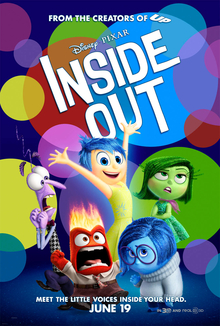
Inside out

Inside Out è un film d'animazione in 3D del 2015 della Disney Pixar.
La trama è questa: Riley, una ragazzina statunitense di undici anni, è costretta a trasferirsi dal Minnesota a San Francisco ed entra in crisi. La vicenda è vista dall'interno della sua mente, dove emozioni personificate (Gioia, Tristezza, Paura, Rabbia e Disgusto) gestiscono la sua vita emotiva attraverso una sorta di consolle. A causa di un incidente, Gioia e Tristezza sono costrette a intraprendere un viaggio nel mondo surreale della mente di Riley.
Il primo trailer che era uscito era divertentissimo e non vedevo l'ora di vedere questo film. L'ho visto in aereo, prima dell'uscita italiana e sono contenta di non avere pagato il biglietto del cinema. La prospettiva da cui la storia viene raccontata è senz'altro originale, ma lo svolgimento non lo è tanto quanto avrebbe potuto essere, perché si concentra di più sul viaggio di Gioia e Tristezza che sull'interazione fra gli "omini del cervello" e il mondo esterno. E' senz'altro carino e ben fatto, ma non all'altezza di altri film Pixar come Up o WALL-E.
Inside Out is a 2015 3D animated film by Disney Pixar.
Tis is the plot: Riley, an eleven years old U.S.A. girl, is forced to move from Minnesota to San Francisco and is quite distressed. The story is seen from the inside of her mind, where personified emotions (Joy, Sadness, Fear, Anger and Disgust) handle her emotional life through a kind of console. Because of an accident, Joy and Sadness are forced to embark on a journey into the surreal world of Riley's mind.
The first trailer released was really funny and I could not wait to watch this movie. I watched it on the plane, before the Italian release and I am glad not to have paid the movie ticket. The perspective from which the story is told is certainly original, but the developement is not so good as it could have been, because it focuses more on Joy and Sadness' journey than on the interaction between the "little men in the brain" and the outside world. It's certainly nice and well done, but not up to other Pixar movies such as Up or WALL-E.
martedì 15 settembre 2015
Storia di una ladra di libri/The Books Thief (Marcus Zusak)
"Storia di una ladra di libri" è un romanzo del 2005 di Marcus Zusak che ha vinto vari premi e che nel 2013 è stato trasposto in un film omonimo.
La storia è ambientata nella Germania nazista. La protagonista è Liesel Meminger, una bambina di 9 anni a cui muore il fratellino e che viene affidata ad una famiglia adottiva perché la madre non riesce più a mantenerla. Durante il corso del romanzo, Liesel si ritrova a sviluppare un rapporto molto particolare con i libri. Nel frattempo la sua vita e quella dei suoi amici e della sua famiglia si intrecciano con le vicende della seconda guerra mondiale.
A raccontarlo in questo modo sembra uno dei tanti libri ambientati nello stesso periodo, ma bisogna aggiungere che ha uno stile di scrittura molto particolare. Per prima cosa il narratore è la morte. Poi la narrazione viene interrotta di frequente da affermazioni in grassetto staccate dal resto, quasi fossero una sorta di titoletti di giornale. Infine all'interno del romanzo ci sono due racconti illustrati molto particolari, eseguiti da uno dei personaggi.
E' senz'altro uno stile interessante, ma non mi ha convinto del tutto. I racconti illustrati erano carini e in fin dei conti le frasi in grassetto avevano una loro forza. La morte come narratore in sé era una buona idea, soprattutto visto lo sfondo storico del romanzo. Però non ho apprezzato per niente come è stata delineata la morte, il che, visto che è il personaggio narrante, mi ha causato problemi con tutto il romanzo. Quello che proprio non mi è piaciuto è il voler eccedere con le immagini poetiche. Secondo me nelle vicende narrate c'è già abbastanza poesia senza bisogno di aggiungere lunghe descrizioni dei colori delle anime, del cielo e così via. Ho trovato questa parte inutilmente ampollosa e, anche se avrebbe dovuto essere quella che punta di più all'emotività del lettore, su di me ha avuto l'effetto opposto.
In teoria il libro è destinato ad un pubblico molto giovane, ma secondo me può essere godibile anche da un pubblico adulto. Sicuramente la storia è molto ricca e coinvolgente, quello che può lasciare perplessi è lo stile, che probabilmente è più adatto a dei ragazzini.
A questo punto ho intenzione di vedere il film per capire in che modo è reso.

"The Books Thief" is a 2005 novel by Marcus Zusak which won several awards and in 2013 was made into a movie of the same name.
The story is set in Nazi Germany. The protagonist is Liesel Meminger, a 9 year old girl which little brother dies and who is entrusted to a foster home because her mother is not able to maintain her. During the course of the novel, Liesel develops a very special relationship with books. Meanwhile her life and that of her friends and family intertwine with the events of World War II.
Told in this way it seems one of the many books set in the same period, but I have to add that it has a peculiar style of writing. First of, the narrator is Death. Then the narrative is interrupted frequently by bold statements detached from the rest, as if they were a kind of newspaper titles. Finally in the novel there are two odd illustrated stories, written by one of the characters.
It's a style that is certainly interesting, but it didn't convince me entirely. The illustrated stories were nice and in the end the bold sentences in had their strength. Death as a narrator in itself was a good idea, especially given the historical background of the novel. But I did not appreciate at all how Death was outlined, which, as was the narrator, caused me problems with the whole novel. What I really didn't like was the desire to exceed with poetic images. I think there was enough poetry in the events without the need to add long descriptions of the colors of the souls, the sky and so on. I found this part unnecessarily bombastic and, even if it should have been one of the most emotive points for the reader, it had the opposite effect on me.
In theory, the book is intended for a very young audience, but I think it can be enjoyable even for an adult audience. Surely the story is very rich and engaging, what may seem puzzling is the style, which is probably better for kids.
At this point I'm going to watch the movie to see how it was conveyed.
Last summer outfits
Arrivata in Italia, ho trovato l'autunno. Cielo grigio, pioggia e freddo, e dire che fino al giorno prima pare ci fosse il sole!
Ecco un paio di outfit degli ultimi giorni d'estate e un paio che ho messo durante il mio viaggio in Giappone (notate che belli i miei nuovi calzini con le orecchie!).
When I arrived in Italy, I found autumn. Gray skies, rain and cold, and it seems that until the day before it was sunny!
Here are a couple of outfits of the last days of summer and a couple that I wore on my trip in Japan (notice how beautiful my new socks with ears are!).
Iscriviti a:
Post (Atom)